Printers in this guide
Do label makers need ink?
No. None of the label makers we cover uses ink or toner. They print with heat, in one of two ways:
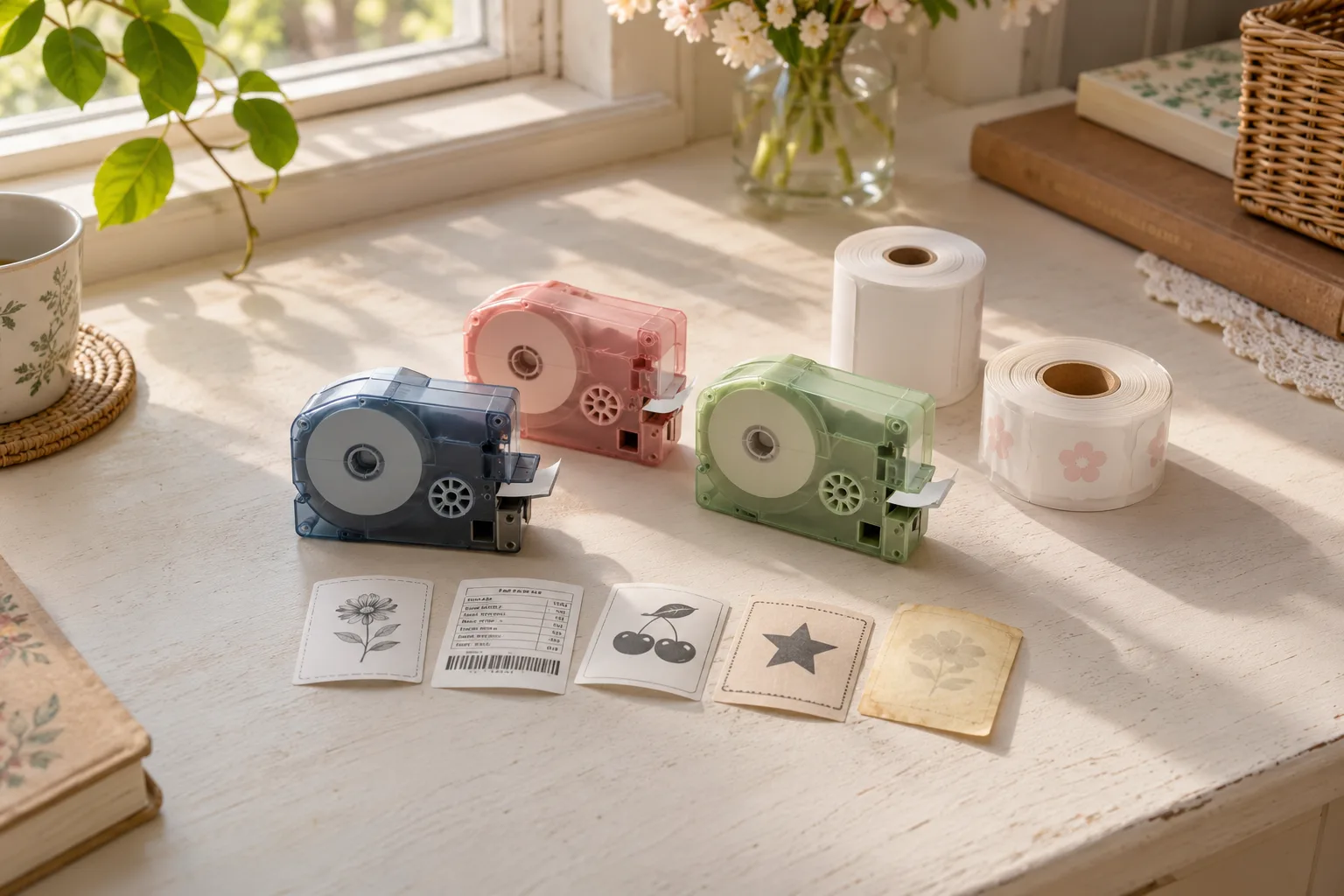
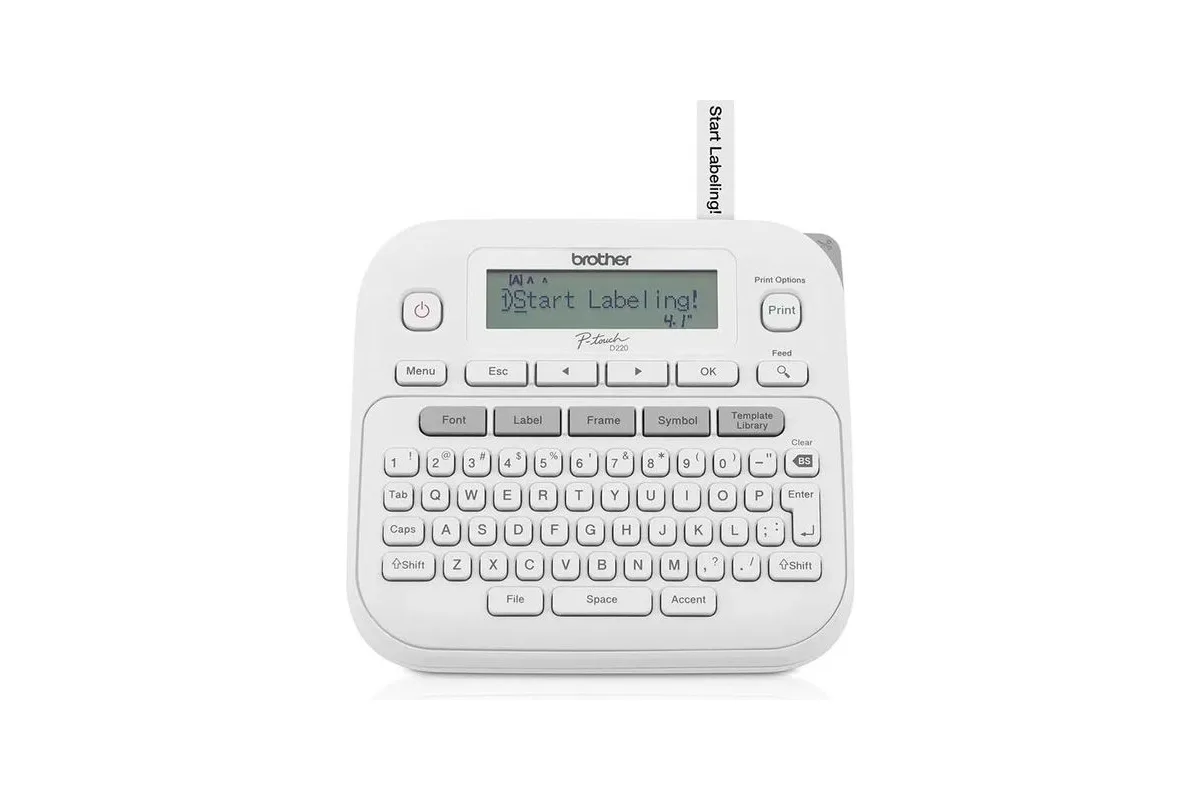
- Thermal transfer: a ribbon inside each tape cassette melts onto the tape. Brother’s TZe tape (in the PT-D220 and P-touch Cube), Dymo’s D1 tape for LabelManager machines, and Dymo’s Rhino industrial tapes work this way. The ribbon comes with the tape, so you never buy it separately. Brother adds a clear laminate over each TZe label.
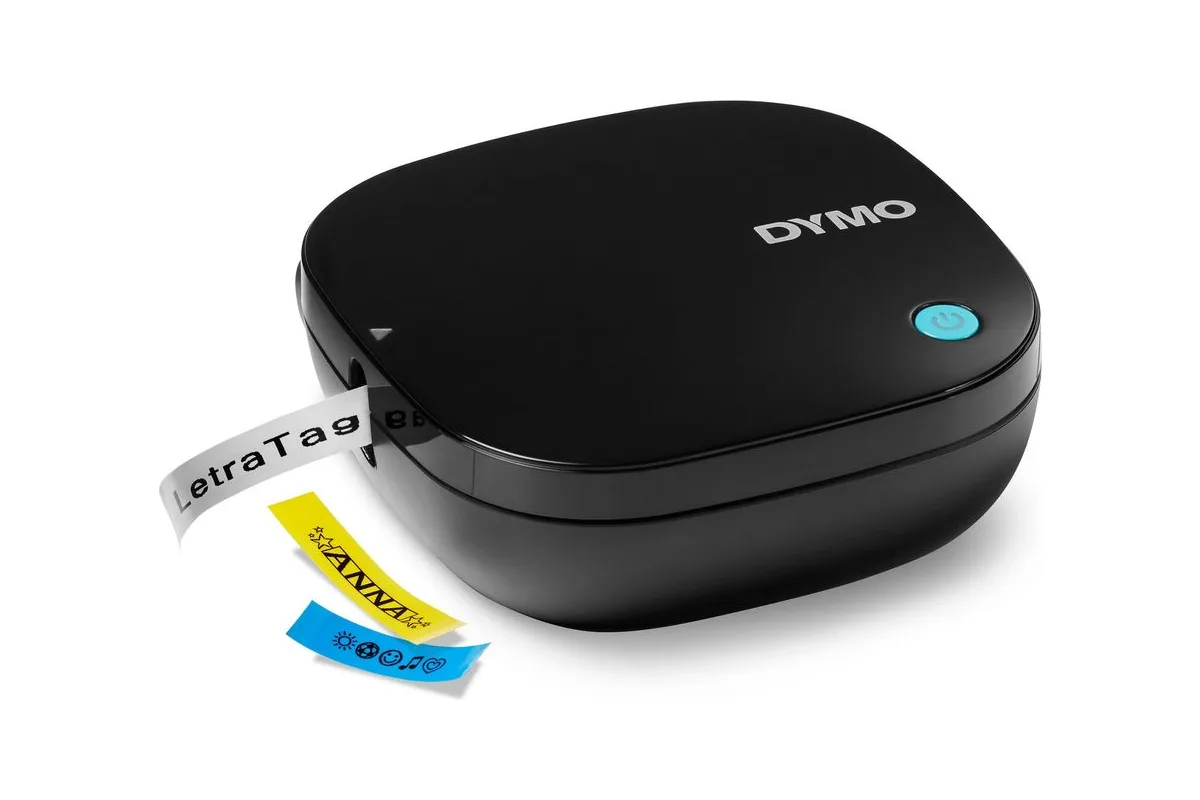
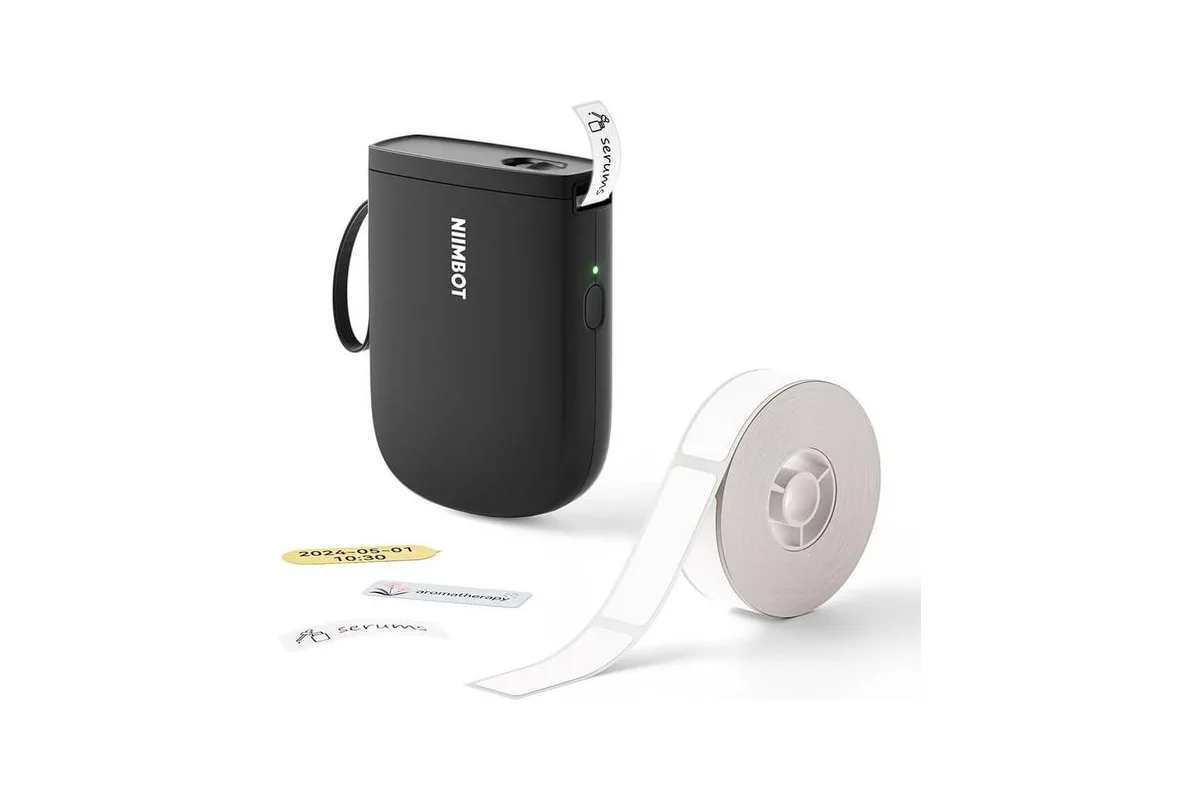
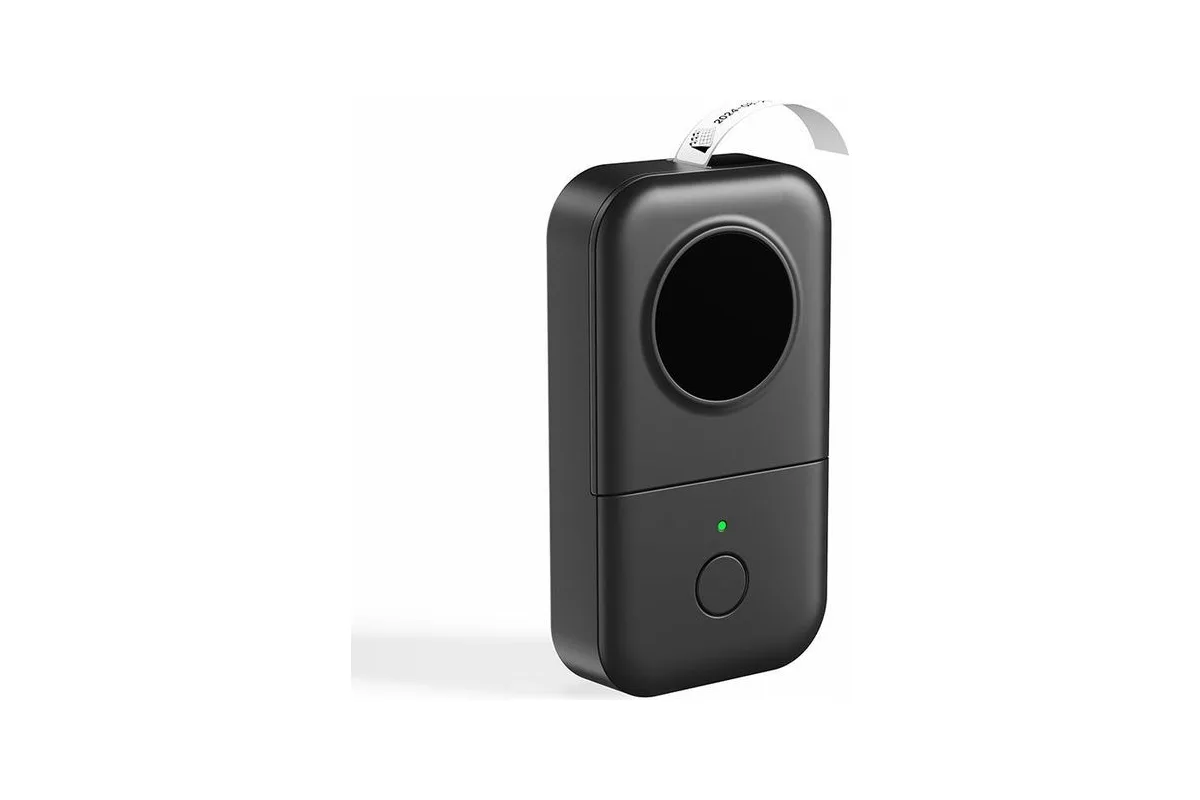
- Direct thermal: the printer heats coated labels that darken where they’re heated. There’s no ribbon at all. Brother’s QL printers and DK rolls, Dymo’s LabelWriter and LetraTag machines, and the pocket printers from Phomemo and Niimbot work this way.
Either way, the only thing you keep buying is tape or labels. That’s the real running cost, and it varies from about 3¢ a label to more than 60¢ a foot. See the best label makers for a full cost table.
Dymo’s own pages are mixed on LetraTag: it calls the LetraTag machines direct thermal, but its iron-on LetraTag tape thermal transfer, so the method can depend on the cassette.
How long do thermal labels last?
It depends on where they are. Direct thermal labels can last years in a cool, dark drawer, but heat, sunlight and friction fade or darken them, sometimes in weeks. No label maker we looked at gives a lifespan figure for ordinary thermal labels.
What makers do say:
- Brother says its direct thermal DK labels are “not ideally suited for use outdoors for periods over one month” and aren’t designed for durable, permanent labeling. It points to laminated TZe tape for that.
- Niimbot says its D-series labels resist water, oil, tearing and scratches, but gives no lifespan.
- Phomemo names some of its label rolls for 10 or 20 years, without saying how that was tested.
Laminated thermal transfer tape lasts far longer. Brother’s TZe tests found the print unchanged after 478 hours of simulated sunlight, which Brother says approximates a year outdoors, and after 30 days under water at 40°C.
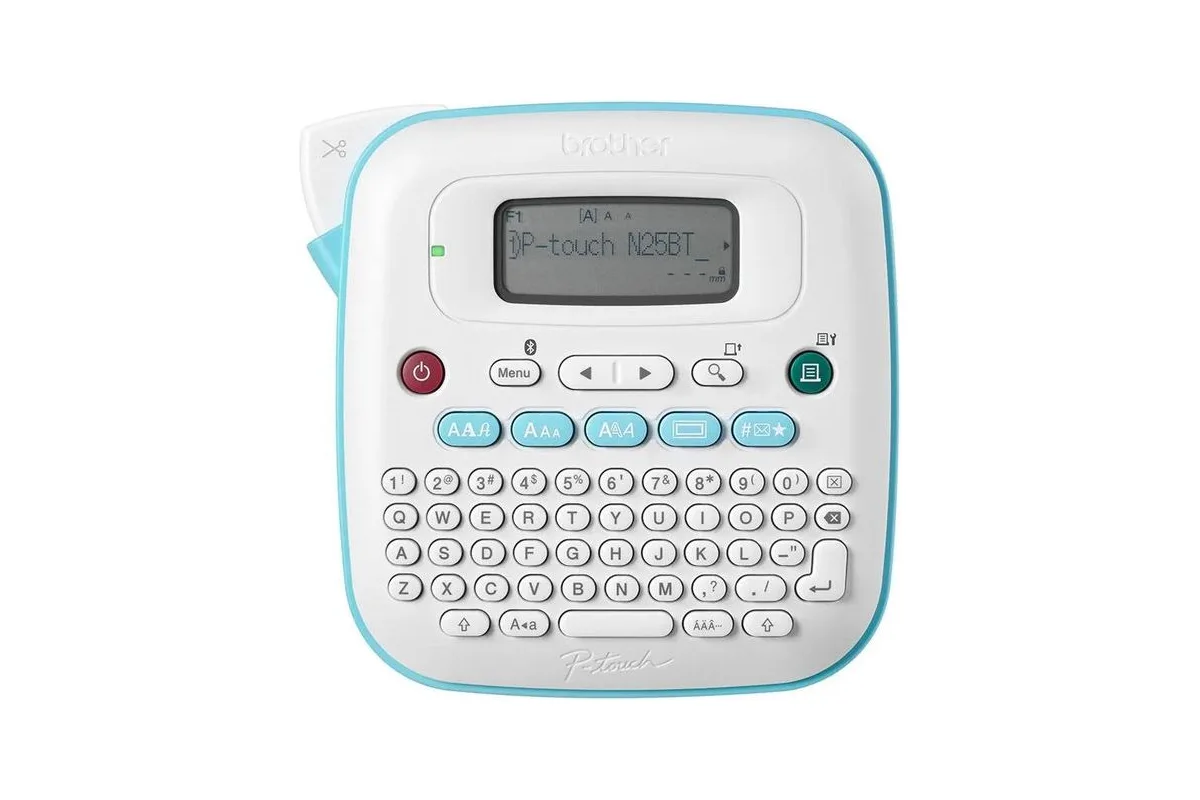
For the kitchen: thermal labels near a stove, dishwasher or sunny window will fade. Laminated TZe tape, or the Btag tape for Brother’s PT-N25BT, which Brother calls microwave, dishwasher and freezer resistant, is the safer choice.
Does Dymo block third-party labels?
On its LabelWriter 550 desktop printers, yes. On its LetraTag and LabelManager label makers, no, but it tells you not to use them.
- LabelWriter 550, 550 Turbo and 5XL: Dymo says these printers work exclusively with Dymo-branded labels. Their “Automatic Label Recognition” reads a chip in the label roll, so other brands’ rolls won’t print. Dymo’s older LabelWriter 450 series has no such check, and compatible rolls are sold for it.
- LetraTag (including the LetraTag 200B) and D1 LabelManager machines: Dymo’s tape pages say “always use DYMO-branded labels,” and its LetraTag quick start guide says the warranty doesn’t cover damage from other labels. We found no sign of a chip in these cassettes. That’s a warning, not a block.
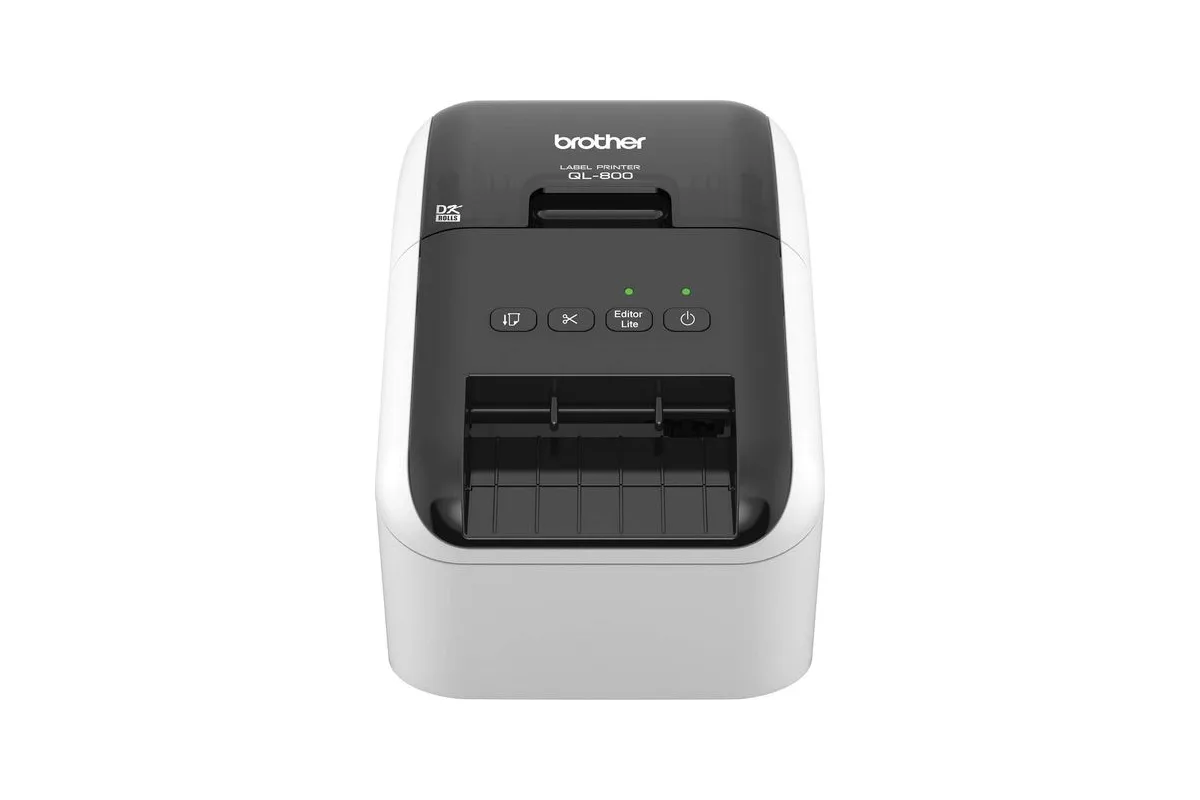
If you want a desktop address-label printer with open supplies, Brother’s QL-800 takes DK rolls with no chip, and its DK-1201 address labels cost about 3.5¢ each.
Are Brother TZe tapes worth the price?
For labels that have to survive, yes. For dry indoor labels, not always. In November 2026 genuine Brother TZe-231 (12 mm, black on white) was $16.49 for 26.2 ft at Brother, about 63¢ a foot. Generic compatible TZe-231 tape sold for about $9 for a five-pack of 8 m rolls in store listings, about 7¢ a foot, roughly a ninth of the price.
What the genuine tape gets you is Brother’s durability data. Brother tested TZe for:
- 3 days at -80°C and 2 days at 150°C (the text survived; the tape discolored at the top end)
- 30 days in water or salt water at 40°C
- 478 hours of simulated sunlight, about a year outdoors by Brother’s estimate (red, yellow and fluorescent tapes faded more)
- 50 passes of an abrasion tester, with the text still legible
Those figures cover only Brother’s own tape. We couldn’t find a published test of generic TZe tape. So buy genuine TZe for labels on things that get washed, frozen, cleaned with bleach or left in the sun, and for anything you don’t want to redo. For bins, folders and dry shelves, compatible tape or a cheaper thermal label maker is fine.
Skip Brother’s smaller “Economy” TZe-231S roll: at $9.99 for 4 m it costs more per foot than the standard 8 m roll.
Which label makers lock you in?
| Brand and model | Lock-in | What the maker says |
|---|---|---|
| Niimbot D11, D110, D101 | Chip in every roll | Niimbot says third-party labels don’t work with the D11 and D110, and its label pages say each roll “contains a sensor chip” |
| Niimbot B21 | RFID in the roll | Niimbot says labels without a compatible RFID chip may not be recognized |
| Dymo LabelWriter 550 series | Chip in the roll | Dymo says these printers work exclusively with Dymo-branded labels |
| Dymo LetraTag and D1 | No chip found | Dymo says to use only its labels; warranty excludes damage from others |
| Phomemo D30 | No chip found | Phomemo says to use only its own thermal paper |
| Brother Btag (PT-N10, N20, N25BT) | Own cassette format | Btag fits only these three models, and they take no other tape |
| Brother TZe | None | Compatible tapes are widely sold |
| Brother DK (QL printers) | None | No chip |
The Niimbot D11 is the clearest case among home label makers: it’s cheap and sharp, but every roll you ever buy has to come from Niimbot. Apps can tie you in too. Phomemo’s and Niimbot’s apps sell subscriptions, while Brother’s Design&Print 2 has no in-app purchases; see the Phomemo D30 review.
Questions people ask
Do label makers need ink?
No. They print with heat, either through a ribbon built into each tape cassette or directly onto heat-sensitive labels. You only buy tape or labels.
Do Brother P-touch label makers need ink?
No. Each TZe or Btag cassette contains everything needed to print. Brother TZe tape also has a clear laminate over the print.
How long do thermal labels last?
Years in a cool, dark place, but heat, sunlight and friction fade them, sometimes in weeks. Brother says its own thermal DK labels aren’t meant for outdoor use beyond about a month.
Does Dymo block third-party labels?
Only on its LabelWriter 550 series, which reads a chip in Dymo label rolls. LetraTag and D1 label makers aren’t chipped, but Dymo says to use only its labels and won’t cover damage from others.
Are Brother TZe tapes worth the price?
For labels that must survive water, heat, cleaners or sun, yes: genuine TZe costs about 63¢ a foot, about nine times generic tape, and Brother tests it for those conditions. For dry indoor labels, cheaper tape is fine.
Do generic TZe tapes work?
They fit Brother’s TZe machines, and Brother uses no chip to block them. We couldn’t find a published durability test of generic tape.
Which label makers lock you into their labels?
Niimbot’s D11 and D110 (a chip in each roll), Niimbot’s B21 (RFID) and Dymo’s LabelWriter 550 series (a chip in the roll). Brother’s Btag tape fits only Brother’s PT-N models.
Sources
- Brother: durability test data for laminated TZe labels, brother.com.au
- Brother TZe-231 laminated tape, Brother
- Brother Btag tape, Brother
- Brother QL-800, Brother
- Dymo LetraTag 200B, dymo.com
- Dymo D1 Durable labels, dymo.com
- Niimbot D11/D110 white labels, niimbot.com
- Phomemo D30 portable Bluetooth label maker, phomemo.com
Keep exploring
Buying guide
The best color label printers for product labels
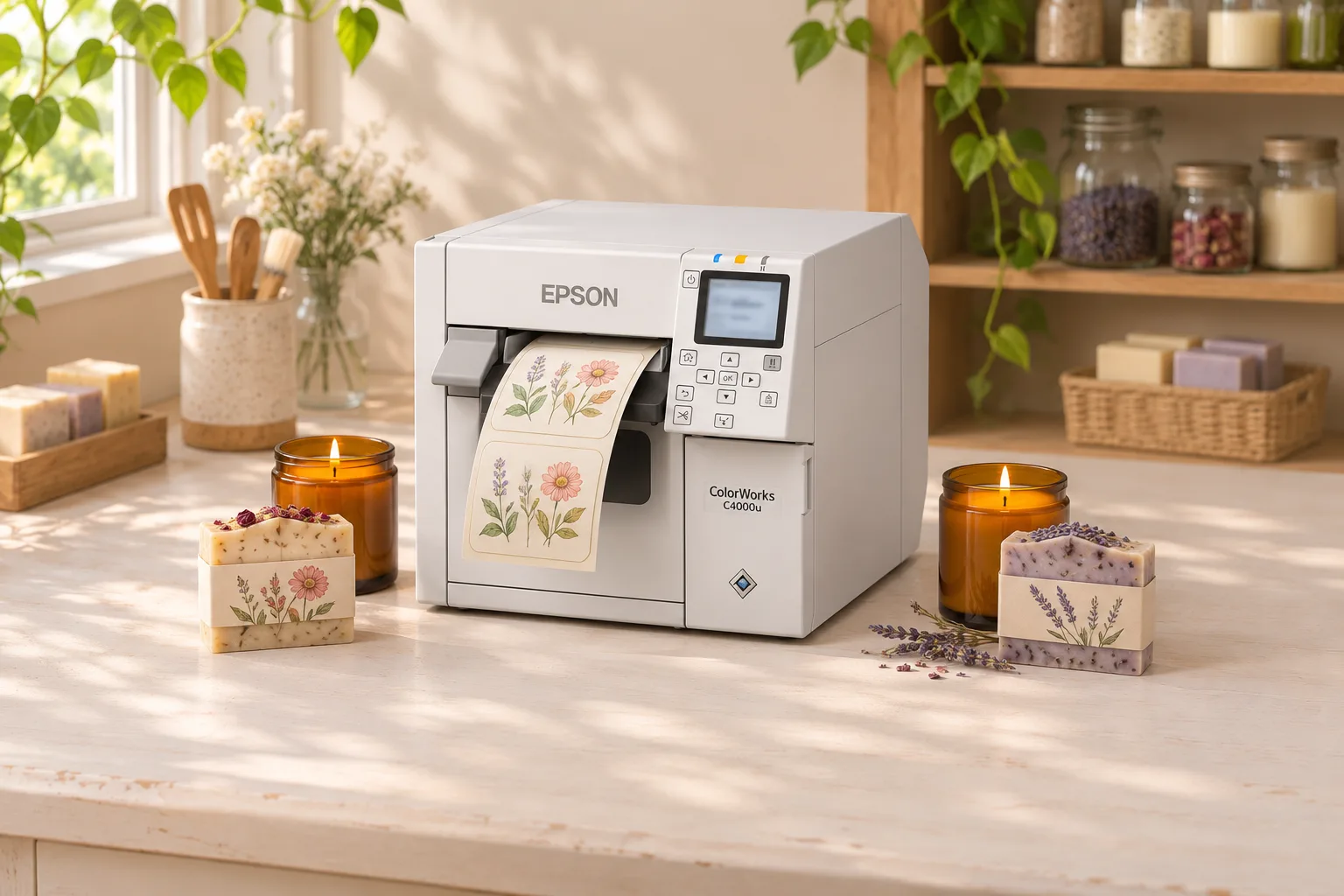
The Epson ColorWorks CW-C4000 is the best color label printer for product labels: pigment CMYK ink at up to 1200 dpi, rolls up to 4.25 inches wide, 4 inches a second and BS 5609 certification on Kimdura poly, for $2,499 at CDW in November 2026. Get the Primera LX610 ($2,695) to print and cut custom shapes, or the Primera LX500 ($1,549) on a budget.
Read story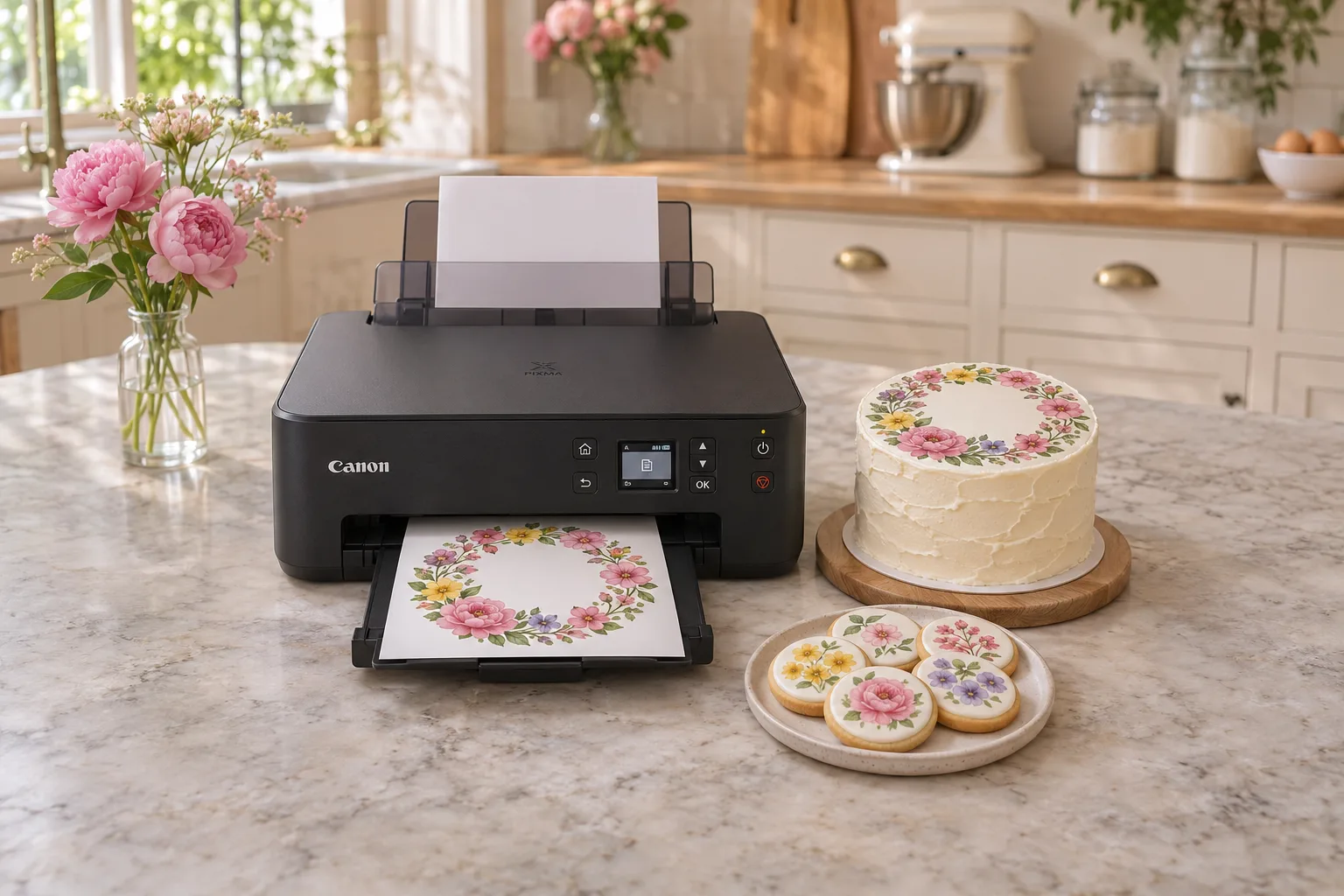
Buying guide
The best edible printers for cakes and cookies
The best edible printer for cakes is a new Canon PIXMA TS702a bought in an edible ink bundle: $295 to $299 in November 2026, for letter and legal-size frosting sheets at about $1 to $3 a cake topper. For printing straight onto cookies, the Primera Eddie is $2,995 and uses about 6¢ of ink per cookie.
Read story