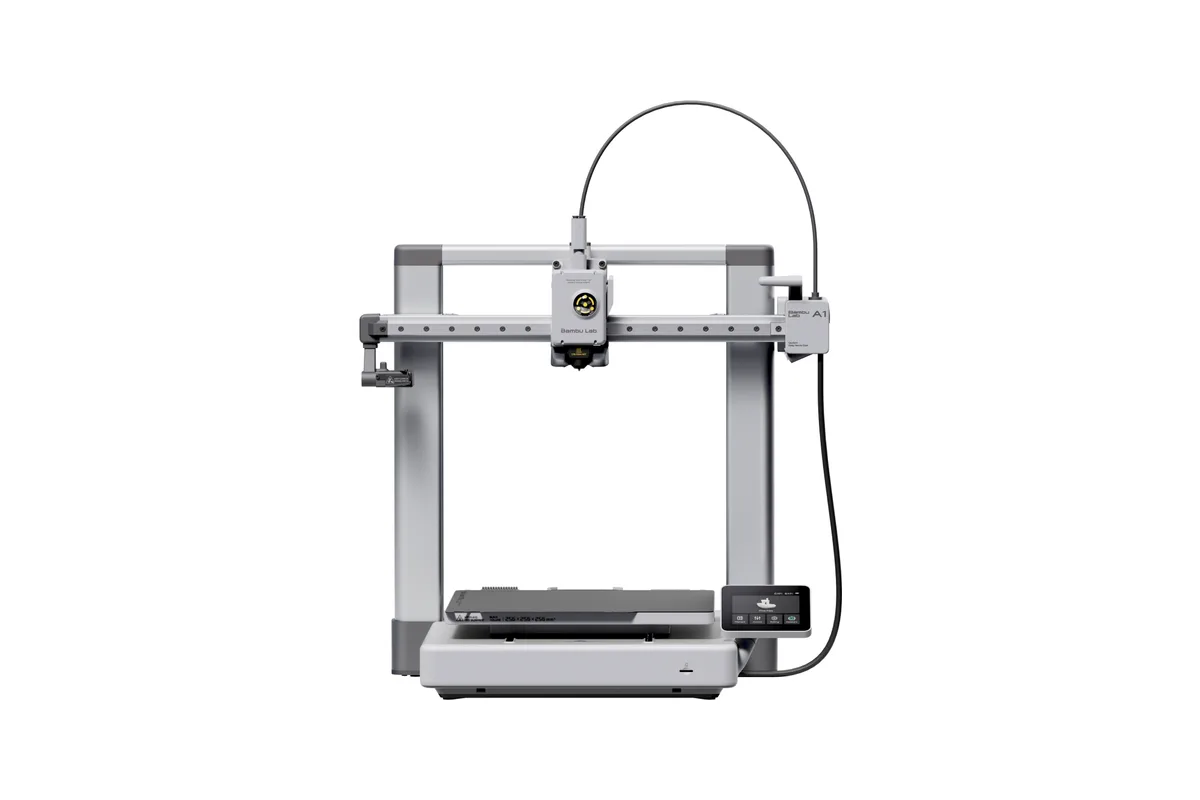
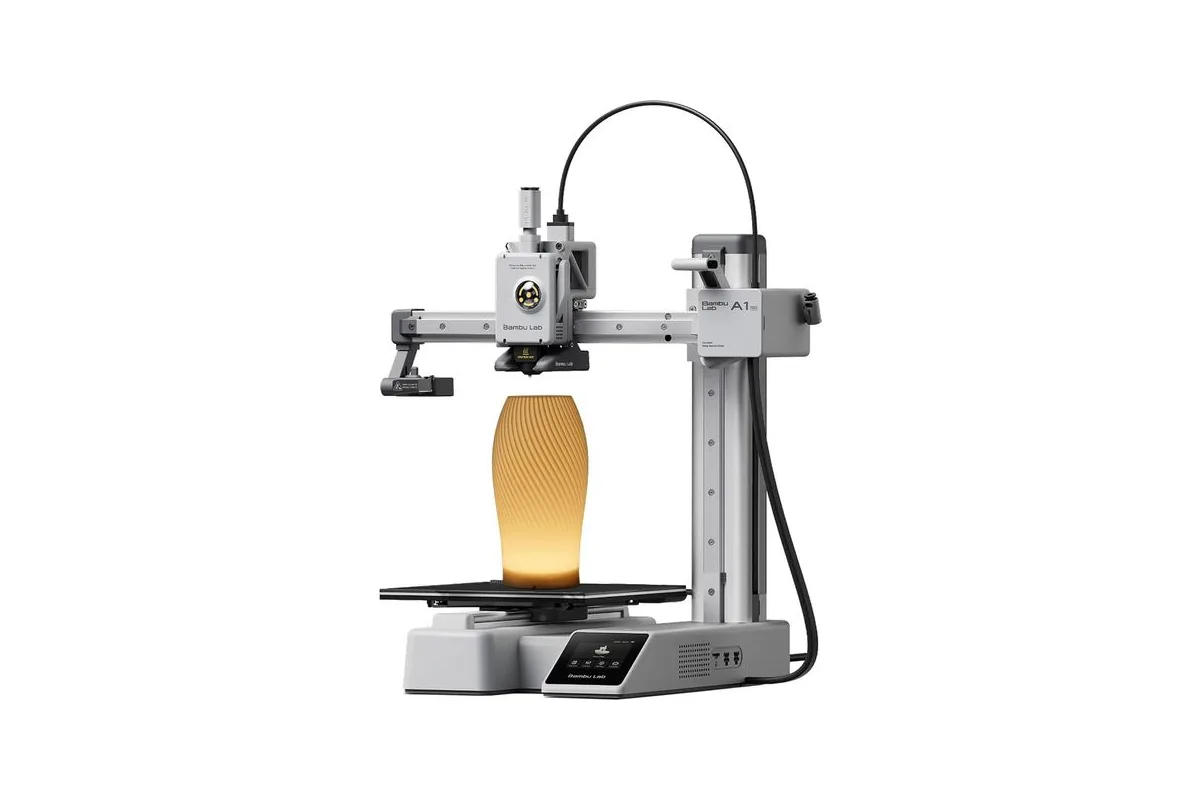
Side by side
| Feature | Bambu LabA1 | Bambu LabA1 mini |
|---|---|---|
| Frame | Open (bed slinger) | Open (bed slinger) |
| Build volume | 256 x 256 x 256 mm | 180 x 180 x 180 mm |
| Multicolor | Optional 4 colors (AMS lite) | Optional: 4 colors (AMS lite) or AMS units via AMS Hub |
| Materials | PLA, PETG, TPU | PLA, PETG, TPU |
| Where to buy | Check price at Amazon | Check price at Amazon |
Bambu Lab A1
- Frame
- Open (bed slinger)
- Build volume
- 256 x 256 x 256 mm
- Multicolor
- Optional 4 colors (AMS lite)
- Materials
- PLA, PETG, TPU
Bambu Lab A1 mini
- Frame
- Open (bed slinger)
- Build volume
- 180 x 180 x 180 mm
- Multicolor
- Optional: 4 colors (AMS lite) or AMS units via AMS Hub
- Materials
- PLA, PETG, TPU
Bambu Lab A1 or A1 mini?
The A1, for most people. Both printers calibrate themselves, use the same software and print equally well, but the A1’s 256 x 256 x 256 mm build area holds nearly three times the volume of the A1 mini’s 180 mm cube. In November 2026 the A1 was $259 at Bambu’s store and the A1 mini $199, so the bigger bed costs only $60.
Buy the A1 mini if you mostly print small things, have little desk space, or want the cheapest way in. Many people who start on an A1 mini wish they had the larger bed for their first helmet, vase or storage bin.
What’s the difference between the A1 and A1 mini?
| Bambu Lab A1 | Bambu Lab A1 mini | |
|---|---|---|
| Price (Bambu, Nov 2026) | $259 (typical $299) | $199 (typical $219) |
| Combo with AMS lite | $359 | $299 |
| Build volume | 256 x 256 x 256 mm | 180 x 180 x 180 mm |
| Max bed temperature | 100 °C | 80 °C |
| Max nozzle temperature | 300 °C | 300 °C |
| Calibration | Automatic | Automatic |
| Materials | PLA, PETG, TPU | PLA, PETG, TPU |
| Multicolor | AMS lite, 4 colors | AMS lite, 4 colors |
| Noise (silent mode) | About 48 dB | About 48 dB |
| Average power printing PLA | About 95 W | About 57–80 W |
| Weight | 8.3 kg | 5.5 kg |
| 2024 recall | Early units (fixed) | Not affected |
| Warranty | 2 years | 2 years |
Source: Bambu’s specifications, wiki and US store, read November 24, 2026.
Is 180 mm big enough?
For a lot of beginner projects, yes: figurines, toys, keychains, phone stands, drawer organizers and most household fixes fit. It’s too small for cosplay helmets, large vases and planters, tall storage bins and long parts, which you’d have to split and glue. If you’re unsure what you’ll make, the A1’s extra size is cheap insurance.
Is the A1 harder to use?
No. Both run the same automatic bed leveling and calibration and the same Bambu Studio and Bambu Handy software, so the experience is nearly identical. The A1 is larger and heavier and its bed moves farther, so give it more desk space.
Which is better for multicolor?
Both use the same AMS lite, so color quality and purge waste are the same. The A1 Combo ($359) gives you the bigger bed for $60 more than the A1 mini Combo ($299). See the best multicolor 3D printers.
Which should you buy?
The A1, unless you know your prints will stay small. Read our A1 review and A1 mini review, and see the best 3D printers.
Questions people ask
Is the A1 mini worth it over the A1?
If you print small things and space or budget is tight, yes. Otherwise the A1’s larger bed is worth the extra $60.
Are the A1 and A1 mini equally easy to use?
Yes. They share the same calibration, software and model library.
Can the A1 or A1 mini print ABS?
Neither is suited to ABS or ASA; both are open-frame printers. Use PLA, PETG or TPU.
Which is quieter, the A1 or A1 mini?
Bambu rates both at about 48 dB in silent mode.
Can I upgrade the A1 mini to the A1?
No. They’re different printers, but the AMS lite works with both.
Sources
- Bambu Lab A1 product page, us.store.bambulab.com
- Bambu Lab A1 mini product page, us.store.bambulab.com
- Bambu Lab A1 technical specifications, bambulab.com
- Bambu Lab A1 mini technical specifications, bambulab.com
- Bambu Lab: power consumption, wiki.bambulab.com
Keep exploring

How to
Hardened steel vs brass nozzles, and what nozzle size to use
Brass, or the stainless steel Bambu ships on the A1, is fine for PLA, PETG, ABS, ASA and TPU. Carbon fiber, glass fiber, glow-in-the-dark and sparkle filaments need hardened steel. Use a 0.4 mm nozzle for most prints, 0.6 mm for carbon fiber and big parts, and 0.2 mm for miniatures.
Read story
How to
Can you 3D scan with an iPhone? Yes, but not to tight tolerances
Yes. Any current iPhone can 3D scan objects from photos (photogrammetry), and KIRI Engine's free tier exports STL for printing. Only the iPhone 18 Pro and 18 Pro Max have LiDAR in Apple's current lineup. For parts that must fit, a $359 scanner is about ten times tighter.
Read story