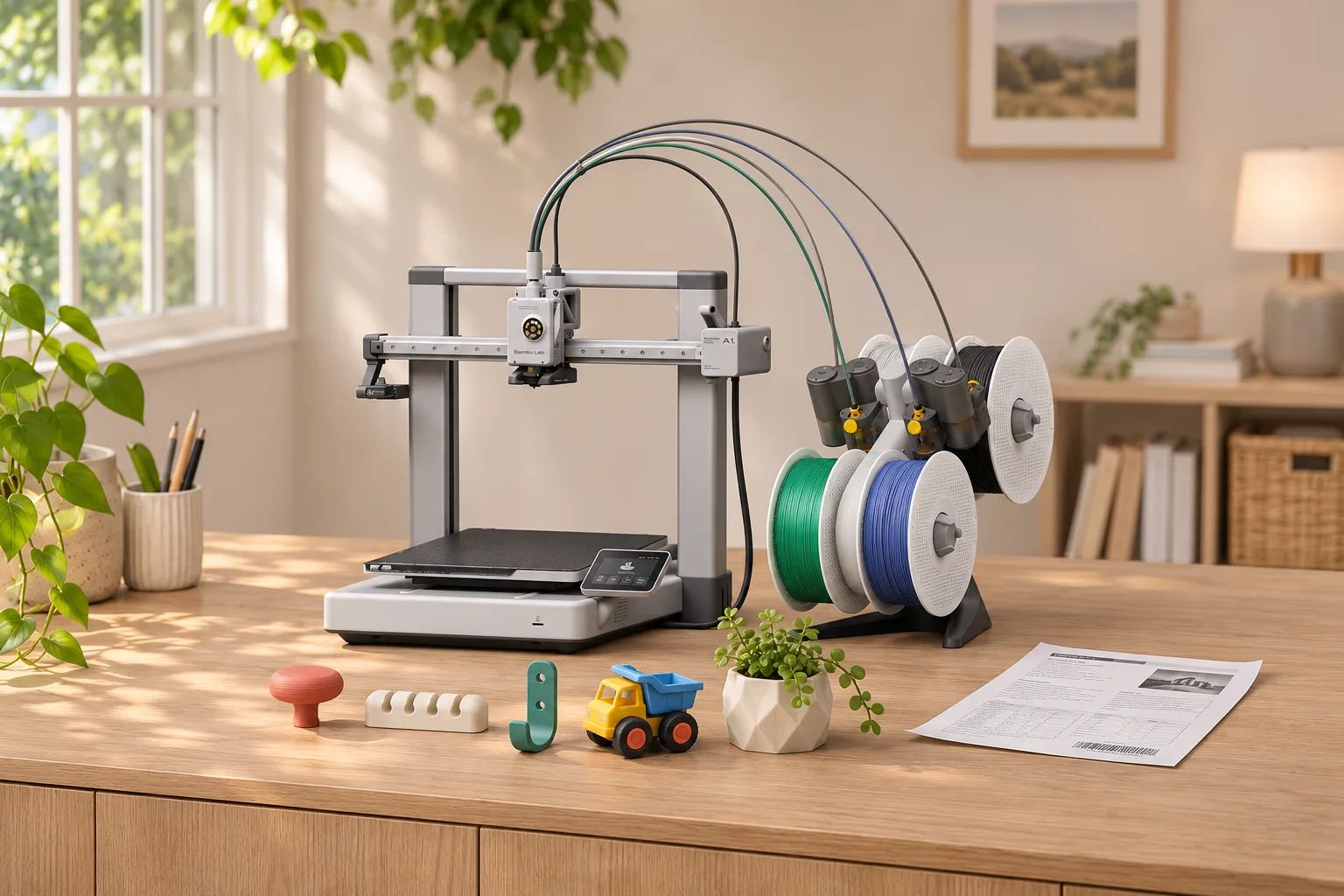
Printers in this guide
Is a 3D printer worth it for home use?
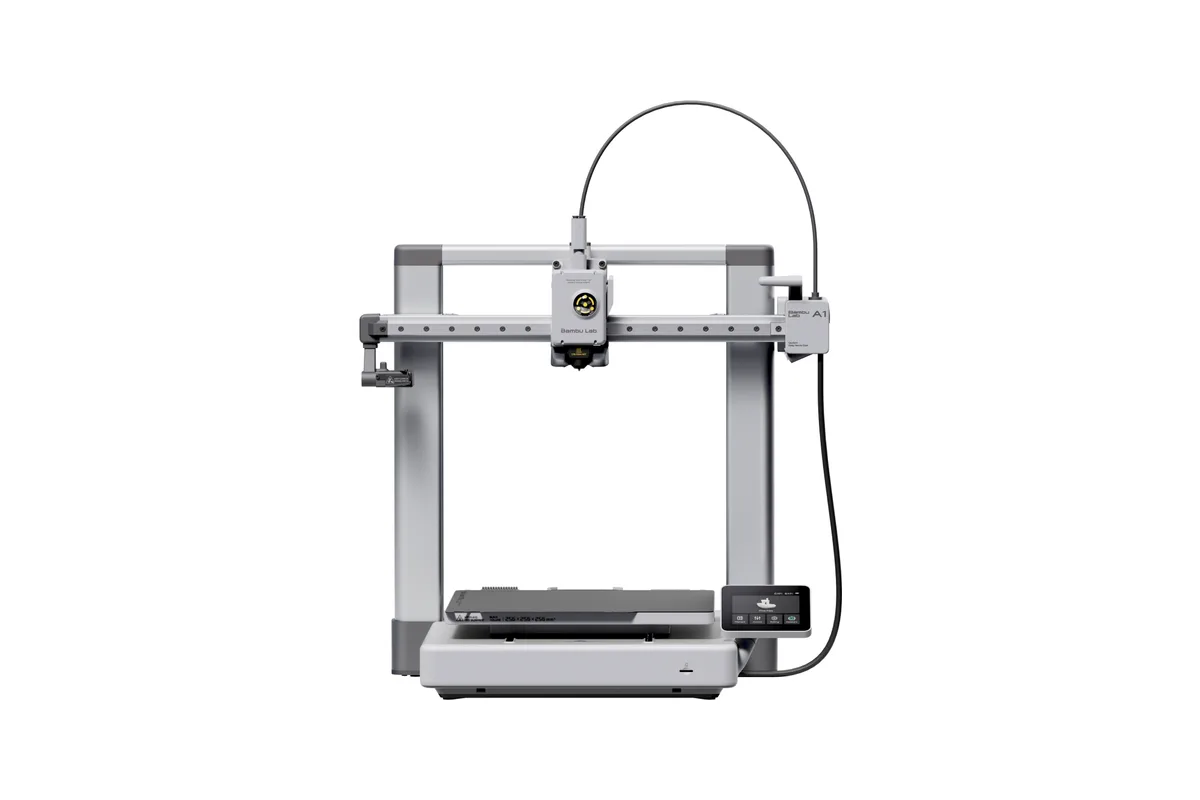
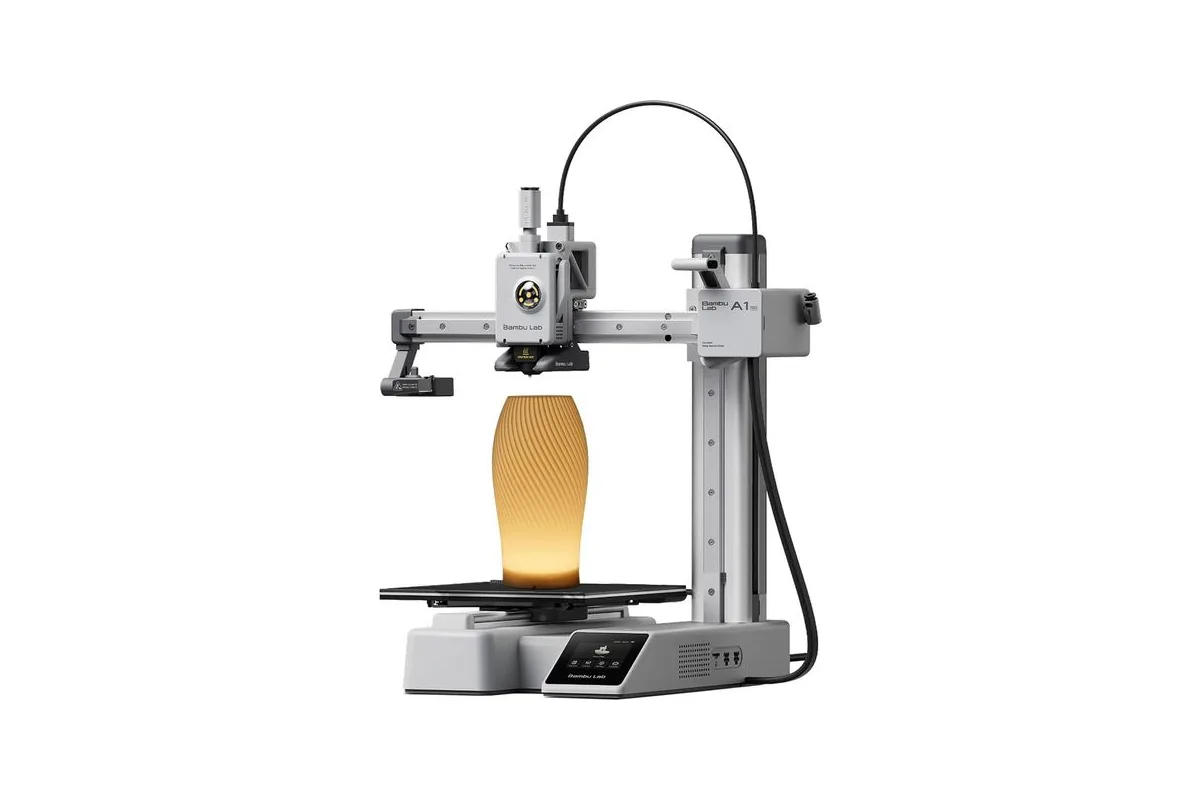
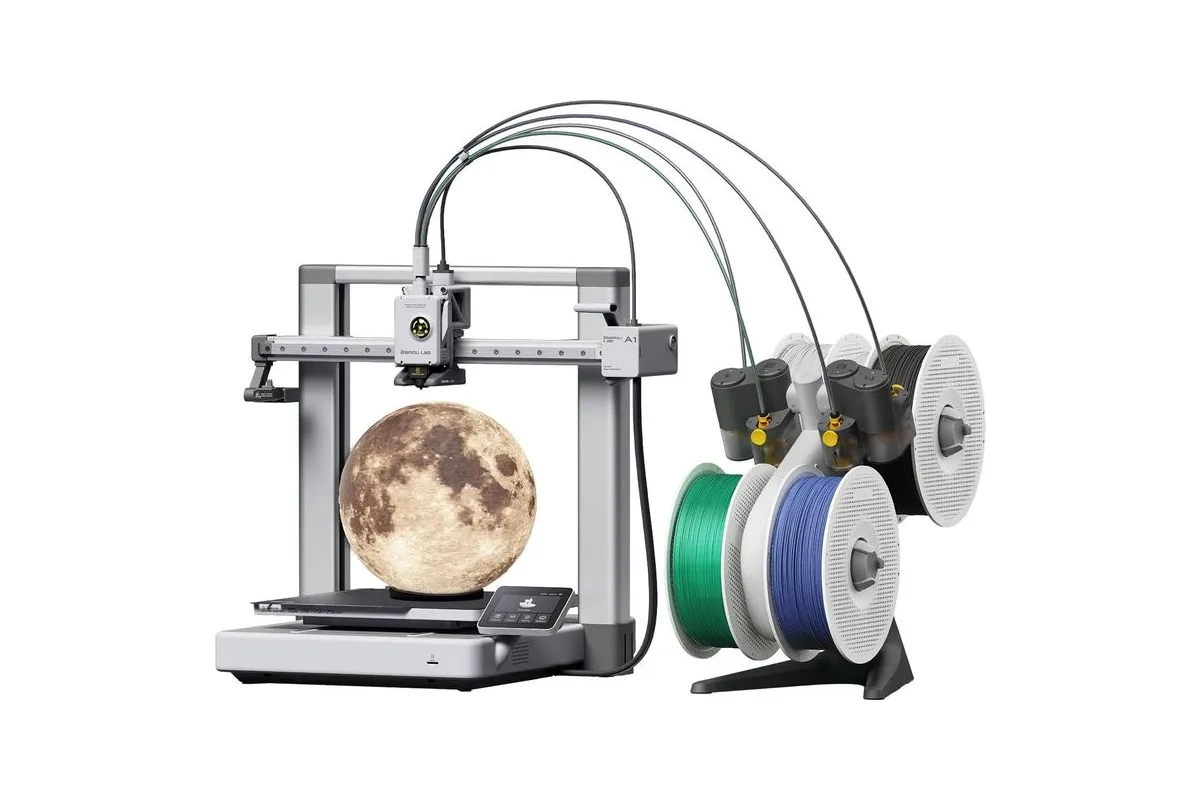
Yes, if you’ll use it a few times a month. Today’s beginner printers, like the Bambu Lab A1 mini ($199 in November 2026) and A1 ($259), calibrate themselves and print well with default settings, so you no longer need to be a hobbyist to get good results. A 1 kg spool of PLA costs about $10 to $25 and makes dozens of small objects, so most prints cost under a dollar.
It’s not worth it if you’d only print a handful of things a year; a local library, makerspace or online print service is cheaper. And it won’t replace a store: mass-produced plastic items are often cheaper to buy.
What can you make with a 3D printer at home?
- Replacement parts: knobs, clips, battery covers, appliance feet, shelf brackets.
- Organizers: drawer dividers, cable holders, tool racks, Gridfinity storage bins.
- For kids: toys, puzzles, fidget toys, school-project models.
- Gifts and decor: planters, vases, personalized keychains, lithophanes.
- Hobbies: cosplay props, tabletop terrain, RC car parts, camera mounts.
- Fixes and adapters: custom mounts and adapters that don’t exist in stores.
Free model sites, such as Bambu’s MakerWorld, Prusa’s Printables and Thingiverse, have huge libraries of ready-to-print designs, so you don’t need to design anything yourself.
Does a 3D printer pay for itself?
It can, if you print things you’d otherwise buy. A $5 to $15 replacement part, organizer or toy that costs under a dollar in filament saves money each time; print 20 to 30 of those and a $200 to $300 printer has paid for itself. Most people don’t buy a printer to save money, though: they buy it to make things they can’t buy.
Do you need to know CAD?
No. You can print free, ready-made models without designing anything. When you want to make your own, free tools are beginner-friendly: Tinkercad runs in the browser and builds models from simple shapes, and Onshape has a free plan for non-commercial use (its free documents are public).
How much time does it take?
Very little hands-on time with a modern printer. You pick a model, slice it with default settings and press print; the printer does the rest. Prints take from 20 minutes for a small part to a day or more for big ones. Maintenance is light: Prusa says its printers average about 800 print hours between maintenance, with the nozzle the most common part to replace.
What’s the best first 3D printer?
The Bambu Lab A1 ($259) for most people, or the A1 mini ($199) on a budget. See the best 3D printers and the best cheap 3D printers.
Questions people ask
Is a 3D printer a good gift?
For a teenager or adult who likes making, fixing or tinkering, yes. A self-calibrating printer like the Bambu A1 mini is easy enough to enjoy from day one.
Is 3D printing an expensive hobby?
No. After the printer, the main cost is filament at about $10 to $25 a kilogram, and most prints use under a dollar’s worth.
How long do 3D printers last?
Years, with routine part replacements. Nozzles, build plates, PTFE tubes and belts wear out and are cheap to replace.
What should I 3D print first?
A calibration model or a small, useful object from the printer maker’s library, such as a cable clip or a phone stand. It’s quick, and it shows you how the printer works.
Is a 3D printer worth it for kids?
For kids interested in making, design or science, yes, with adult supervision. Choose PLA and a quiet printer, and keep it in a ventilated room. See are 3D printers safe?
Sources
- Bambu Lab A1 product page, us.store.bambulab.com
- Bambu Lab A1 mini product page, us.store.bambulab.com
- Bambu Lab filament bulk sale, us.store.bambulab.com
- Tinkercad, tinkercad.com
- Onshape pricing (free plan), onshape.com
- Prusa: frequently asked questions (maintenance), help.prusa3d.com
Keep exploring

How to
Hardened steel vs brass nozzles, and what nozzle size to use
Brass, or the stainless steel Bambu ships on the A1, is fine for PLA, PETG, ABS, ASA and TPU. Carbon fiber, glass fiber, glow-in-the-dark and sparkle filaments need hardened steel. Use a 0.4 mm nozzle for most prints, 0.6 mm for carbon fiber and big parts, and 0.2 mm for miniatures.
Read story
How to
Can you 3D scan with an iPhone? Yes, but not to tight tolerances
Yes. Any current iPhone can 3D scan objects from photos (photogrammetry), and KIRI Engine's free tier exports STL for printing. Only the iPhone 18 Pro and 18 Pro Max have LiDAR in Apple's current lineup. For parts that must fit, a $359 scanner is about ten times tighter.
Read story