Printers in this guide
Are 3D printers safe to use indoors?
Yes, with sensible precautions. Filament printers release ultrafine particles and volatile organic compounds (VOCs) while they print, and UL’s Chemical Insights research has measured up to one trillion particles per hour and more than 200 different VOCs. How much depends mostly on the material: ABS gives off the most, nylon less, and PLA the least. The EPA’s review of 16 studies reached the same conclusion: ABS produced more particles than PLA.
The low-risk setup is simple: print PLA, in a ventilated room, away from where people sit or sleep, and don’t hover over the printer while it runs. Use an enclosed printer, ideally with a filter, for ABS, ASA and nylon.
Are 3D printer fumes toxic?
The research doesn’t yet say how much exposure is harmful, but it’s enough to be careful. A UL-sponsored lab study found that emissions from both PLA and ABS damaged human airway cells in the lab, with ABS worse; that’s a cell study, not a study of people. The particles are mostly smaller than 100 nanometers, and the American Lung Association notes they can stay in the air for hours after printing stops. The EPA says research on children’s exposure is limited.
Do 3D printers need ventilation?
Yes. UL’s guidance for home and school users:
- Print in a room with good air circulation or a window you can open, and use an exhaust fan above the printer if you can.
- Keep the printer away from HVAC return vents, which spread emissions through the house.
- Keep it out of bedrooms and high-traffic areas, and close the door of the room it’s in.
- Don’t hover. Being close to a running printer significantly increases exposure; watch it through a camera or window instead. Emissions peak in roughly the first 20 minutes.
- Print at the lowest temperature the filament maker allows.
- Basic dust masks don’t stop ultrafine particles or VOCs.
UL says a ventilated enclosure cut particle concentration by 99.7% and VOCs by 69.5% in its tests. NIOSH’s guidance for schools and makerspaces recommends enclosures and local exhaust ventilation.
Is an enclosed printer safer?
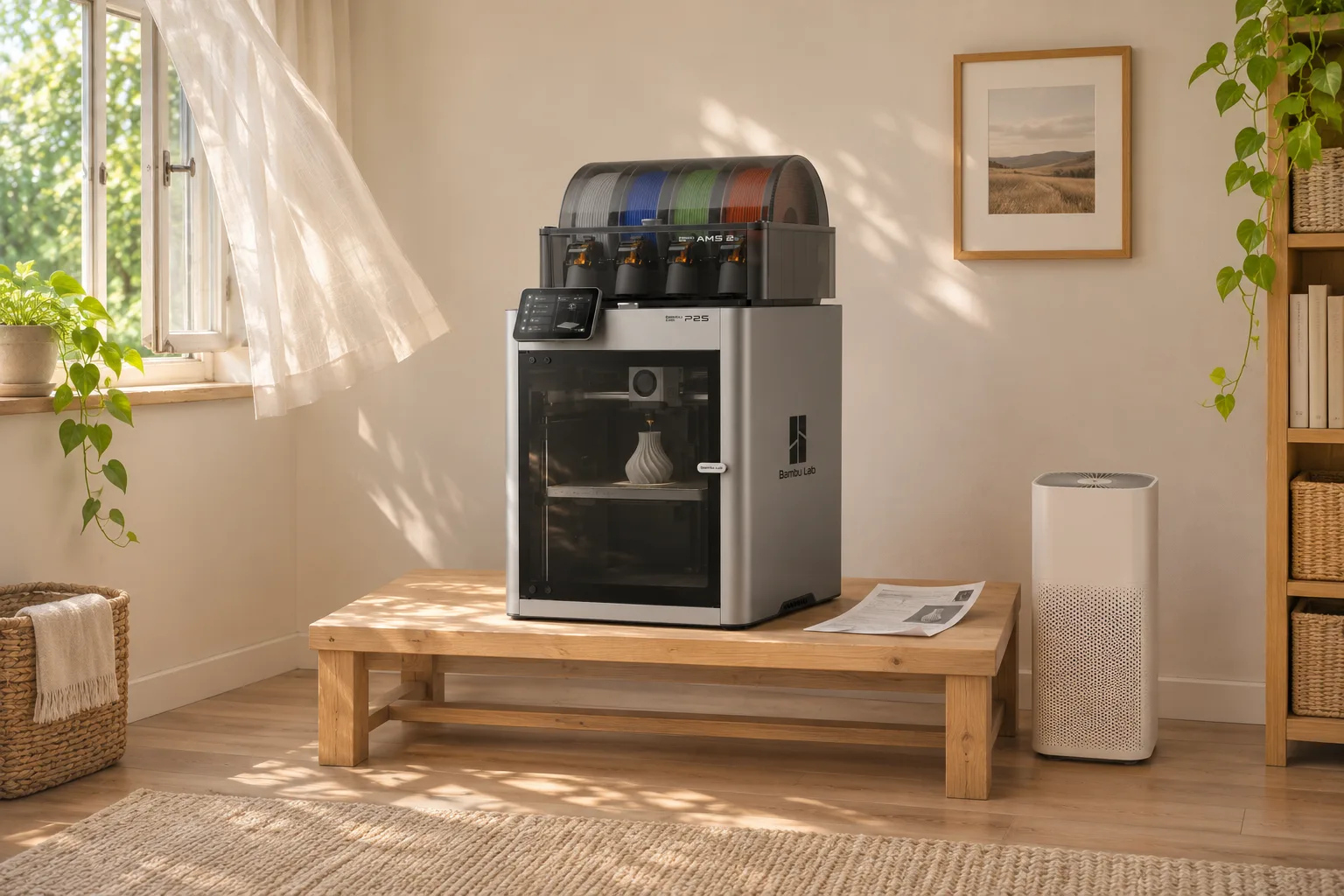
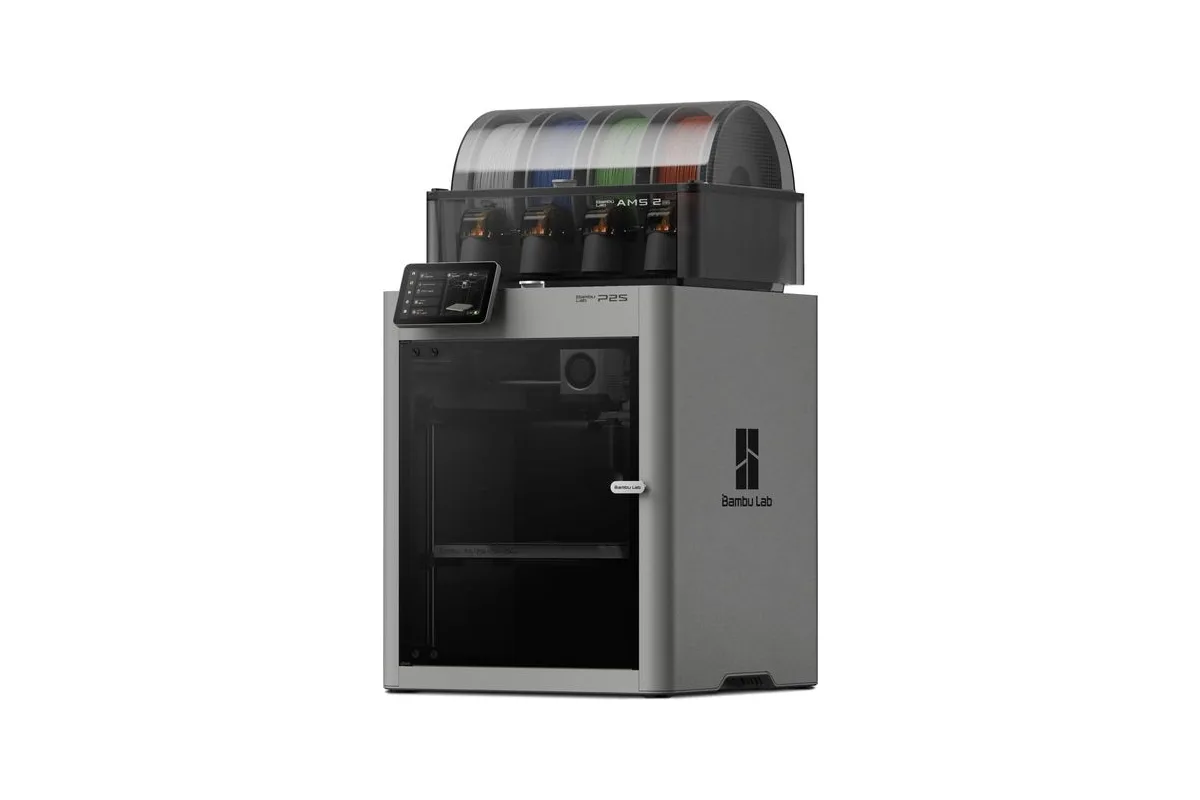
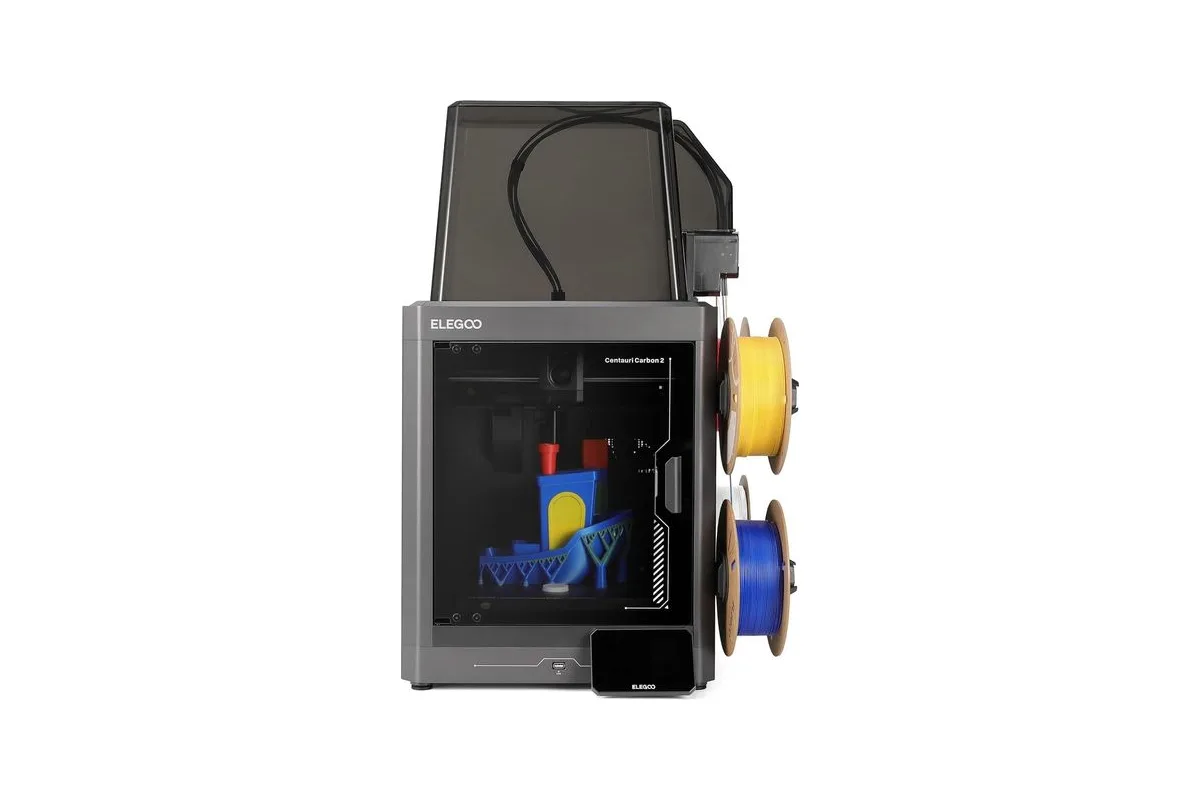
Somewhat. An enclosed printer like the Bambu P2S or Elegoo Centauri Carbon 2 keeps hot parts and moving belts behind a door and contains more of the emissions, especially with a carbon filter. It’s the right choice for ABS and ASA and for printers in shared living spaces. You should still ventilate the room. See the best enclosed 3D printers.
Can 3D printers catch fire?
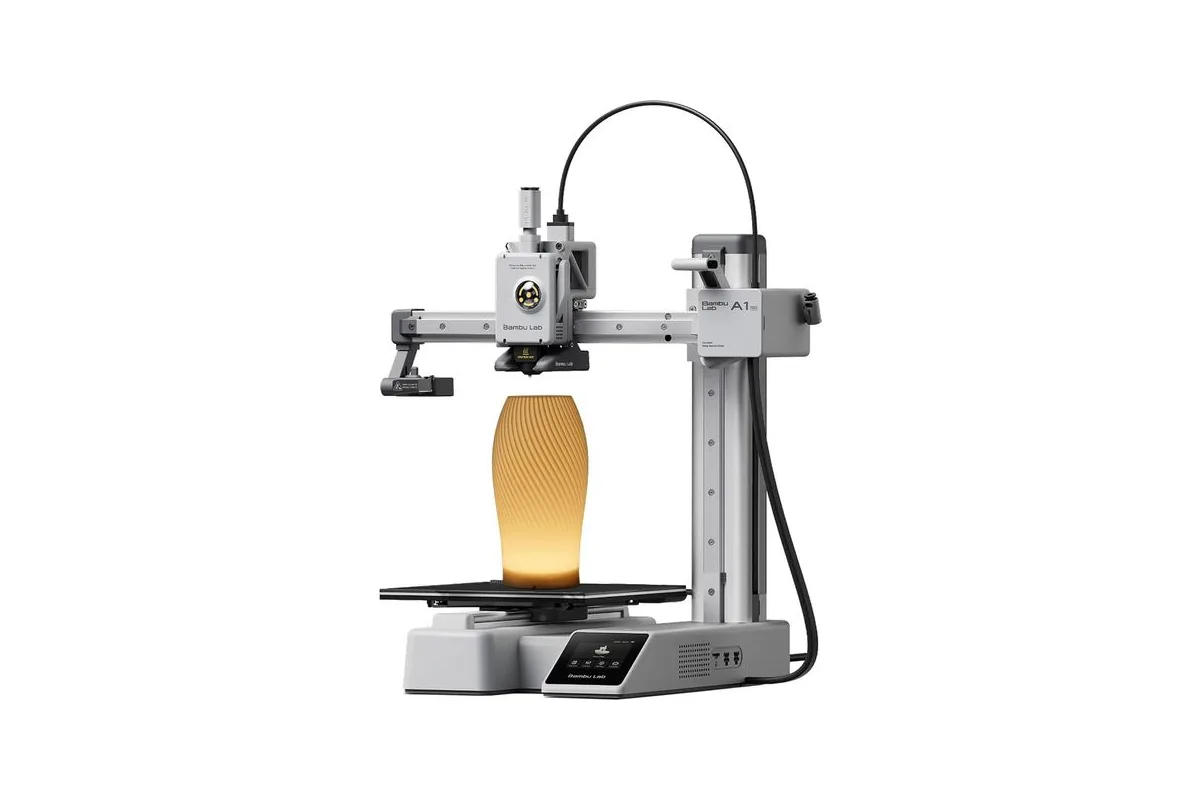
Rarely, but they run hot for hours, so treat them like any heating appliance. The only 3D printer recall in the US Consumer Product Safety Commission’s database is the 2024 Bambu Lab A1 recall: about 12,800 units whose heatbed cable could be damaged and spark, after 19 reports of damaged cables and no injuries. Printers made since then use a redesigned part. Bambu’s own manual says not to leave a printer running unsupervised. Keep a smoke alarm in the room and the printer away from curtains and paper.
Can kids use a 3D printer safely?
With supervision, yes. The nozzle runs at about 190 to 240 °C for PLA and the bed at about 60 °C, so keep small children away from open printers while they run and cool down. An enclosed printer adds a door. Print PLA, keep the printer out of the child’s bedroom, and keep children from sitting next to it during a print. Makers don’t publish a minimum age.
Are resin printers safe?
They need more care than filament printers. Liquid resin is a skin sensitizer: Formlabs says repeated skin contact can cause an allergy over time, and recommends nitrile gloves, not latex, and washing skin with soap and water, not alcohol. Resin printers also release VOCs from uncured resin, even when idle, so they belong in a ventilated space away from living areas. Isopropyl alcohol used for washing is flammable. See resin vs filament 3D printers.
Questions people ask
Is it safe to 3D print in a bedroom?
It’s best not to. Emissions linger after printing, and UL recommends keeping printers out of rooms where people spend a lot of time. A garage, workshop or spare room with a window is better.
Is PLA safe to print indoors?
PLA gives off the fewest emissions of the common filaments, and it’s the safest choice indoors, in a ventilated room.
Do I need an air purifier for a 3D printer?
It helps. A HEPA purifier removes particles, and activated carbon helps with VOCs. Ventilation to the outside does more.
Is it safe to leave a 3D printer running overnight?
Makers advise against leaving a printer unsupervised. If you do run long prints, use a camera and AI failure detection, keep a smoke alarm nearby, and keep the printer away from flammable materials.
Where should I put a 3D printer in my house?
In a well-ventilated room you don’t sleep in, away from HVAC return vents and high-traffic areas, on a stable surface, with space around it for airflow.
Sources
- UL Chemical Insights: 10 ways to promote healthy indoor air quality while using a 3D printer, chemicalinsights.ul.org
- UL Chemical Insights: 3D printing emissions and its impact on human health, chemicalinsights.ul.org
- UL: comprehensive emissions data for material extrusion 3D printing, ul.org
- UL Chemical Insights: 3D printing toxicity report, ul.org
- EPA: researchers continue to study the emissions of 3D printers, epa.gov
- NIOSH: Approaches to Safe 3D Printing, cdc.gov
- CPSC: Bambu Lab recalls A1 3D printers, cpsc.gov
- Formlabs: resin safety FAQ, formlabs.com
Keep exploring

How to
Hardened steel vs brass nozzles, and what nozzle size to use
Brass, or the stainless steel Bambu ships on the A1, is fine for PLA, PETG, ABS, ASA and TPU. Carbon fiber, glass fiber, glow-in-the-dark and sparkle filaments need hardened steel. Use a 0.4 mm nozzle for most prints, 0.6 mm for carbon fiber and big parts, and 0.2 mm for miniatures.
Read story
How to
Can you 3D scan with an iPhone? Yes, but not to tight tolerances
Yes. Any current iPhone can 3D scan objects from photos (photogrammetry), and KIRI Engine's free tier exports STL for printing. Only the iPhone 18 Pro and 18 Pro Max have LiDAR in Apple's current lineup. For parts that must fit, a $359 scanner is about ten times tighter.
Read story