Printers in this guide
How do you dispose of 3D printer resin safely?
Cure it solid, then throw it out; never pour it down a drain. Every resin safety data sheet (SDS) we read classifies liquid resin as a skin sensitizer and flags an aquatic hazard in the resin or one of its ingredients. Once cured hard under UV light or sunlight, it’s a solid plastic: Formlabs, which makes professional resin printers, says to “dispose of the fully cured resin and container as household waste,” and Phrozen says to “cure it and treat it as general plastic garbage.”
Used alcohol and wash water are different. They carry dissolved resin, and Elegoo says filtering or curing them doesn’t make them safe to drain, so they go to household hazardous waste collection, never down a sink, toilet or storm drain.
This page quotes makers’ instructions, safety data sheets and federal agencies. It isn’t medical advice: for first aid, follow the SDS for your resin and a medical professional.
What to do with each kind of resin waste
| Waste | What to do | Who says so |
|---|---|---|
| Failed prints, supports, rafts | Cure fully under UV or sunlight, then household trash | Formlabs; Phrozen |
| Paper towels and gloves with resin on them | “Expose them to sunlight or UV light to cure the liquid resin and then dispose of them with household waste” | Formlabs |
| Small amounts of leftover liquid resin | Pour into a labeled, clear container and “leave the container exposed to sunlight to cure for 1–10 days,” then trash the cured block and the container | Formlabs |
| Used resin you want to keep | Store in a closed, opaque bottle; don’t mix it with new resin | Phrozen |
| Unused liquid resin in bulk | Don’t put it in household trash; hand it to a licensed waste handler or household hazardous waste collection | Siraya Tech Fast SDS; EPA |
| Dirty isopropyl alcohol | Never down a drain; settle and reuse it, then take it to hazardous waste collection | Formlabs; Elegoo; Anycubic |
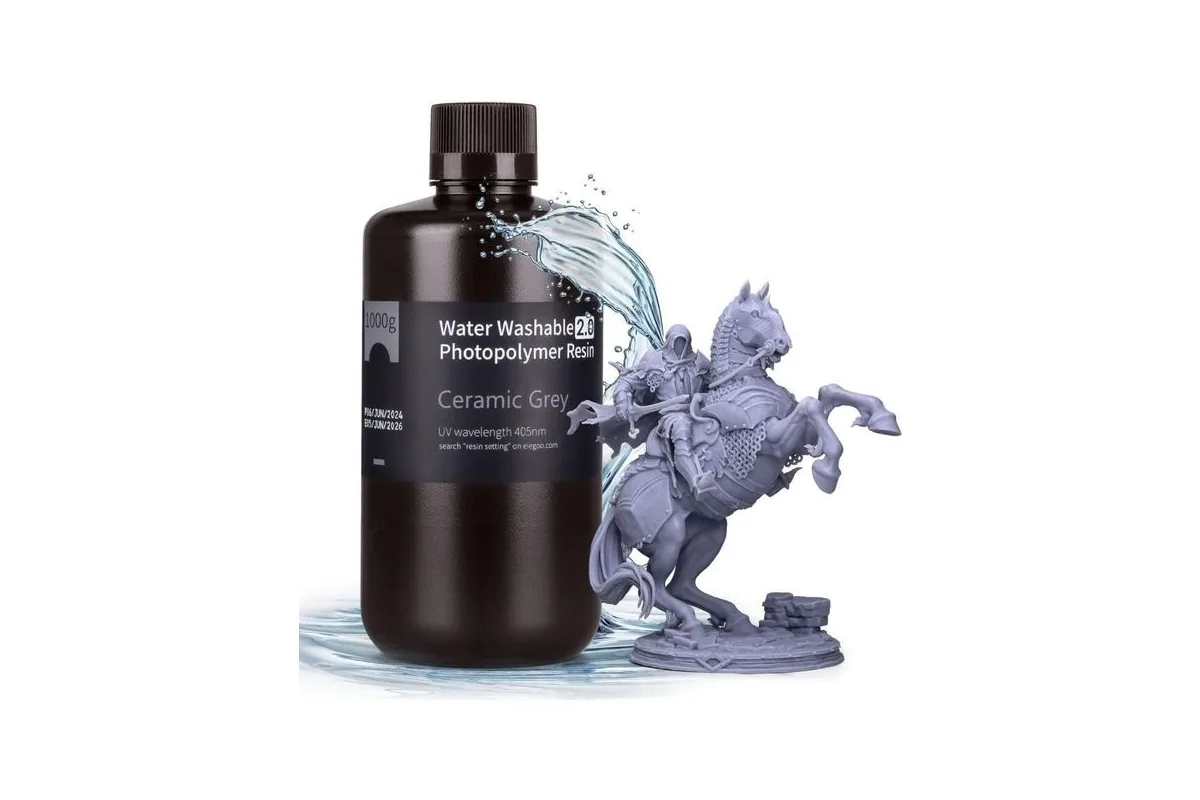
| Water from water-washable resin | Collect it; never down a drain, even after filtering or curing | Elegoo |
Why the split between cured and liquid: Elegoo says photopolymer resin “requires exposure to UV light of a suitable wavelength to cure … it does not cure on its own through mixing or standing.” The hazard classes on an SDS describe the liquid. Our read: curing turns a liquid sensitizer and aquatic hazard into an inert plastic solid, which is why makers treat cured and uncured resin so differently.
What do resin safety data sheets say?
| Resin (SDS) | Hazard statements |
|---|---|
| Elegoo Standard (EU SDS, 2024) | H315 causes skin irritation; H317 may cause an allergic skin reaction; H412 harmful to aquatic life with long-lasting effects |
| Elegoo Water Washable (EU SDS, 2022) | H318 causes serious eye damage; H315; H317 |
| Elegoo product safety page (May 2026) | Skin irritation, allergic skin reaction, serious eye irritation, “toxic to aquatic life with long lasting effects” |
| Siraya Tech Fast (EU SDS v4.0, 2025) | H302 harmful if swallowed; H317; H318; H319; H373 may cause damage to organs through prolonged or repeated exposure |
H317, the skin-sensitizer warning, is on every resin SDS we read. The aquatic class varies by product (H411 or H412), and Elegoo’s 2022 water-washable SDS carries an eye-damage class (H318) that its 2024 standard resin SDS doesn’t, so water-washable doesn’t mean milder.
Can you pour resin down the drain?
No, and that includes used alcohol and water from water-washable resin.
- Formlabs: “Never pour solvent that contains dissolved resin into drains or dispose of it with household waste.”
- Elegoo: “Uncured resin and cleaning solutions containing resin must not be poured directly into drains or released into the environment.”
- Elegoo’s SDSs: “Do not allow product to reach sewage system or any water sourse [sic].”
- Siraya’s Fast SDS: “Do not empty unused product in drainage systems. The product must not be disposed of with municipal waste.”
- Elegoo, on water-washable resin: “Filtering or curing the waste liquid does not mean that it can be discharged directly into the sewage system.”
Where do you take used IPA and liquid resin?
To household hazardous waste (HHW) collection. The EPA says improper disposal of household hazardous waste includes “pouring them down the drain, on the ground, into storm sewers, or in some cases putting them out with the regular trash,” and that “many communities have collection programs for HHW.” It suggests searching “household hazardous waste” with your zip code, or contacting your local environmental, health or solid waste agency.
Programs differ by area, so check with yours. Formlabs suggests telling the waste service the solvent contains “small amounts of methacrylated monomers, oligomers, and trace photoinitiator,” and notes that disposal “methods of used solvent vary by location.” Until then, keep it in a sealed, labeled container away from heat and flames.
Do you need isopropyl alcohol for resin printing?
For most resins, yes, or a substitute the resin maker names. Standard and ABS-like resins are washed in alcohol to remove uncured resin before curing. Elegoo says its standard resin “is generally cleaned using Isopropyl Alcohol (IPA) or Ethyl Alcohol at a concentration specified by the resin manufacturer.”
You can skip it two ways:
- Water-washable resin rinses in water. The wash water still has to be collected (see is water-washable resin any good?).
- Ethanol in place of IPA. Elegoo names it, and Siraya Tech treats 95% ethanol as equal to IPA.
What concentration of IPA do you need?
90% or stronger; makers prefer 95% and up.
| Maker | What it says |
|---|---|
| Formlabs | “Most Formlabs resins can be washed in IPA with a concentration of 90% or higher”; biocompatible resins need 96% or higher |
| Anycubic | “Use alcohol with concentration exceeding 95%” if parts come out white |
| Siraya Tech | 95% ethanol or IPA preferred |
| Elegoo | The concentration “specified by the resin manufacturer” |
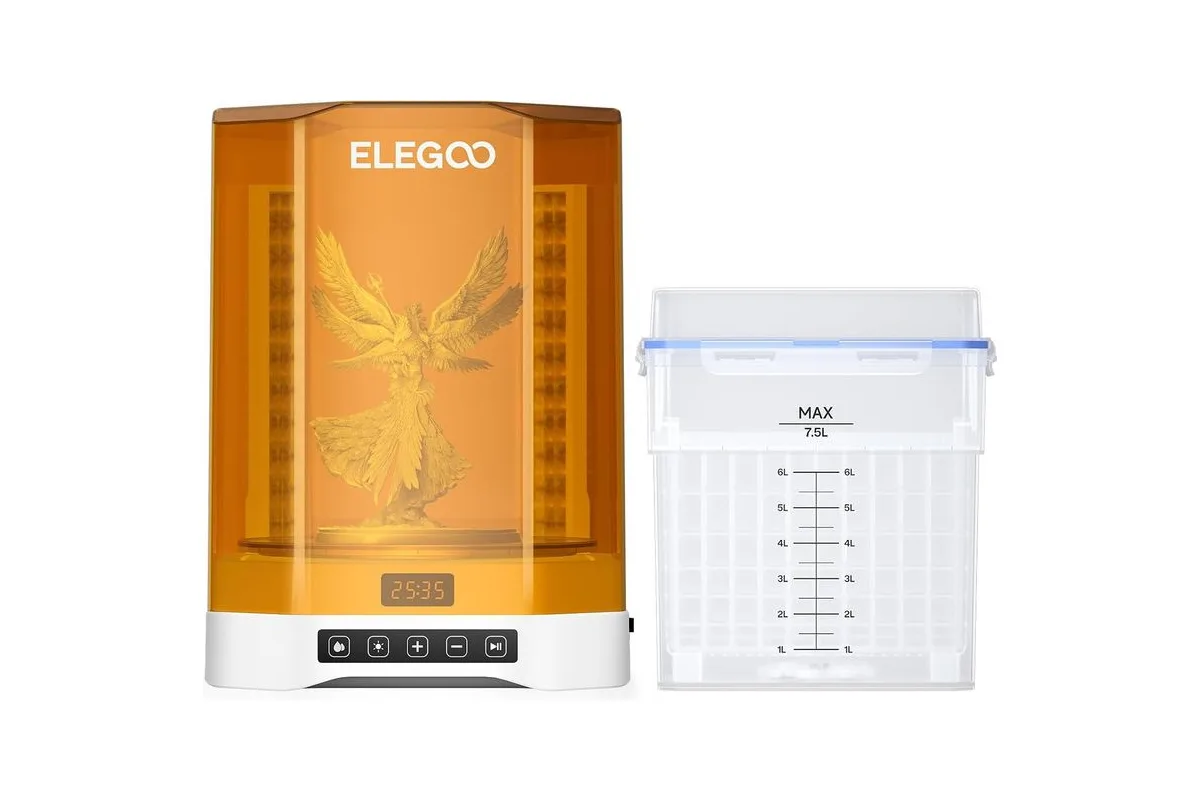
99% IPA from Uline was $120–$140 for a carton of four 1-gallon bottles in November 2026, about $30–$35 a gallon. A wash station’s tank holds a lot: filling Elegoo’s 7.5-liter Mercury Plus V3.0 takes about two gallons.
What can you use instead of isopropyl alcohol?
- Ethanol: named by Elegoo and Siraya Tech.
- Makers’ resin cleaners: Elegoo’s Photopolymer Resin Detergent is “non-flammable” with “a high flash point of 82 degrees” ($64.99 for 5 kg; out of stock on November 28). Phrozen’s Wash: Resin Cleaner was $41, also out of stock.
- TPM (tripropylene glycol monomethyl ether): a solvent Formlabs uses alongside IPA; the same no-drain rule applies.
- Methanol: Siraya lists it as an alternative “but make sure it does not contain acetone.” Methanol is toxic, and we wouldn’t use it at home.
- Not acetone or degreasers. Siraya’s cleaning guide (which we saw only in a search result) warns against “any product that contains acetone or strong degreasers.” No maker we read recommends household cleaners like Simple Green.
Is isopropyl alcohol dangerous?
It’s highly flammable, and its vapor irritates. Sigma-Aldrich’s SDS classifies 2-propanol as a Category 2 flammable liquid (H225, “highly flammable liquid and vapor”) with a flash point of 12 °C (53.6 °F), and adds H319 (“causes serious eye irritation”) and H336 (“may cause drowsiness or dizziness”). Its vapor can ignite in air at 2% to 13.4% by volume. Honeywell’s SDS gives the same hazard statements and flash point.
NIOSH and OSHA set the workplace exposure limit at 400 ppm averaged over a shift (NIOSH adds a 500 ppm short-term limit). Formlabs calls IPA a “highly-volatile, flammable” liquid and says to keep small quantities in labeled, sealed containers away from ignition sources, in a well-ventilated area.
In practice: keep the lid on your wash tank or jar, store alcohol away from heaters, pilot lights and sparks, and don’t let it sit open in a closed room.
Can you reuse isopropyl alcohol?
Yes, for a while. Anycubic gives the routine: let the dirty solvent “stay still for over 10 hours so the residue could be precipitated and settled,” pour the clear top layer into a sealed container, then “expose the residue in the sunlight” so “the cured resin can be handled as general solid waste.” It recommends replacing the solvent after about 30 models. Formlabs replaces IPA when resin reaches 10–12% of it, measured with a hydrometer.
Elegoo adds a warning: filtering or curing used liquid “does not mean that it can be discharged directly into the sewage system.” Reused alcohol eventually goes to hazardous waste collection.
What protective gear do you need for resin?
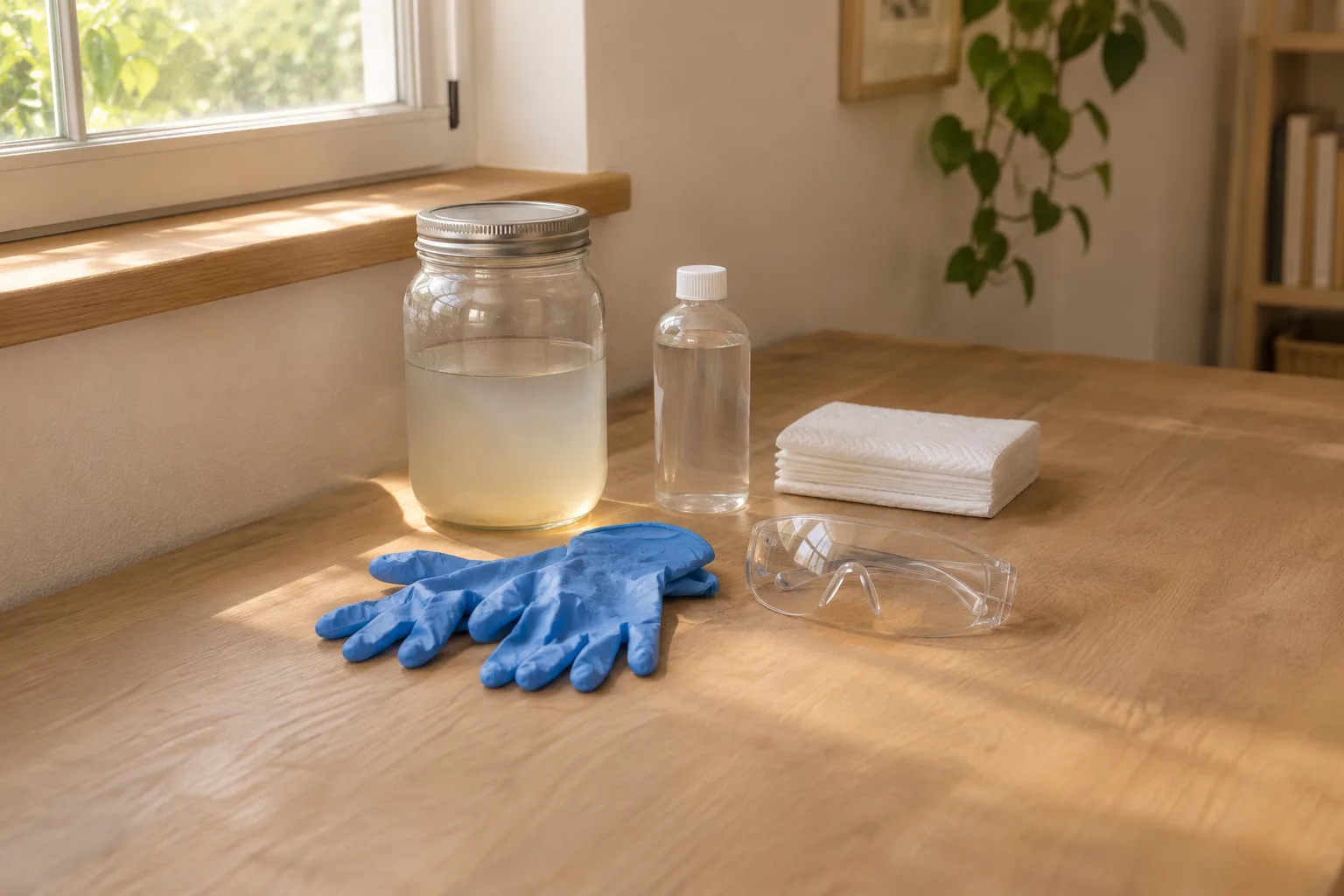
- Nitrile gloves. Formlabs: “Wear gloves when handling liquid resin, resin-coated surfaces, or solvent,” and new, clean nitrile gloves when pouring waste resin. Anycubic’s store pages (seen in search results) say water-washing “does not make the resin safe to handle.”
- Eye protection. Elegoo says to wear protective gloves and safety goggles, and its safety page adds “eye protection/face protection.”
- Ventilation. Elegoo: “Maintain adequate ventilation in the work area,” and use resin “in a well-ventilated environment away from direct sunlight.” Phrozen says to “wear gloves and masks when using resins.”
- If resin gets on your skin, Elegoo’s safety page says: “IF ON SKIN: Wash with plenty of soap and water.” Follow your resin’s SDS for anything more.
For where a printer should live and how much ventilation it needs, see are 3D printers safe? and resin vs filament 3D printers.
Questions people ask
Can you throw cured resin in the trash?
Yes. Formlabs says to “discard cleaned parts and cured (hardened) resin as household waste,” and Phrozen says to treat cured resin “as general plastic garbage.” Make sure it’s fully hard, with no sticky surface.
How long does resin take to cure in the sun?
Formlabs says to leave waste resin in a clear container in sunlight “for 1–10 days.” A 405 nm UV lamp works faster and doesn’t depend on the weather.
Can you evaporate used IPA?
We wouldn’t: its vapor is highly flammable and can cause drowsiness or dizziness (H225, H336). The makers’ routine is to let it settle, reuse the clear alcohol, and take the rest to hazardous waste collection.
Is 70% isopropyl alcohol OK for resin prints?
The makers we read ask for 90% or stronger: Formlabs 90%, Anycubic and Siraya 95%.
Is uncured resin toxic?
Its SDSs classify it as a skin irritant and sensitizer, an eye hazard and harmful to aquatic life, and Siraya’s Fast SDS adds “harmful if swallowed.” Fully cured resin is a solid plastic. See resin printing cost for the price of the gloves and alcohol this takes, and the best resin for miniatures for resin picks.
Sources
- Formlabs: disposing of resin, formlabs.com
- Formlabs: how can I dispose of resin and used solvent?, formlabs.com
- Formlabs: isopropyl alcohol (IPA), formlabs.com
- Elegoo Wiki: resin FAQ, wiki.elegoo.com
- Elegoo: product safety information, elegoo.com
- Elegoo Standard Photopolymer Resin safety data sheet (2024), download.elegoo.com
- Elegoo Water Washable Photopolymer Resin safety data sheet (2022), download.elegoo.com
- Siraya Tech Fast safety data sheet v4.0 (reseller-hosted copy), 3ddruckboss.de
- Siraya Tech Fast technical data sheet (cleaning), siraya.tech
- Phrozen US store product feed (resin handling and disposal notes), us.phrozen3d.com
- Anycubic Wiki: Wash & Cure 3 Plus (IPA reuse), wiki.anycubic.com
- Sigma-Aldrich 2-Propanol safety data sheet, uwaterloo.ca
- Honeywell isopropyl alcohol safety data sheet, web.faa.illinois.edu
- NIOSH Pocket Guide: isopropyl alcohol, cdc.gov
- EPA: household hazardous waste, epa.gov
- Uline 99% isopropyl alcohol, 1 gallon, uline.com
Keep exploring

How to
Hardened steel vs brass nozzles, and what nozzle size to use
Brass, or the stainless steel Bambu ships on the A1, is fine for PLA, PETG, ABS, ASA and TPU. Carbon fiber, glass fiber, glow-in-the-dark and sparkle filaments need hardened steel. Use a 0.4 mm nozzle for most prints, 0.6 mm for carbon fiber and big parts, and 0.2 mm for miniatures.
Read story
How to
Can you 3D scan with an iPhone? Yes, but not to tight tolerances
Yes. Any current iPhone can 3D scan objects from photos (photogrammetry), and KIRI Engine's free tier exports STL for printing. Only the iPhone 18 Pro and 18 Pro Max have LiDAR in Apple's current lineup. For parts that must fit, a $359 scanner is about ten times tighter.
Read story