Printers in this guide
What is a giclée print?
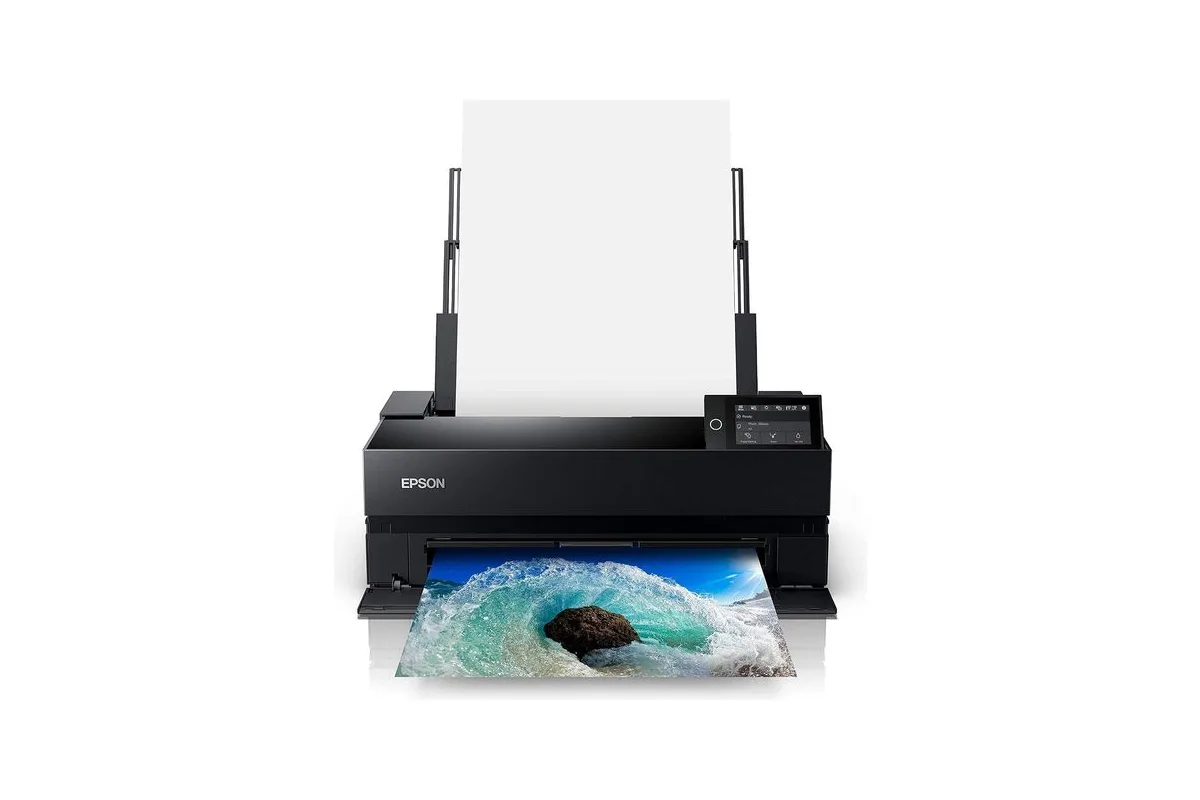
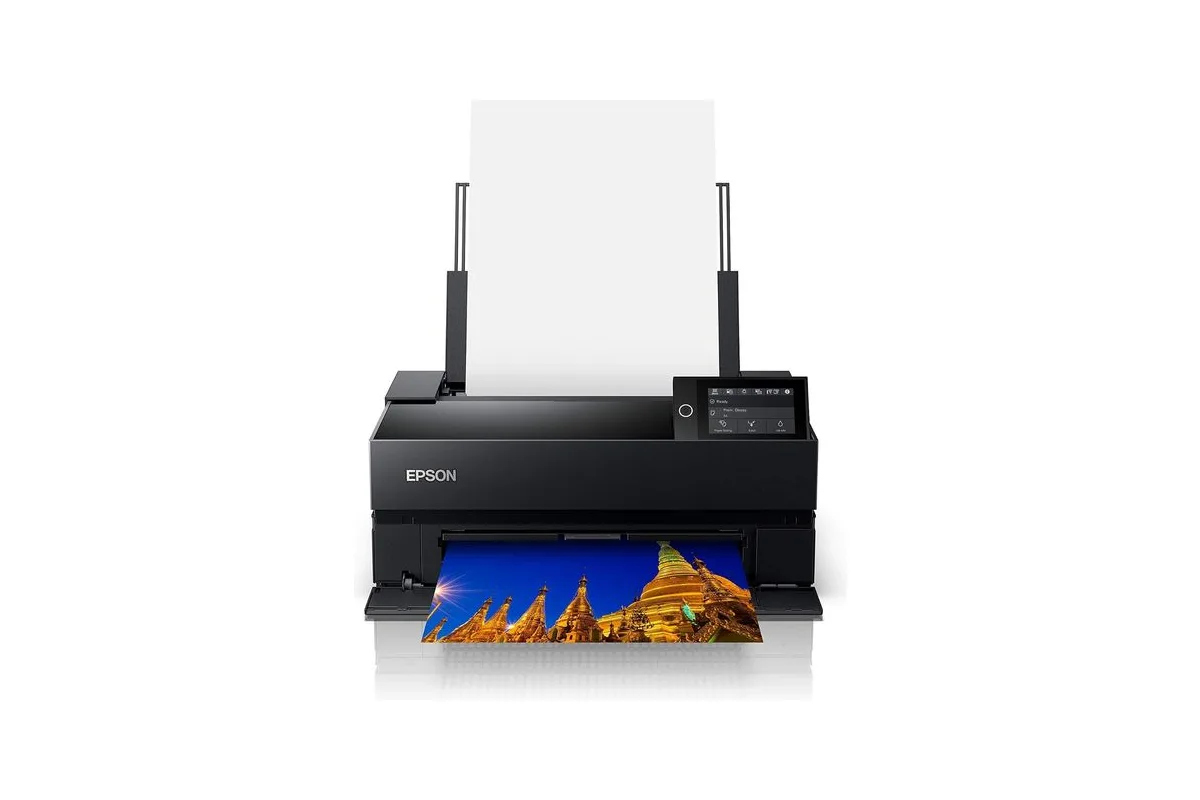
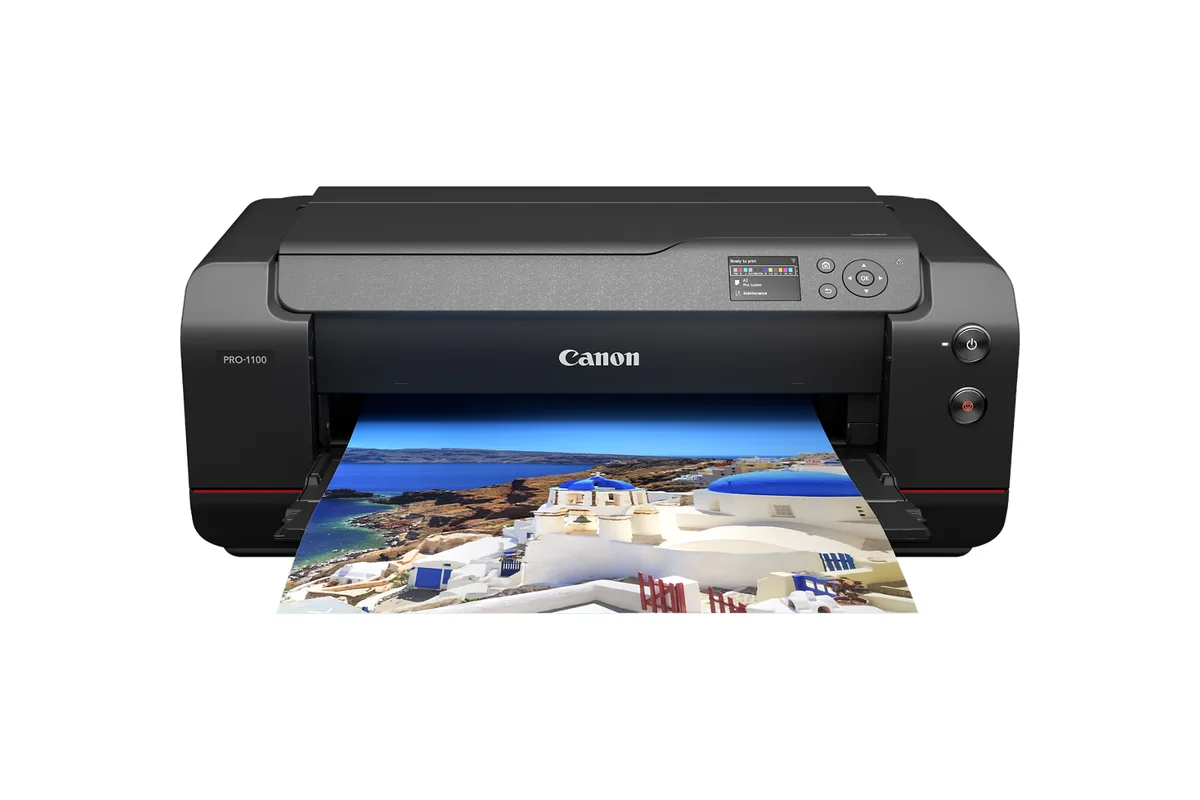
A giclée is a fine art inkjet print, usually made with pigment ink on archival cotton paper or canvas. The word is a marketing name, not a standard: no body certifies it, and it’s used for prints of every quality. A pigment print from an Epson P900 or Canon PRO-1100 on cotton rag is a giclée in every practical sense.
The word comes from the French gicleur, a jet or nozzle, and gicler, to squirt or spray. Printmaker Jack Duganne, who worked at Nash Editions, adopted it around 1990–1991 for fine art prints made on a modified Iris printer, an industrial proofing machine. He wanted a name without the commercial, digital ring of “Iris print”.
What makes a print a giclée?
Nothing official, but buyers expect four things:
- Pigment ink from the printer maker, not dye.
- Archival paper or canvas: acid- and lignin-free, usually 100% cotton, and ideally free of optical brighteners.
- High-resolution printing from a good file, on a pro photo printer.
- Often, a limited edition with numbered, signed prints and a certificate.
Don’t assume a print sold as a giclée uses pigment. Mpix says its giclée prints use a “7 dye-based inkjet system”. If longevity matters to you as a buyer, ask what ink and paper were used.
Can I sell giclée prints made on a home printer?
Yes. Nothing in the printer or paper terms we read restricts selling prints, and pro labs use the same ink families and papers you can buy. Buyers care about the materials, consistency and documentation, not whose building the printer sits in.
What makes a home print sellable:
- The printer maker’s own pigment inks. Permanence ratings hold only for the ink and paper that were tested.
- Archival paper. Hahnemühle Photo Rag, Photo Rag Baryta and Photo Rag Pearl state ISO 9706 permanence, and Photo Rag Baryta and Pearl have no optical brighteners. See our fine art paper guide.
- Color management. The paper maker’s profile, a calibrated monitor and the same media settings every time, so a reprint matches the first print. See ICC profiles and soft proofing.
- Honest labeling. Call a print archival only if it’s pigment on archival paper. Don’t call a dye print archival.
Hahnemühle runs a Certified Studio program that checks, trains and certifies print studios, including on color management and archivability. It’s for studios, not individuals, so a home printmaker can’t claim it, but it shows what the trade treats as good practice.
How long do giclée prints last?
Pigment prints on good paper are rated to last a century or more framed under glass, and far less displayed bare. The ratings are predictions from accelerated light-fade tests, not guarantees, and they depend on the exact ink, paper and display conditions.
Epson P700 and P900 (UltraChrome PRO10 pigment). Wilhelm Imaging Research’s 2023 ratings assume indoor display at its standard lighting:
| Color print on | Framed under glass | Under UV-filtering glass | Displayed bare | Dark storage |
|---|---|---|---|---|
| Epson Premium Luster | 135 years | more than 250 years | 76 years | more than 300 years |
| Epson Legacy Fibre | 143 years | more than 250 years | 69 years | more than 400 years |
| Epson Legacy Platine | 122 years | more than 250 years | 65 years | more than 400 years |
| Epson Exhibition Fibre | 122 years | 184 years | 77 years | more than 300 years |
| Epson UltraSmooth Fine Art | 109 years | more than 220 years | 62 years | more than 400 years |
| Epson Exhibition Canvas Satin | more than 220 years | more than 350 years | 112 years | more than 300 years |
Black-and-white prints made in Epson’s Advanced Black and White mode are rated at more than 400 years under glass and more than 250 years bare on the papers rated. Epson’s own pages round this to “up to 200 years for color and 400 years for black-and-white”, say the ratings depend on media and display conditions, and recommend glass or UV-absorbing acrylic.
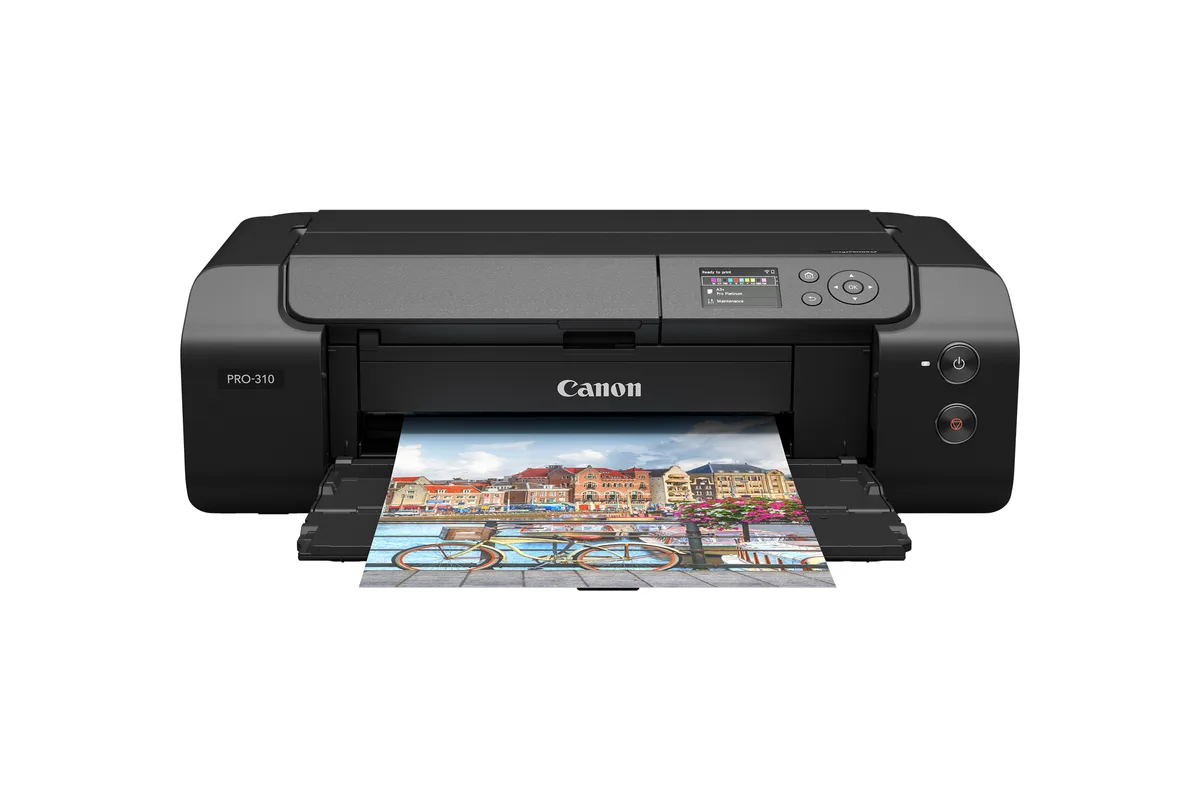
Canon PRO-310 and PRO-1100 (LUCIA PRO II pigment). Canon rates prints on its Photo Paper Pro Platinum at up to 200 years of light fastness. Canon Japan says that’s a predicted value from the JEITA CP-3901B indoor light test method, not a guarantee. We couldn’t find an independent permanence rating for LUCIA PRO II inks, so this figure stands on its own: it comes from a different test, on a different paper, and can’t be compared directly with the Epson table above.
Independent tests that measure exposure. Aardenburg Imaging & Archives runs independent light-fade tests that report how much light a print withstood rather than predicting years. We found none covering these exact printers and inks.
The ink set matters as much as the paper. In 2020 permanence ratings of Canson papers, switching ink sets changed predicted life two- to threefold on the same sheet. Our guide to dye vs pigment ink covers storage and display.
To make any print last longer, frame it under UV-filtering glass or acrylic, keep it out of direct sun, and let it dry for about a day before framing.
How do limited editions and certificates work?
Decide the edition size before you sell the first print, number and sign each one, and give every buyer a certificate of authenticity. Once you state an edition size, don’t print more of that image at that size and on that paper.
A certificate usually records:
- the artist, title and year
- the edition number and size, such as 7/25, plus any artist’s proofs
- the print size, paper and ink
- the date printed and your signature
Hahnemühle sells a Certificate of Authenticity and Hologram System: 25 A4 certificates on watermarked mould-made paper and 50 serialized holograms, one for the certificate and a matching one for the back of the print. It costs about $130–135 at US retailers, or roughly $5.20–5.40 a print. You can also design your own certificate on archival paper.
Some states regulate this. California, for example, requires dealers who sell limited-edition prints and photographs there to give buyers a certificate stating details such as the edition size. That’s general background, not legal advice; check the rules where you sell.
Is a giclée print worth more than a regular photo print?
It can be, because of the materials and the edition, not the word. A pigment print on cotton or baryta paper is rated to last far longer than a dye print, and a small numbered edition is scarcer than an open one. A print sold as “giclée” with dye ink and no edition has neither advantage. For what one costs to make, see the cost of a fine art print.
Questions people ask
What does giclée mean?
It comes from the French gicleur, a jet or nozzle, and gicler, to spray. In printing it means a fine art inkjet print, usually pigment ink on archival paper, though there’s no formal standard.
Is a giclée print just an inkjet print?
Yes, a high-quality one. The name was adopted around 1990–1991 for fine art prints made on an Iris inkjet printer, to avoid the commercial ring of “Iris print”. Buyers expect pigment ink and archival paper.
Can I sell giclée prints made on my home printer?
Yes. Use the printer maker’s pigment inks and an archival, ideally OBA-free cotton or baryta paper, manage color so reprints match, and number prints in a fixed edition with a certificate of authenticity.
How long do giclée prints last?
Wilhelm Imaging Research rates Epson P900 color prints on Premium Luster at 135 years framed under glass and 76 years displayed bare, and black-and-white prints at more than 400 years under glass. Canon rates PRO-1100 prints on its Pro Platinum paper at up to 200 years from its own accelerated test.
Do giclée prints fade?
Slowly, and much faster displayed bare or in direct sun. Epson P900 color prints on Premium Luster are rated at 76 years displayed bare and more than 250 years under UV-filtering glass.
What is a certificate of authenticity for a print?
A signed document that records the artwork, edition number and size, paper and ink. Hahnemühle sells certificates with matching serialized holograms for the certificate and the print, about $130–135 for 25.
Is a giclée print an original?
No. It’s a reproduction or a photographic print, made as a multiple. Its value comes from the edition size, the materials and the artist’s signature.
Sources
- Epson SureColor P900 product page, Epson
- imagePROGRAF PRO-1100 image durability (Canon Japan), canon.jp
- Hahnemühle Certified Studios, Hahnemühle
- Hahnemühle Photo Rag 308, Hahnemühle
- Epson SureColor P700 and P900 print permanence ratings (PDF), Wilhelm Imaging Research
- Aardenburg Imaging & Archives, aardenburg-imaging.com
- Mpix giclée prints, Mpix
- Giclée, en.wikipedia.org
Keep exploring
Buying guide
The best photo booth printers
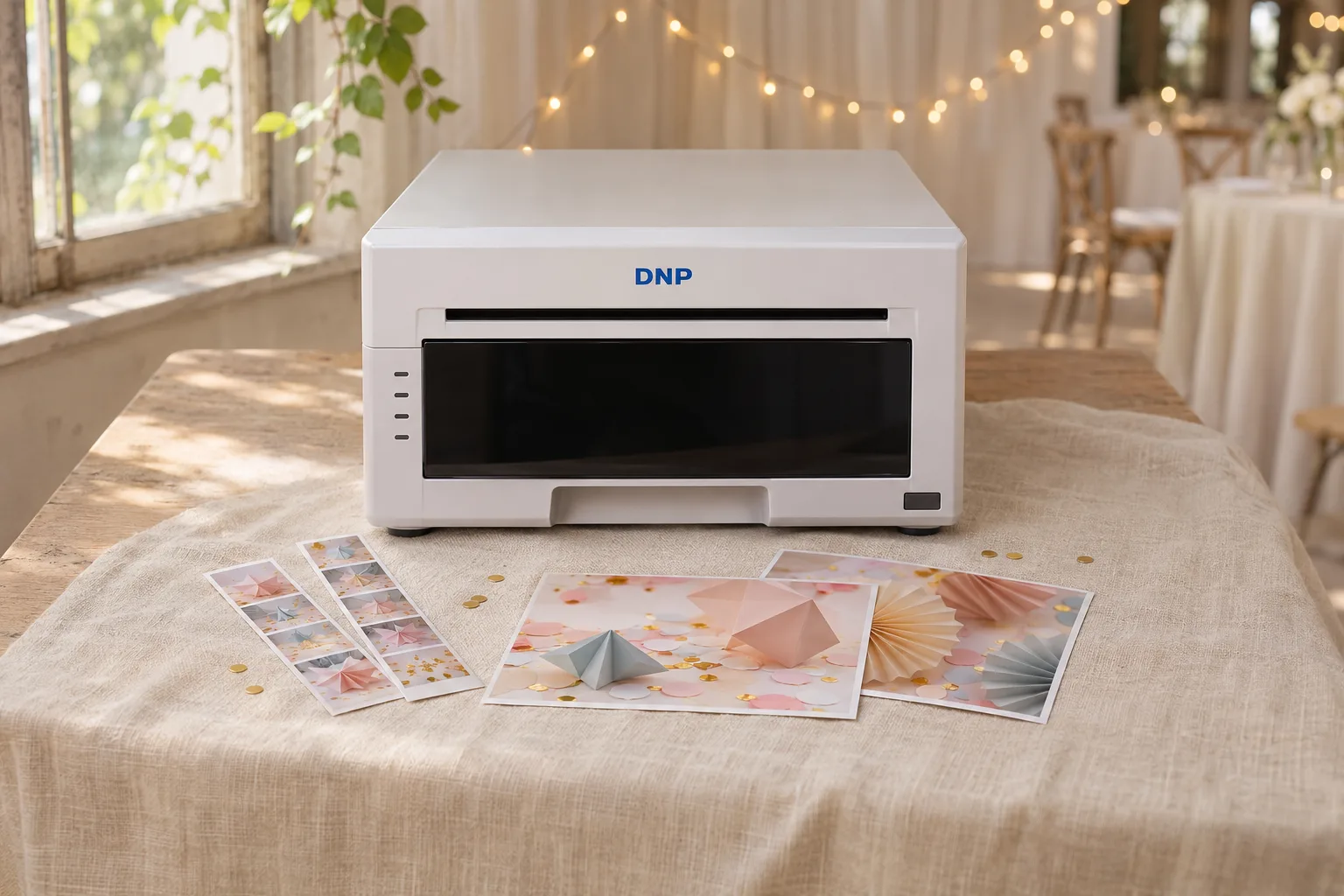
The DNP DS620A is the best photo booth printer: a 4x6 in about 8.3 seconds, 400 prints per roll, 2x6 strips at about 8¢ each in media and a 3-year exchange warranty, for $995 on Black Friday sale in November 2026. The HiTi P525L ($649) costs least to run, at about 11¢ per 4x6.
Read story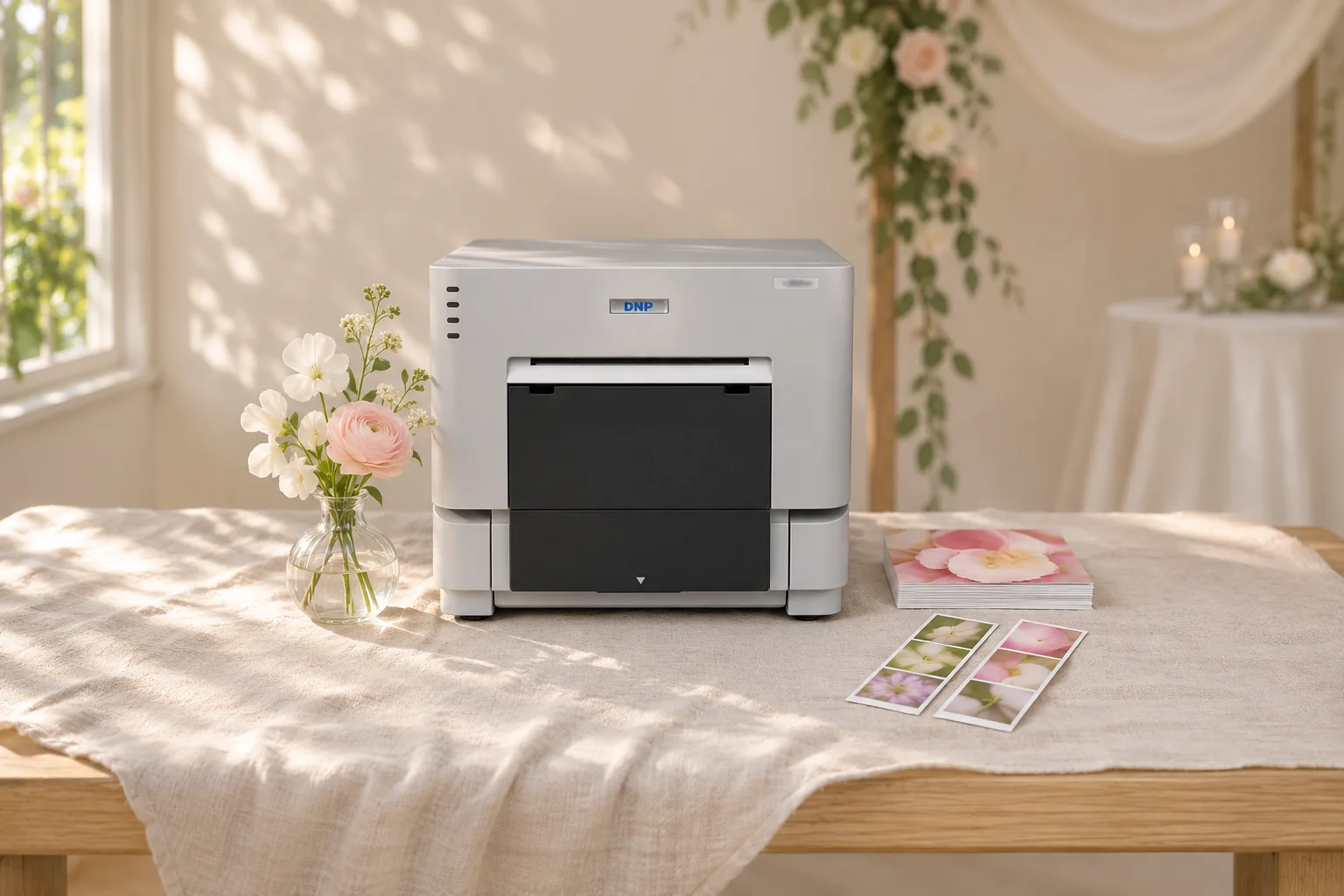
Review
DNP DS-RX1HS review
Not as a new buy: the DNP DS-RX1HS still runs cheaply, at 12.4 seconds per 4x6, 700 prints per roll and about 14¢ of media per 4x6, but new units were unavailable or backordered at $695 in November 2026, and DNP now lists the DP-RX2 ($795) with the same speed and roll size and a 3-year warranty in its place.
Read review