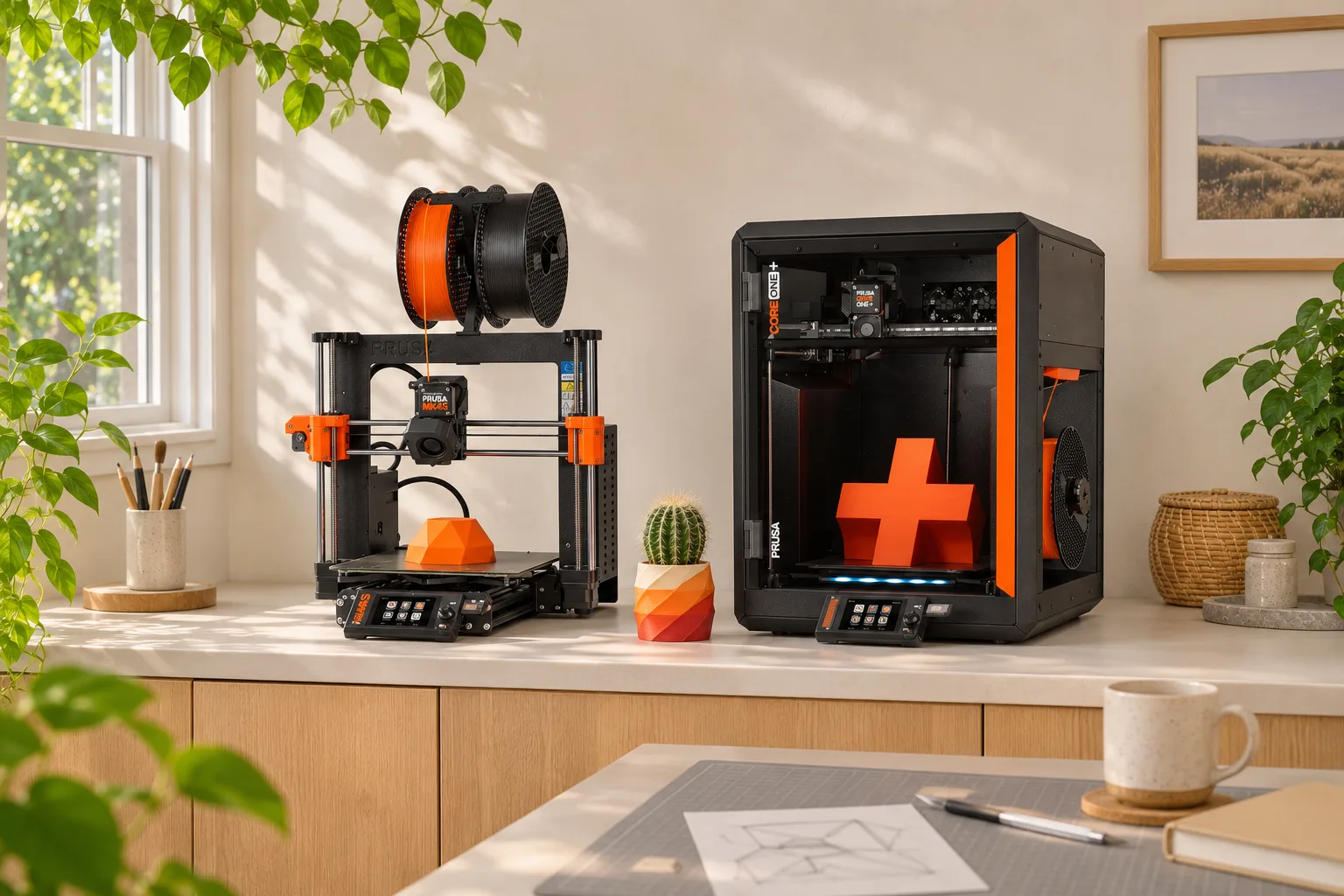
Printers in this guide
Which Prusa printer should I buy?
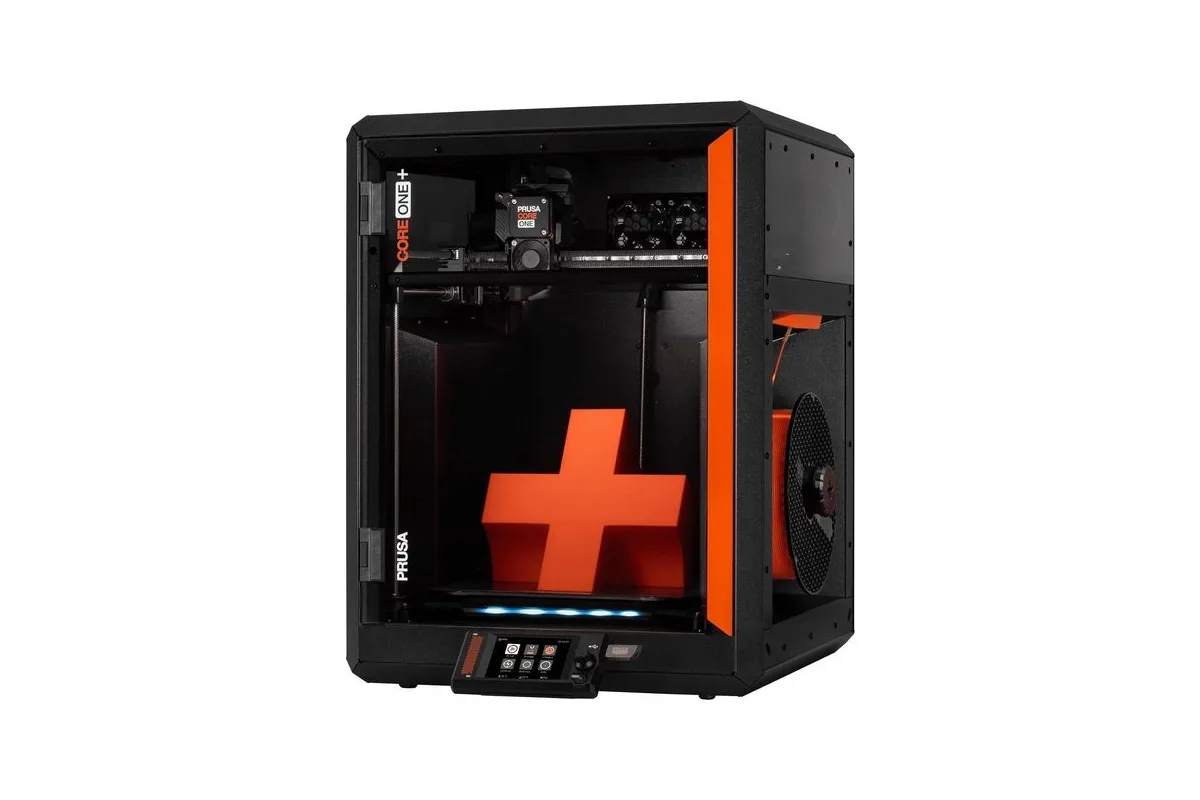
The CORE One+ (Gen 2), for most people. At $1,299 assembled or $999 as a kit at Prusa’s US store in November 2026, it’s Prusa’s enclosed CoreXY printer with a chamber that reaches 55 °C, so it handles PLA through ABS, ASA and nylon, and it’s the base for Prusa’s INDX tool changer. The rest of the lineup fits around it:
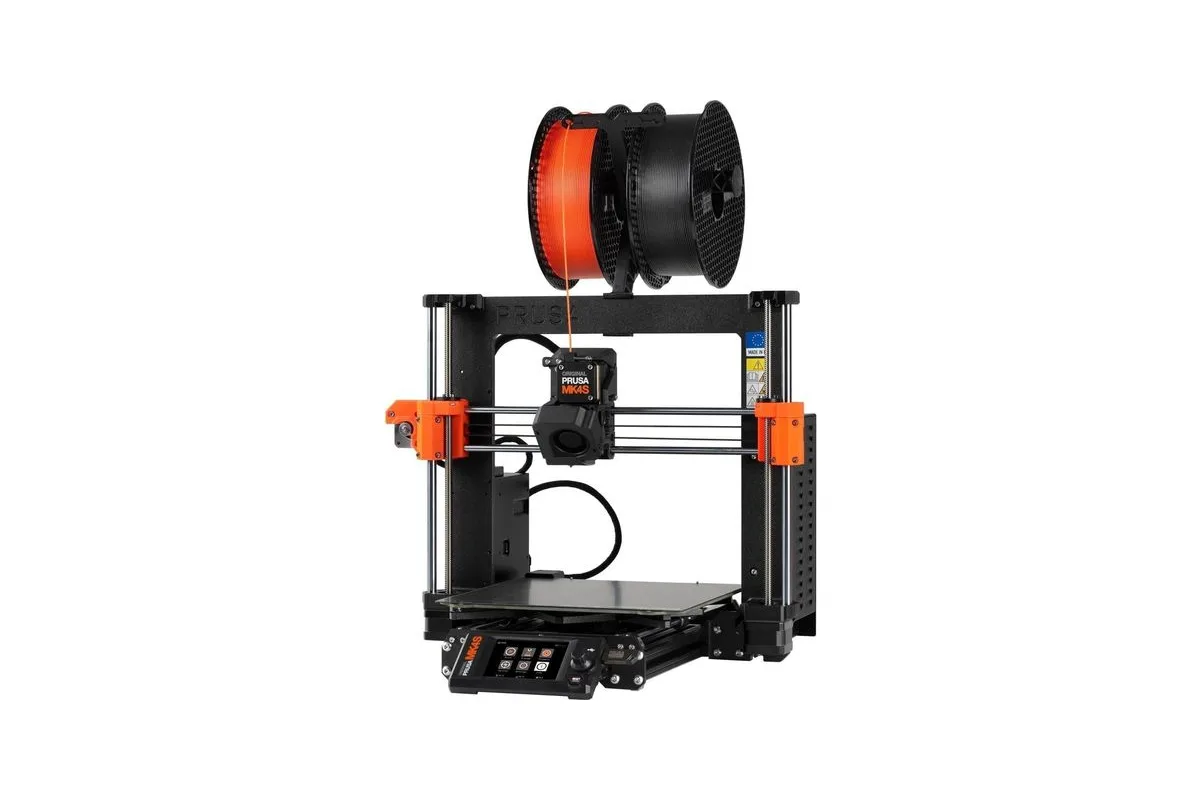
- Tighter budget: the MK4S kit ($709), an open bed slinger for PLA, PETG and TPU. Assembled it’s $999, only $300 less than the CORE One+.
- Bigger prints: the CORE One L+ ($1,999), with a 300 x 300 x 330 mm volume, a 60 °C chamber and a camera included.
- Multicolor with little waste: a CORE One+ with INDX (8-tool assembled printer $2,249, or a $749 4-tool kit added later). Expect to wait: new INDX orders ship from late December 2026 to February 2027.
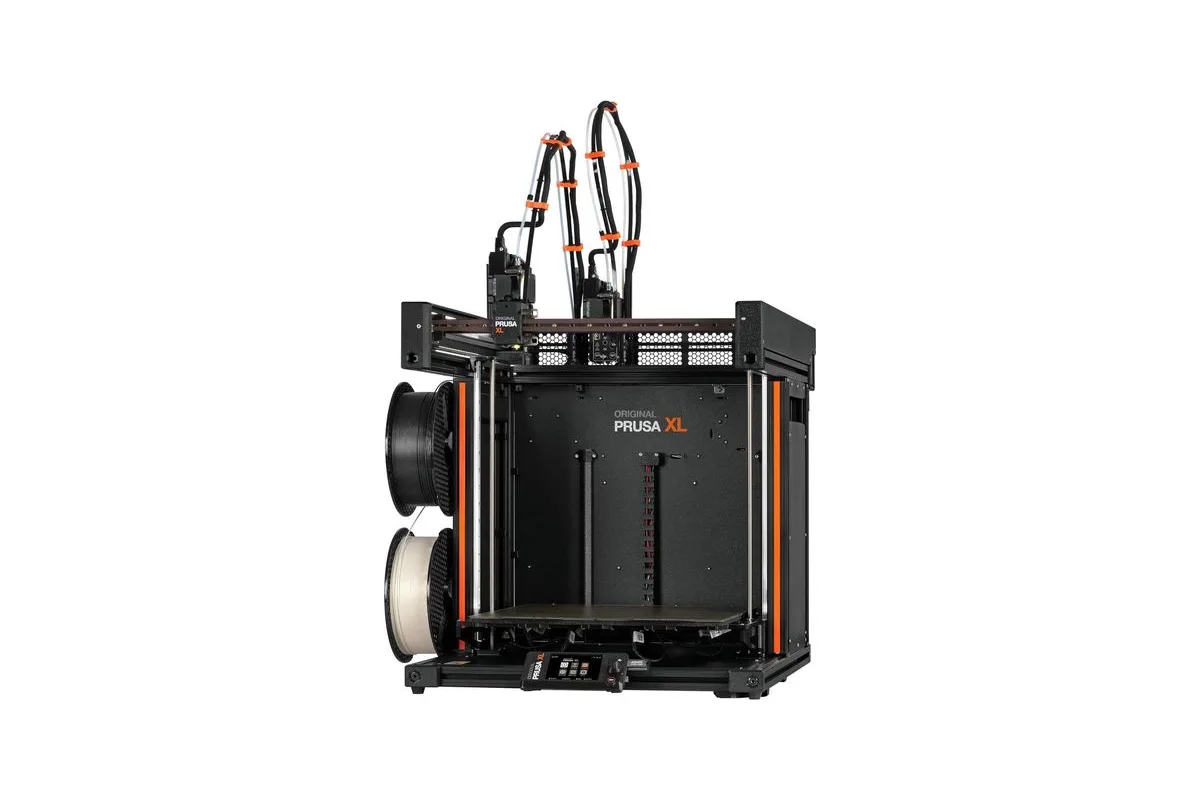
- Large multi-material parts: the XL+ ($2,299 with one toolhead, $2,980 with two, $3,899 with five), a 360 mm cube with up to five independent toolheads.
- Smallest and cheapest: the MINI+ ($549). It’s still sold but hasn’t been refreshed, and most new buyers should skip it (see below).
Every Prusa prints fully offline with no account, runs open-source firmware and PrusaSlicer, and is built to be repaired.
The Prusa lineup at a glance
| Model | Price (Prusa US, Nov 28, 2026) | Build volume | Liters (our estimate) | $ per liter (our estimate) | Frame | Chamber | Nozzle / bed | Multicolor | Camera |
|---|---|---|---|---|---|---|---|---|---|
| CORE One+ (Gen 2) | $1,299 assembled / $999 kit | 250 x 220 x 270 mm | 14.9 | $87 / $67 | Enclosed CoreXY | Heated to 55 °C | 290 / 120 °C | MMU3 (5) or INDX (4 or 8) | Optional |
| CORE One L+ | $1,999 ($2,169 with 400 °C HT Hotend) | 300 x 300 x 330 mm | 29.7 | $67 | Enclosed CoreXY | Active convection to 60 °C | 290 / 120 °C | INDX 8-Tool version | Included |
| MK4S | $999 assembled / $709 kit | 250 x 210 x 220 mm | 11.6 | $86 / $61 | Open bed slinger | None (enclosure $379) | 290 / 120 °C | MMU3 (5) | Optional |
| MINI+ | $549 semi-assembled | 180 x 180 x 180 mm | 5.8 | $94 | Open bed slinger | None | 280 / 100 °C | None | None |
| XL+ | $2,299 / $2,980 / $3,899 (1 / 2 / 5 toolheads) | 360 x 360 x 360 mm | 46.7 | $49 / $64 / $84 | CoreXY, open; enclosure optional | Up to 50 °C with the optional enclosure | 290 / 115 °C | 1–5 toolheads | None listed |
Source: Prusa’s US store and product pages, read November 28, 2026. Volumes and per-liter prices are our arithmetic. All were in stock except the XL+ (3–6 week lead times) and the CORE One+ kit (1–2 weeks).
The per-liter column shows why the XL+ and CORE One L+ look better on paper than their prices suggest, and why the MINI+ looks worse.
Prusa CORE One+ (Gen 2): the default choice
The CORE One+ is Prusa’s best all-rounder: enclosed, CoreXY, with load-cell first-layer calibration, input shaping, GT1.5 belts and an integrated nozzle wiper. Its chamber reaches 55 °C without a separate heater (Prusa’s pages call it both active and passive; the bed and fans do the work). It weighs 22.5 kg and has Ethernet and removable Wi-Fi. The 1080p camera, HEPA filtration and multicolor are add-ons, and the stock nozzle is brass.
Gen 2 has shipped since August 13, 2026, at the same price as before. Prusa’s store no longer sells the original CORE One or the first CORE One+; it sells upgrade kits for both. An Ultimate Edition bundle costs $1,699 assembled or $1,399 as a kit.
Full review: Prusa CORE One+. Against Bambu: CORE One+ vs Bambu Lab P2S.
Prusa CORE One L+: the big enclosed Prusa
For $700 more than the CORE One+, the L+ doubles the build volume to 300 x 300 x 330 mm, about 29.7 liters. Two fans under its heatbed drive what Prusa calls an active convection chamber, up to 60 °C. Prusa quotes travel speeds “reaching 500 mm/s.”
It comes with more in the box than the CORE One+: a 1080p night-vision camera (installing it is optional), a hardened nozzle alongside the installed high-flow one, and 1 kg of Prusament PLA. Prusa says it “never requires a network connection,” and a Critical Infrastructure edition has no Wi-Fi circuitry or cameras at all. It weighs 21.9 kg and measures 469 x 521 x 635 mm.
Prusa sells it with its new 400 °C HT Hotend fitted for $2,169, and as a CORE One L+ INDX 8-Tool for $2,989, with new orders shipping after January 18, 2027. The HT Hotend isn’t compatible with INDX.
Buy it if you print large functional parts, helmets or cosplay pieces in ABS, ASA or nylon. Per liter, it costs about the same as a CORE One+ kit and less than an assembled CORE One+ (our estimates).
Prusa MK4S: the budget workhorse
The MK4S is Prusa’s open bed slinger: 250 x 210 x 220 mm, 290 °C nozzle and 120 °C bed, the same Nextruder and load-cell calibration as the CORE One+, at 7 kg. Prusa lists PLA, PETG, TPU, PC, PP and more on the open printer; ABS, ASA and nylon need an enclosure, and Prusa’s costs $379. The optional MMU3 adds up to 5 materials.
As a $709 kit, it’s the cheapest full-size Prusa and a good way to learn a printer inside out. Assembled at $999, it’s harder to recommend: the CORE One+ is $300 more and enclosed, and an MK4S plus Prusa’s enclosure costs $1,378 (our estimate). Amazon had the assembled MK4S at $1,104.15 on November 28, more than Prusa’s own price.
Full review: Prusa MK4S. Side by side: MK4S vs CORE One+.
Is the Prusa MINI+ still worth buying?
Not new, for most people. The MINI+ is still sold, $549 semi-assembled and in stock on November 28, 2026, but it hasn’t had a hardware refresh, and both Prusa’s own lineup and Bambu’s undercut it:
| Prusa MINI+ | Prusa MK4S kit | Bambu Lab A1 mini | |
|---|---|---|---|
| Price (maker US store, Nov 28, 2026) | $549 | $709 | $199 ($299 with 4-color AMS lite) |
| Build volume | 180 x 180 x 180 mm | 250 x 210 x 220 mm | 180 x 180 x 180 mm |
| Liters / $ per liter (our estimate) | 5.8 L / $94 | 11.6 L / $61 | 5.8 L / $34 |
| Max bed | 100 °C | 120 °C | 80 °C |
| First-layer calibration | Inductive probe (SuperPINDA); Z offset set by you | Load cell, automatic | Automatic |
| Multicolor | None | MMU3 (5) | AMS lite (4) |
| Camera | None | Optional | Low-rate, up to 1080p |
| Connectivity | Ethernet, USB; Wi-Fi via an add-on ESP module | Ethernet, Wi-Fi, NFC, USB | Wi-Fi, microSD |
| US warranty | 1 year | 1 year | 2 years from Bambu’s store |
Sources: Prusa’s and Bambu’s US stores, read November 24 and 28, 2026. Volumes are our arithmetic.
For $160 more than a MINI+, the MK4S kit roughly doubles the build volume, and calibrates its own first layer. The MINI+ also uses a Bowden extruder, which makes flexible TPU harder to feed. For $350 less, the A1 mini prints the same size with automatic calibration and a camera, adds four colors for $100 more, and carries a 2-year warranty from Bambu’s store.
The MINI+ still makes sense if desk space is tight (it’s 4.5 kg and 380 x 330 x 380 mm without its spool holder and external power supply), you want a small printer that never touches a cloud, or you value Prusa’s openness: Prusa lists every MINI design file as released, including manufacturing data and the bill of materials, which it doesn’t for the MK4S. Its 100 °C bed and long materials list (PLA, PETG, ASA, ABS, PC, nylon and more) go further than the A1 mini’s 80 °C bed. It has a 1-year US warranty, a +1-year extension, and Prusa mentions 60-day returns. For Black Friday it gets free shipping only.
If you want a small Bambu instead, read our A1 mini review.
Prusa XL+: the large tool changer
The XL+ is a different kind of printer: a 360 x 360 x 360 mm CoreXY machine (about 46.7 liters) that holds up to five independent toolheads and swaps between them automatically. Because each toolhead keeps its own nozzle and filament, Prusa claims “zero purge waste” on multi-material jobs. The 2026 update added a permanently mounted tool-offset sensor that Prusa says calibrates “about 20 times faster,” and Prusa says the XL+ is 10–15% faster than the original XL.
| XL+ toolheads | Price (Prusa US, Nov 2026) | Lead time | Extra per toolhead (our estimate) |
|---|---|---|---|
| 1 | $2,299 | 5–6 weeks | — |
| 2 | $2,980 | 3–4 weeks | $681 for the second |
| 5 | $3,899 | 4–5 weeks | about $306 each for tools 3–5 |
The bed has 16 individually heated tiles, rated to 115 °C in Prusa’s spec table (a comparison card on the same page says 120 °C). The XL+ is open as sold. An optional enclosure holds about 50 °C, and Prusa says an external heater for 60 °C is coming, without a date. No camera is listed. It weighs about 30 kg and needs roughly 700 x 900 x 720 mm of space. A silicone-printing toolhead is due in Q4 2026, and Prusa offers 60-day returns.
The product card on this page links to Amazon’s listing for the older Prusa XL with two toolheads, at $3,799; Prusa’s own XL+ 2-tool is $2,980. See the best tool changer 3D printers and the best large 3D printers.
Prusa INDX: what multicolor costs
INDX, developed with Bondtech, turns a CORE One into a tool changer: 4 or 8 passive tools, each with its own nozzle, picked up by an induction-heated head. Prusa claims about 0.013 g of purge per tool change (“about one grain of rice”), about 12 seconds per change and no wipe tower. It also claims shared-nozzle systems can use 30–50% of a spool on complex multicolor prints. These are Prusa’s claims, not our measurements.
| INDX option | Price (Prusa US, Nov 2026) | Per tool (our estimate) | Ships |
|---|---|---|---|
| 4-tool kit for CORE One+ (Gen 2) | $749 | $187 | After Feb 2027 |
| 8-tool kit for CORE One+ (Gen 2) | $999 | $125 | After Feb 2027 |
| CORE One+ INDX 8-Tool, assembled | $2,249 | — | After Dec 21, 2026 |
| CORE One+ INDX 8-Tool, kit | $1,949 | — | After Feb 2027 |
| CORE One L+ INDX 8-Tool | $2,989 | — | After Jan 18, 2027 |
INDX trims the CORE One+ print area to 248 x 205 x 270 mm (298 x 275 x 330 mm on the L+). Its nozzles are rated for 10 kg of PETG-CF, 5 kg of PC-CF or 0.5 kg of Prusament Ultraglow, so it isn’t meant for long runs of abrasive filament. INDX orders are excluded from Prusa’s Black Friday free shipping. See is a multicolor 3D printer worth it?
What changed in Prusa’s lineup in 2026?
- January 16: the CORE One+ (2nd release) added an automatic top vent, an easier flex-loading point and a 2 kg spool holder.
- April: INDX orders opened.
- August 13: the CORE One+ (Gen 2), CORE One L+ and XL+ replaced the earlier versions at the same prices, and open orders were upgraded automatically.
- October 21: Prusa released its 400 °C HT Hotend, sold as an upgrade or fitted to a new CORE One L+.
- By late November: a CORE One L+ INDX 8-Tool was orderable at $2,989.
The MK4S and MINI+ didn’t change.
What do all Prusa printers have in common?
- Offline by design. No Prusa needs an account or the cloud to print. PrusaLink is built in, and Prusa Connect can now run locally on your own hardware with no cloud (firmware 6.4.0 or later). See Bambu Lab vs Prusa.
- Open, mostly. Firmware is open source and PrusaSlicer is free and open source. Prusa publishes printable parts and CAD under its own Open Community License, but since 2023 it has withheld some circuit-board manufacturing files to discourage clones.
- Built to repair. Prusa says nothing is glued and everything comes apart with a screwdriver, and it sells spare parts.
- Made by Prusa. Prusa builds its printers in its own factories in the Czech Republic and the US.
- Warranty. 1 year in the US (2 years for EU consumers), with paid extensions bought in the same cart. For Black Friday, the CORE One+, CORE One L+ and XL+ get a free extra year.
What is Prusa offering for Black Friday 2026?
Prusa doesn’t cut printer prices. It adds gifts, through November 30, 2026, 11:59 p.m. Pacific:
| Model | Black Friday offer (Prusa’s figures) |
|---|---|
| CORE One+ | Gifts “up to $450”: +1-year warranty (worth up to $154), OpenPrintTag upgrade, 1 kg PLA, four models, two Academy courses, $50 INDX voucher |
| CORE One L+ | Gifts “up to $550”: +1-year warranty (worth $214), OpenPrintTag upgrade, a drybox, 1 kg PETG, free shipping |
| XL+ | Gifts “up to $960”: +1-year warranty (worth $469), a textured sheet, 1–5 Prusament spools, $50 INDX voucher |
| MK4S | Free shipping, two Academy courses and four models |
| MINI+ | Free shipping |
For more on timing, see the best time to buy a 3D printer.
Which Prusa should you buy, by budget?
| Budget | Buy |
|---|---|
| About $550 | MINI+, only if space is tight. Otherwise stretch to the MK4S kit or look at a cheaper printer |
| About $700 | MK4S kit ($709) |
| About $1,000 | CORE One+ kit ($999) |
| About $1,300 | CORE One+ assembled ($1,299): our pick for most buyers |
| About $2,000 | CORE One L+ ($1,999) for size, or CORE One+ INDX 8-Tool ($2,249) for multicolor |
| $2,300 and up | XL+ (1 to 5 toolheads) for large multi-material parts |
If none of these fit your budget, Bambu’s printers do more for less money, with less openness: see the best 3D printers and the best Bambu Lab alternatives.
Questions people ask
What is the best Prusa printer?
The CORE One+ (Gen 2) for most people: enclosed, CoreXY, a 55 °C chamber and INDX-ready, for $1,299 assembled or $999 as a kit.
Is the Prusa MINI+ discontinued?
No. It’s still sold at $549 semi-assembled, but it hasn’t had a hardware refresh, and the $709 MK4S kit is a better buy for most people.
What’s the difference between the CORE One+ and CORE One L+?
The L+ has twice the build volume (300 x 300 x 330 mm), a hotter 60 °C convection chamber and an included camera, for $700 more.
Is the CORE One+ better than the MK4S?
For most buyers, yes. It’s enclosed and faster for $300 more assembled. The MK4S is cheaper as a kit and fine for PLA.
Does Prusa make a multicolor printer?
Yes, in three ways: the MMU3 add-on (up to 5 materials through one nozzle), the INDX tool changer for the CORE One family (4 or 8 tools), and the XL+ with up to five toolheads.
Are Prusa printers worth the money over Bambu Lab?
If you value open firmware, repairability and offline use, yes. If you want the most printer per dollar, Bambu is ahead: the enclosed P2S Combo was $649 in November 2026. See Bambu Lab vs Prusa.
Sources
- Prusa 3D printers (US store), prusa3d.com
- Prusa: XL+, CORE One L+ and CORE One+ (Gen 2) update, blog.prusa3d.com
- Prusa CORE One+ (Gen 2) product page, prusa3d.com
- Prusa CORE One L+ product page, prusa3d.com
- Prusa MK4S product page, prusa3d.com
- Prusa MINI+ semi-assembled product page, prusa3d.com
- Prusa XL+ single toolhead, prusa3d.com
- Prusa XL+ 2 toolheads, prusa3d.com
- Prusa XL+ 5 toolheads, prusa3d.com
- Prusa INDX 4-tool conversion kit, prusa3d.com
- Prusa INDX 8-tool conversion kit for CORE One+ (Gen 2), prusa3d.com
- Prusa CORE One+ (Gen 2) INDX 8-Tool, prusa3d.com
- Prusa CORE One L+ INDX 8-Tool, prusa3d.com
- Prusa: INDX orders now open, blog.prusa3d.com
- Prusa: HT Hotend is out, blog.prusa3d.com
- Prusa Black Friday 2026, blog.prusa3d.com
- Prusa Black Friday 2026 offers page, prusa3d.com
- Original Prusa Enclosure, prusa3d.com
- Prusa warranty, help.prusa3d.com
- Prusa Connect, prusa3d.com
- Prusa: open source at Prusa Research, prusa3d.com
- Prusa: company, prusa3d.com
- Bambu Lab A1 mini product page, us.store.bambulab.com
- Prusa XL on Amazon, amazon.com
Keep exploring

How to
Hardened steel vs brass nozzles, and what nozzle size to use
Brass, or the stainless steel Bambu ships on the A1, is fine for PLA, PETG, ABS, ASA and TPU. Carbon fiber, glass fiber, glow-in-the-dark and sparkle filaments need hardened steel. Use a 0.4 mm nozzle for most prints, 0.6 mm for carbon fiber and big parts, and 0.2 mm for miniatures.
Read story
How to
Can you 3D scan with an iPhone? Yes, but not to tight tolerances
Yes. Any current iPhone can 3D scan objects from photos (photogrammetry), and KIRI Engine's free tier exports STL for printing. Only the iPhone 18 Pro and 18 Pro Max have LiDAR in Apple's current lineup. For parts that must fit, a $359 scanner is about ten times tighter.
Read story