Printers in this guide
Can you use third-party filament in a Bambu Lab AMS?
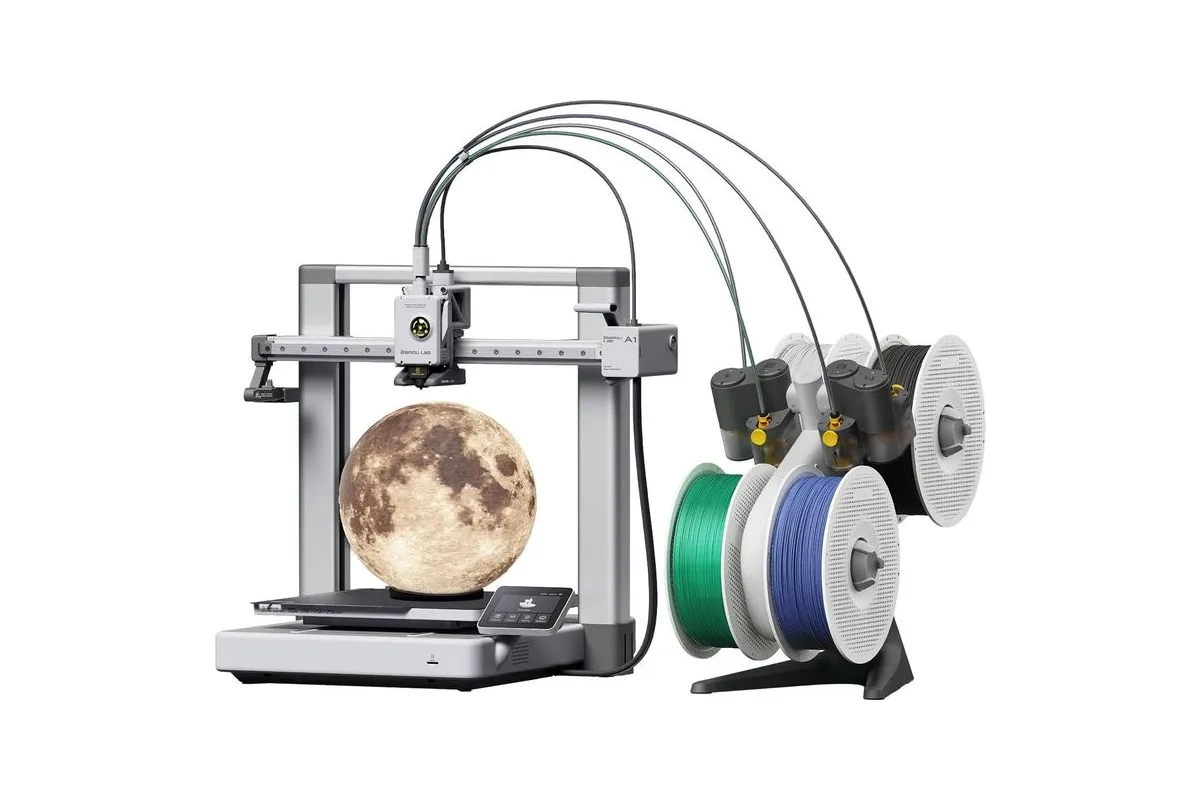
Yes, if the spool fits and the material is one the AMS can feed. The AMS, AMS 2 Pro and AMS HT take spools 50–68 mm wide and 197–202 mm across, which covers standard 1 kg spools from most brands. The AMS lite takes spools 40–68 mm wide on a 53–58 mm center hole. Bambu still recommends its own filament, “which has been thoroughly tested,” but nothing locks you to it.
Three things change with other brands. There’s no RFID tag, so you set the material and color for each slot yourself. Generic TPU won’t feed in the AMS, AMS lite or AMS 2 Pro. And cardboard spools need an adapter ring in every AMS except, arguably, the AMS lite.
AMS lite vs AMS 2 Pro vs AMS HT: what each one takes
From Bambu’s store pages and wiki, November 28, 2026.
| AMS lite | AMS 2 Pro | AMS HT | |
|---|---|---|---|
| Price | $159 (typical $199) | $229 (typical $299) | $119 (typical $139) |
| Spools | 4 | 4 | 1 (our reading of Bambu’s color count; no spec line) |
| Printers | A1 and A2 series, one per printer | X1, P1, P2S, H2D, H2C, X2D | X1, P1, P2S, H2D, H2C, X2D |
| Spool width | 40–68 mm | 50–68 mm | 50–68 mm |
| Spool size | 53–58 mm center hole | 197–202 mm across | 197–202 mm across |
| Dries filament | No | Up to 65 °C (only above 25 °C room temperature) | Up to 85 °C, held at 10–25 °C room temperature |
| Generic TPU | No | No | Through a bypass port only |
| Third-party carbon or glass fiber | No | No | Through the bypass port only |
| ABS, ASA, PC | No | Yes, with conditions | Yes |
| Bambu TPU for AMS (68D) | Yes | Yes, with conditions | Yes |
| Cardboard spools | Hub grip suits “paper spools,” Bambu says | Adapter ring strongly advised | Adapter ring strongly advised |
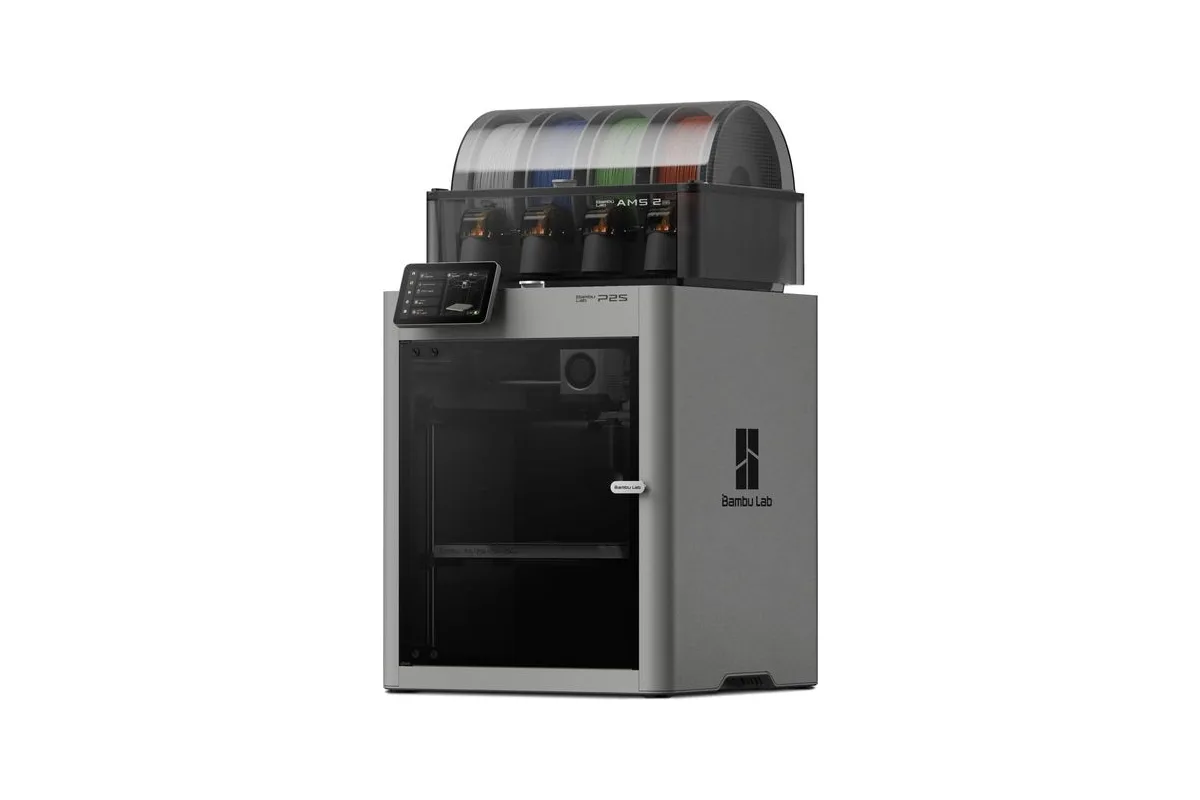
Unit limits: X1 and P1 printers take up to four AMS 2 Pro or AMS HT units in total; the P2S takes four of each; the H2D, H2C and X2D take four AMS 2 Pro and eight AMS HT, for up to 25 colors with the external spool. Neither the AMS 2 Pro nor the AMS HT dries filament on its own; both need the 6-pin cable to the printer, and the AMS HT always needs its own power cord for drying.
The original AMS follows the same spool limits as the AMS 2 Pro. It has an extra transmission gear the AMS lite lacks, so Bambu says PETG-CF and PLA Wood are compatible with the AMS “but not recommended for the AMS lite.”
How do you use third-party filament in an AMS?
- Check the spool. Measure the width and diameter against the table above. A spool outside those limits won’t fit.
- Fit an adapter ring if the spool is cardboard (see below).
- Set the slot by hand. Bambu spools carry RFID tags on both sides that load the material, color and settings. A spool without a tag gives the AMS nothing to read, so choose the material and color for that slot yourself. Some brands publish settings for Bambu printers; eSun offers “Bambu Lab Default Settings” on its site.
- Match backups by brand. For auto-refill, when one spool runs out and the AMS switches to another, Bambu recommends replacing Bambu filament with Bambu filament and non-Bambu with non-Bambu.
Bambu ties its remaining-filament estimate to the RFID tag, so don’t count on it with other brands.
Which third-party filaments should you keep out of the AMS?
Bambu’s material table rejects filament that is:
- Too soft: TPU 95A, 85A, 83A and 80A, and damp PVA or BVOH.
- Too brittle: “certain brands of PET-CF, PLA Wood, PA-CF/GF, PAHT-CF/GF.”
- Too hard and rough.
Bambu also says to avoid “third-party fiber reinforcement materials (PA-CF/GF, PET-CF/GF, PLA-CF/GF, etc.)” because they “may wear AMS PTFE tubes,” while its own PLA-CF, PETG-CF and PAHT-CF “are specially optimized.” Abrasive filaments “can eventually grind down the internal PTFE feed channels,” Bambu adds. That’s one of the few cases where Bambu filament earns its price; see is Bambu Lab filament worth it?
For flexible filament, Bambu’s TPU for AMS is a harder Shore 68D grade made to feed. Other TPU goes through the AMS HT’s bypass port at the rear of its top cover, where it can be dried but loses automatic feed and return, or through the printer’s external spool. See the best TPU filament.
Do cardboard filament spools work in an AMS?
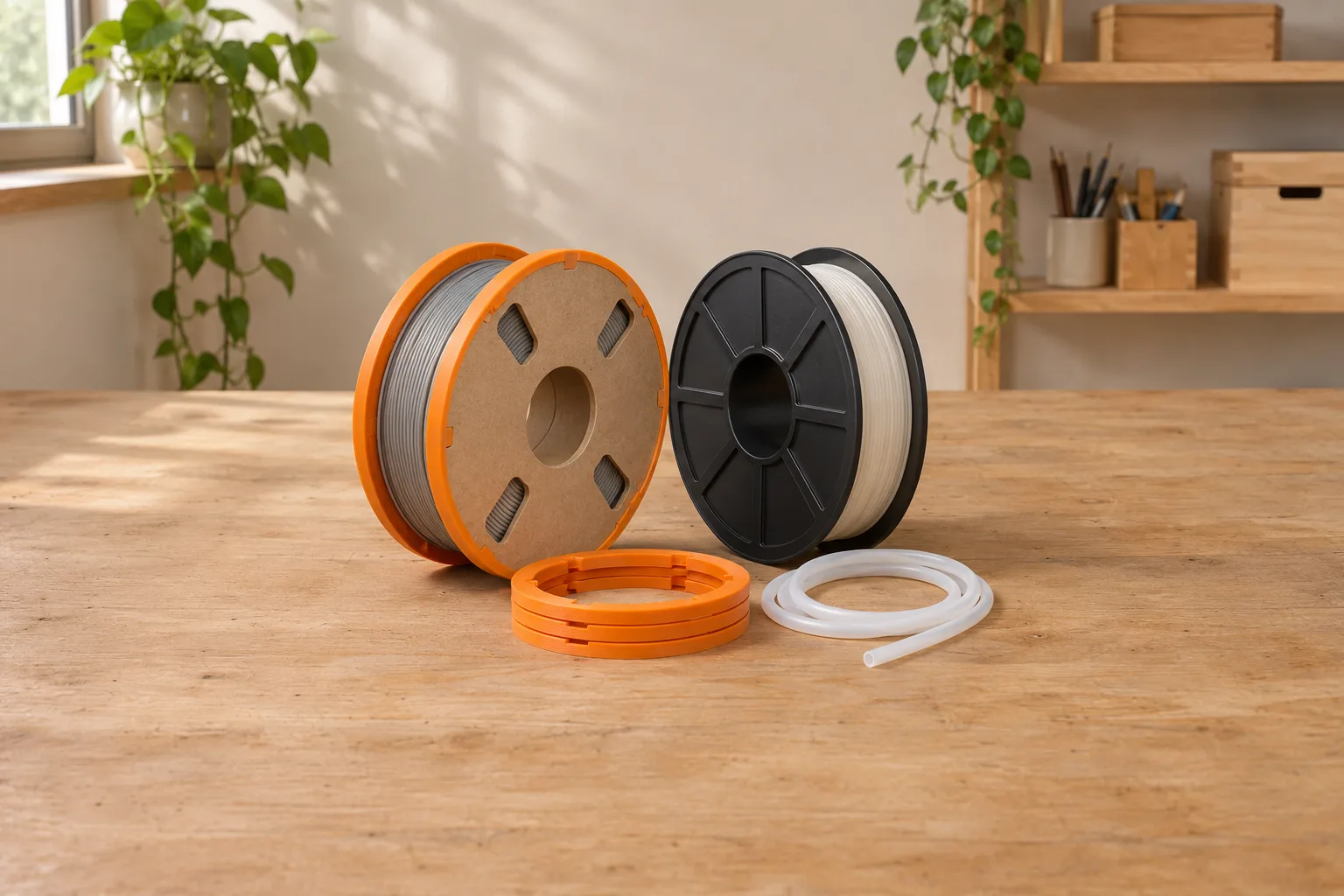
They work, but Bambu “strongly advise[s]” an adapter ring. Its AMS notes say: “We highly recommend using filament with plastic spools… If you prefer to use cardboard spools, we strongly advise using a Spool Adapter/Spool Adapter Ring to reduce the risk of slippage and debris getting left behind in the AMS.” In the AMS, AMS 2 Pro and AMS HT, a bare cardboard rim is what slips and leaves debris behind.
The AMS lite is different. It holds the spool at the center hole on a spring-loaded holder, which Bambu says improves “spool compatibility especially for those paper spools.”
Brands that ship on cardboard include:
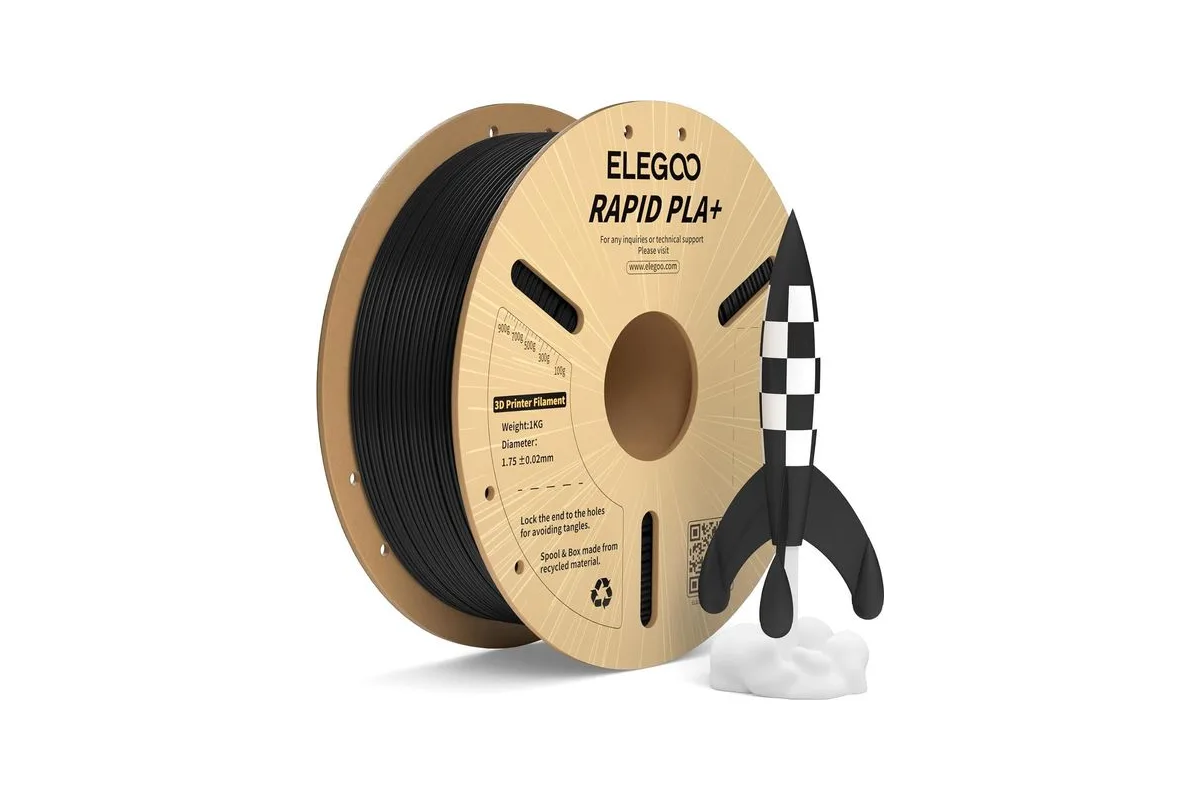
- Elegoo: PLA, Rapid PLA+, PLA Pro and PETG Pro. Elegoo itself says cardboard spools “degrade faster than plastic spools.”
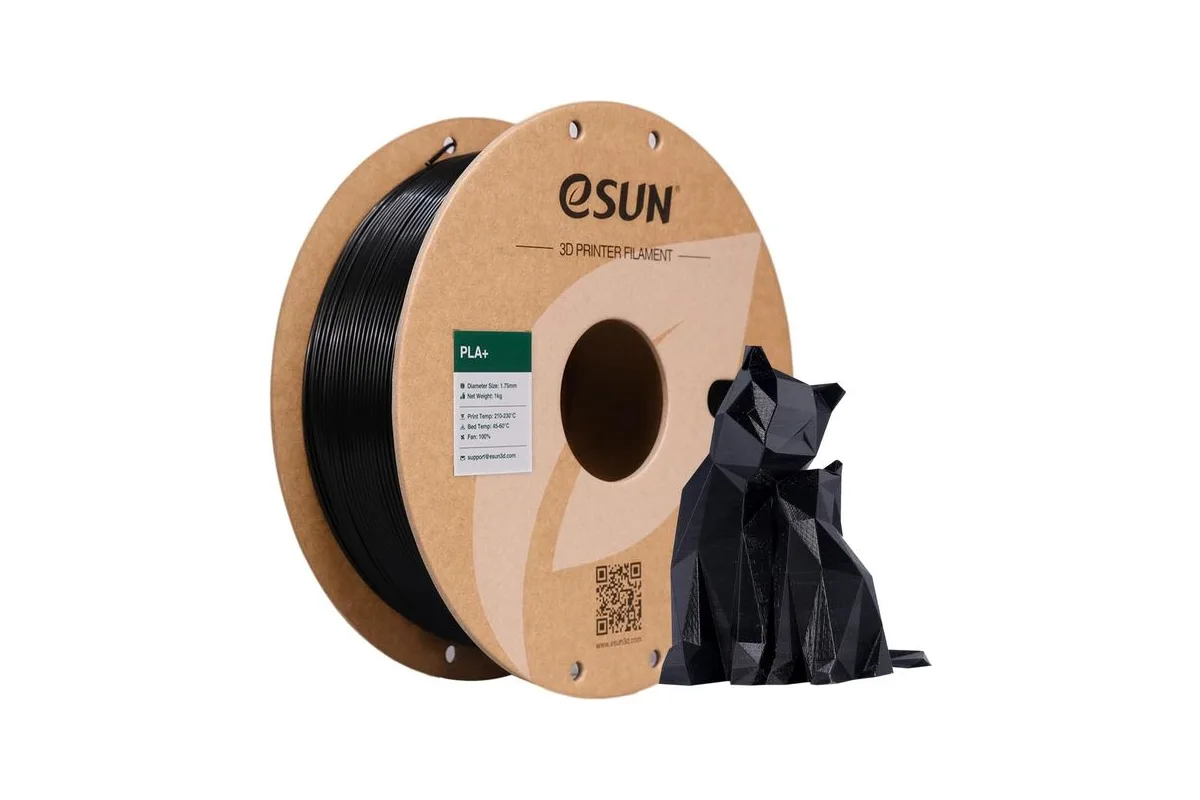
- eSun: PLA+. eSun offers a free cardboard spool adapter file on its product page.
- Inland (Micro Center): all its PLA and PETG.
- Bambu’s own PPS-CF, which ships as 0.75 kg on a cardboard spool.
Three ways to handle them:
- Print adapter rings that clip over both rims. Models are on MakerWorld and, for eSun, on eSun’s own page.
- Wind the filament onto a plastic spool, or buy refills for a reusable spool instead. Sunlu says its refills fit both its third-generation reusable spool and Bambu’s reusable spool.
- Use the AMS lite or external spool holder for cardboard if you don’t want adapters, and check the spool still turns freely.
Can you dry third-party filament in an AMS 2 Pro or AMS HT?
Yes, but you set the temperature. The units read RFID to match drying settings for Bambu filament, and Bambu notes its drying table “is based on test data from Bambu Lab filaments… Actual parameters may vary when using third-party filaments.” Use the filament maker’s figure, within each unit’s limit:
- AMS 2 Pro, 65 °C maximum: fine for PLA and PETG. Bambu says it “may not dry completely” filament that needs more than 65 °C.
- AMS HT, 85 °C maximum: covers ABS and ASA (80 °C in Bambu’s table), PC (80 °C) and Bambu’s PA6-CF and PAHT-CF (85 °C). For PPS-CF and PPA-CF, Bambu recommends the heated bed instead.
Watch the spool, too. Bambu rates its low-temperature spools to 70 °C and high-temperature spools to 90 °C; for other brands, check the spool’s rating if the maker gives one. When drying PETG or ABS, Bambu says to take PLA and TPU out of the AMS. More in how to dry filament and the best filament dryers.
Questions people ask
Does Elegoo filament work in a Bambu AMS?
Yes. It fits the spool limits, but most Elegoo PLA and PETG Pro ship on cardboard, so fit adapter rings in the AMS, AMS 2 Pro or AMS HT.
Do you need an adapter for cardboard spools in the AMS lite?
In what we read, Bambu’s adapter advice is aimed at the AMS, and it says the AMS lite’s hub grip improves compatibility for paper spools. An adapter is optional there, though Elegoo’s note that cardboard degrades faster still applies.
Can you put TPU in a Bambu AMS?
Only Bambu’s TPU for AMS (Shore 68D). Generic TPU won’t feed in the AMS, AMS lite or AMS 2 Pro; on the AMS HT it goes through the bypass port without automatic feeding.
Does third-party filament work for multicolor prints?
Yes. Bambu’s own guidance covers non-Bambu spools in the AMS, including auto-refill between them; you just set each slot’s material and color. See is a multicolor 3D printer worth it?
Which third-party PLA is best for a Bambu printer?
Any PLA on a plastic spool within the size limits. For prices and picks, see the best PLA filament.
Sources
- Bambu Lab wiki: notes on AMS, wiki.bambulab.com
- Bambu Lab wiki: filament guide material table, wiki.bambulab.com
- Bambu Lab wiki: AMS function introduction, wiki.bambulab.com
- Bambu Lab wiki: AMS 2 Pro and AMS HT FAQ, wiki.bambulab.com
- Bambu Lab wiki: multi-model AMS compatibility guide, wiki.bambulab.com
- Bambu Lab wiki: AMS 2 Pro drying function, wiki.bambulab.com
- Bambu Lab wiki: filament drying recommendations, wiki.bambulab.com
- Bambu Lab AMS 2 Pro, us.store.bambulab.com
- Bambu Lab AMS HT, us.store.bambulab.com
- Bambu Lab AMS lite, us.store.bambulab.com
- Bambu Lab PPS-CF, us.store.bambulab.com
- Elegoo US store, us.elegoo.com
- eSun PLA+ store page, esun3dstore.com
- Sunlu store, store.sunlu.com
- Micro Center: Inland PLA, microcenter.com
Keep exploring

How to
Hardened steel vs brass nozzles, and what nozzle size to use
Brass, or the stainless steel Bambu ships on the A1, is fine for PLA, PETG, ABS, ASA and TPU. Carbon fiber, glass fiber, glow-in-the-dark and sparkle filaments need hardened steel. Use a 0.4 mm nozzle for most prints, 0.6 mm for carbon fiber and big parts, and 0.2 mm for miniatures.
Read story
How to
Can you 3D scan with an iPhone? Yes, but not to tight tolerances
Yes. Any current iPhone can 3D scan objects from photos (photogrammetry), and KIRI Engine's free tier exports STL for printing. Only the iPhone 18 Pro and 18 Pro Max have LiDAR in Apple's current lineup. For parts that must fit, a $359 scanner is about ten times tighter.
Read story