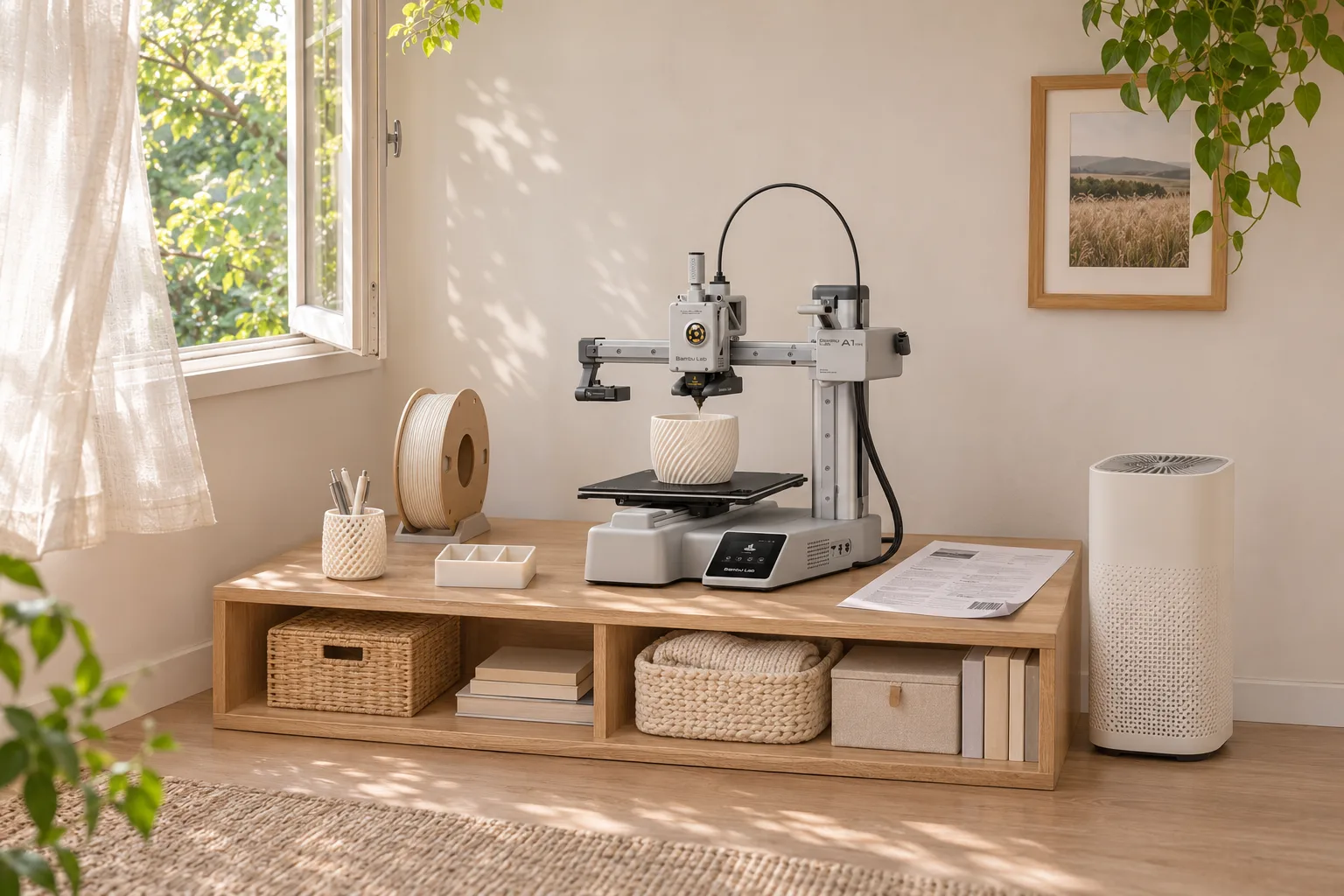
Printers in this guide
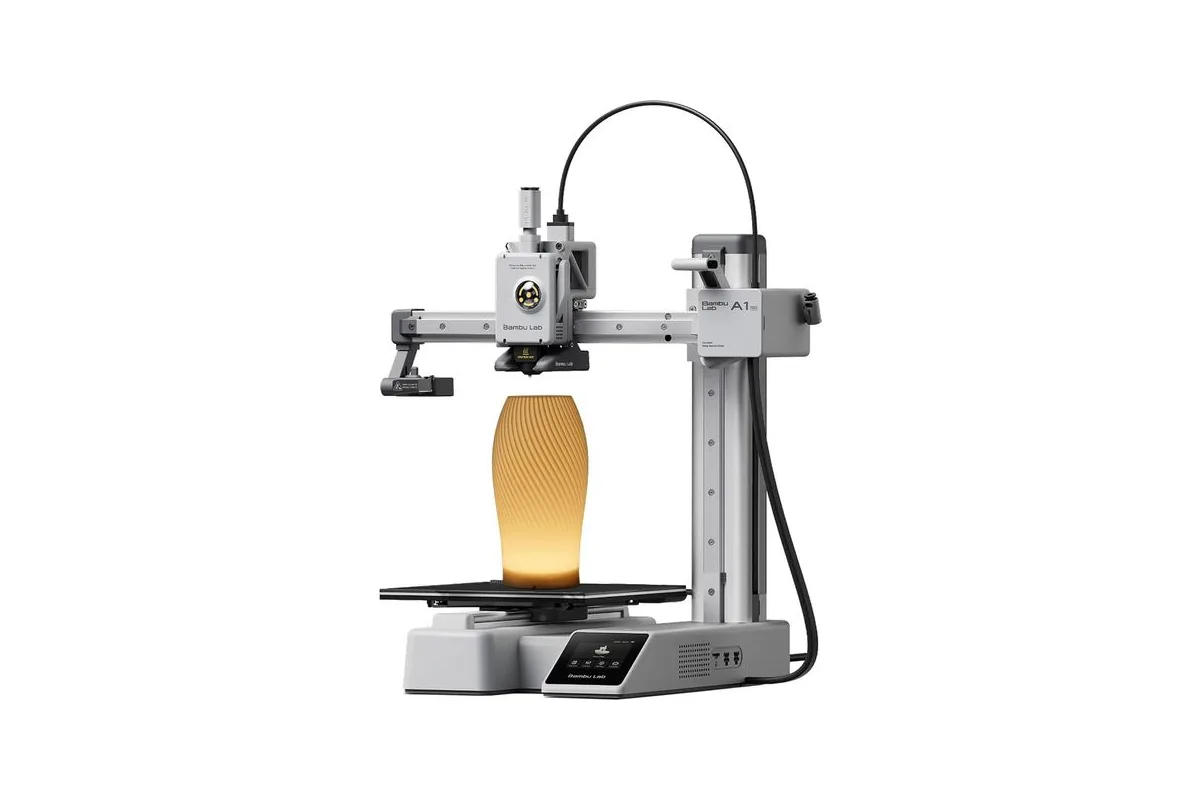
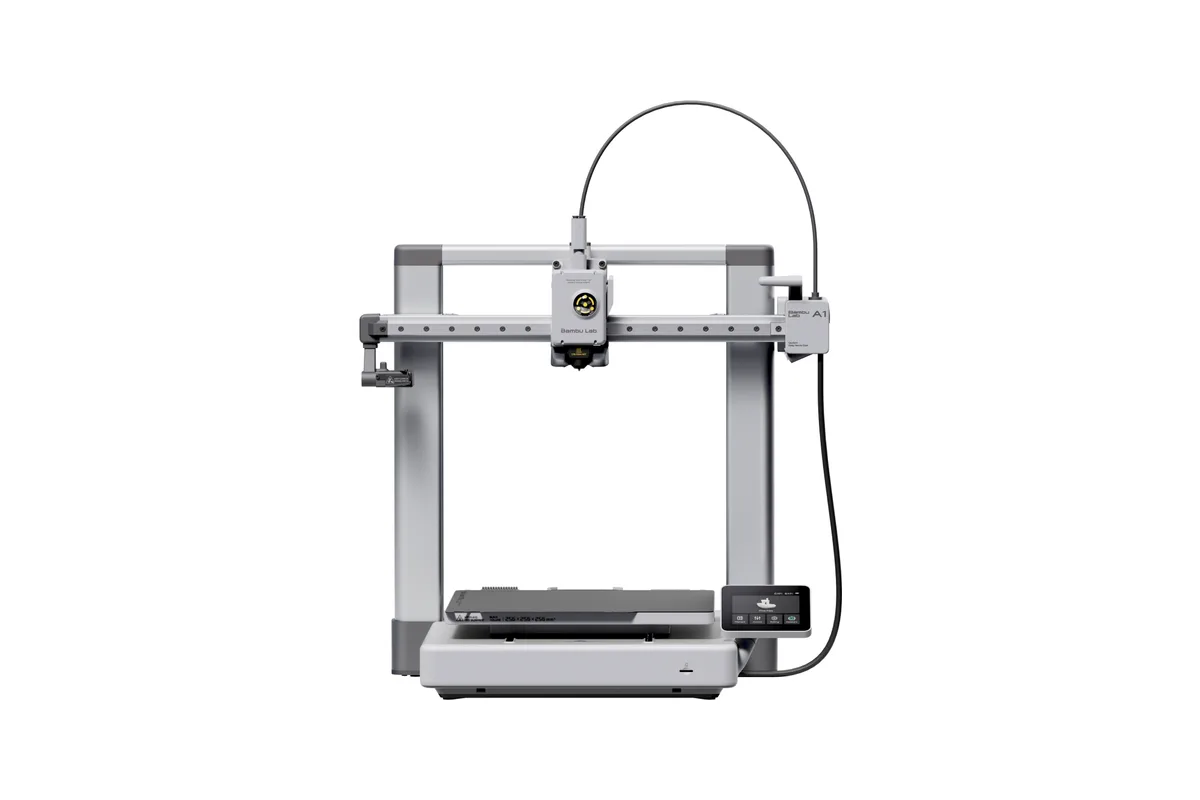
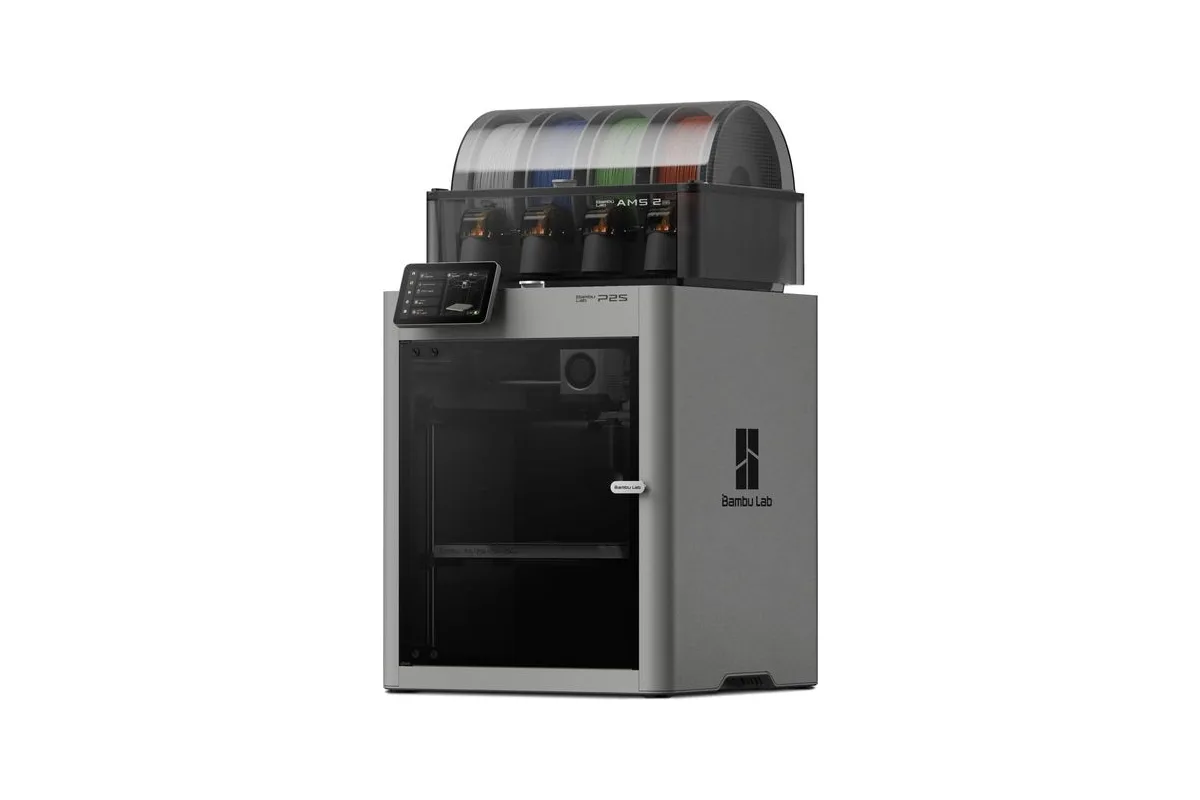
Where should you put a 3D printer in your house?
In a ventilated room you don’t sleep or sit in for hours, which stays between 50 and 86 °F (10–30 °C). That range is what Bambu Lab rates its A1, P1 and P2S printers for, and Prusa calls 68–86 °F ideal. A spare room or home office with a window, a basement workshop, or an insulated garage all work. Put the printer on a sturdy table, away from HVAC return vents, curtains and anything flammable.
Here’s how the usual rooms compare, best first:
| Room | Good for | Watch out for |
|---|---|---|
| Spare room or home office with a window | Easy ventilation, close enough to check on prints | Don’t sit right next to it all day |
| Basement workshop | Space, a solid floor, out of living areas | Damp air (bad for filament), weak Wi-Fi, no window |
| Insulated or heated garage | Fumes and noise stay out of the house | Below 50 °F in winter or above 86 °F in summer |
| Living room or kitchen | Only if nothing else is available | People spend hours there; cooking grease and steam |
| Bedroom | Not recommended | You breathe the emissions all night |
Can you keep a 3D printer in your bedroom?
It’s best not to. Filament printers release ultrafine particles and volatile organic compounds while they print, and the American Lung Association notes those particles can stay in the air for hours after a print ends. UL’s guidance for homes and schools is to keep printers out of rooms where people spend a lot of time, close the door of the room the printer is in, and not hover over it while it runs. If a bedroom is your only option, print PLA, open a window and don’t print while you sleep.
Does a 3D printer need ventilation?
Yes. UL recommends a room with good air circulation or a window you can open, an exhaust fan above the printer if possible, and keeping the printer away from HVAC return vents, which pull emissions into the rest of the house. PLA gives off the least. ABS, ASA and nylon give off more, and belong in an enclosed printer such as the Bambu P2S, ideally with a filter, in a room you can air out. NIOSH’s guidance for schools and makerspaces also recommends enclosures and local exhaust. Our 3D printer safety guide covers the research.
Can you put a 3D printer in a garage?
Yes, if the garage stays between 50 and 86 °F. That’s Bambu’s recommended range for its printers, with humidity under 85%. A cold garage causes warping and poor layer adhesion, especially on open-frame printers, and a hot one can push electronics past their rated range. An insulated or heated garage is a good spot: fumes, noise and dust stay out of the house.
Watch the humidity too. PETG, TPU and nylon absorb moisture, so in a damp garage or basement keep spools in an airtight box with desiccant, or use a filament unit that dries spools, like the P2S Combo’s AMS 2 Pro.
How much space does a 3D printer need?
More than its box size suggests. You need room around it for spools, airflow and, on a bed slinger, the bed moving front to back.
| Printer | Size (W x D x H) | Weight | Extra space to plan for |
|---|---|---|---|
| Bambu Lab A1 mini | 13.7 x 12.4 x 14.4 in (347 x 315 x 365 mm) | 5.5 kg (12 lb) | Bed travel front to back; spool holder |
| Bambu Lab A1 | 18.3 x 16.1 x 16.9 in (465 x 410 x 430 mm) | 8.3 kg (18 lb) | About 27.4 in (695 mm) front to back for the moving bed |
| Bambu Lab P2S | 15.4 x 16.0 x 18.8 in (392 x 406 x 478 mm) | 14.9 kg (33 lb) | Room to open the door and lid, plus the AMS |
| Prusa CORE One+ | 16.3 x 17.5 x 21.8 in (415 x 444 x 555 mm) | 22.5 kg (50 lb) | Space on the side for the spool |
Sizes and weights are the makers’ figures. Bambu says to leave about 695 mm (27.4 in) front to back for the A1’s bed to travel safely, which is far deeper than the printer’s listed size. Enclosed CoreXY printers like the P2S and CORE One+ keep the bed inside the frame, so their footprint is what you see. See CoreXY vs bed slinger and open-frame vs enclosed for the trade-offs.
What surface should a 3D printer sit on?
A sturdy, level table that doesn’t wobble. Print heads move fast, and a bed slinger like the A1 also throws its bed back and forth, so a flimsy table shakes and can leave ripples in prints. A workbench or solid desk is ideal. Enclosed printers weigh about 13–23 kg before you add a filament unit, so check what a wall shelf is rated to hold.
Is it safe to plug a 3D printer into any outlet?
Yes, but don’t share the circuit with a space heater. Printers draw the most power while heating the bed. Bambu rates the P2S at up to 1,000 W on 110 V for the first 3–5 minutes of heating, against a 200 W steady draw printing PLA. A standard 15-amp, 120-volt household circuit carries about 1,800 W (15 x 120), so a printer heating up next to a 1,500 W space heater can trip the breaker.
Keep a smoke alarm in the room and the printer clear of curtains, paper and cardboard. Bambu’s manual says not to leave a printer running unsupervised. Fires are rare: the only 3D printer recall in the CPSC’s database is the 2024 Bambu A1 heatbed-cable recall, about 12,800 units, with no injuries reported.
Where should you put a 3D printer if you have kids or pets?
Somewhere they can’t reach it on their own, ideally behind a door. The nozzle runs above 190 °C for PLA and the moving parts can pinch fingers. Bambu’s A1 mini manual says children under 10 shouldn’t use the printer without supervision. An enclosed printer adds a door between curious hands and the hot parts; see the best 3D printers for kids.
How loud is a 3D printer in a shared room?
About as loud as a quiet conversation in silent mode. Bambu rates the A1 mini at about 48 dB and the P2S under 50 dB at 1 meter in silent mode, which prints at roughly half speed. A closed door solves most noise complaints; see the best quiet 3D printers.
Questions people ask
Can I put a 3D printer in a closet?
Not a closed one. A closet traps heat and fumes, and Bambu’s printers are rated for rooms no warmer than 86 °F. A closet with the door off in a ventilated room is fine.
Can a 3D printer be in a cold garage?
Only if it stays above 50 °F (10 °C), the low end of Bambu’s rated range. Below that, prints warp and layers bond poorly. Heat the space or move the printer indoors for winter.
Does a 3D printer need to be near a window?
It helps. UL recommends a room with a window you can open or an exhaust fan, so emissions don’t build up. Keep it away from HVAC return vents.
Does a 3D printer need Wi-Fi where you put it?
Not strictly. Bambu’s A1 series can print from a microSD card and the P2S from a USB drive, but you’ll want Wi-Fi for sending prints and watching the camera. The P2S works on 2.4 GHz and 5 GHz Wi-Fi; check the signal before you set up in a basement or garage.
Sources
- UL Chemical Insights: 10 ways to promote healthy indoor air quality while using a 3D printer, chemicalinsights.ul.org
- UL Chemical Insights: 3D printing emissions and its impact on human health, chemicalinsights.ul.org
- American Lung Association: 3D printers, lung.org
- NIOSH: Approaches to Safe 3D Printing, cdc.gov
- Bambu Lab wiki: A1 FAQ (ambient temperature and space for the heatbed), wiki.bambulab.com
- Bambu Lab wiki: P1 series FAQ (ambient temperature), wiki.bambulab.com
- Bambu Lab P2S specifications, bambulab.com
- Bambu Lab A1 mini tech specs, bambulab.com
- Bambu Lab A1 tech specs, bambulab.com
- Prusa: frequently asked questions (room conditions and space), help.prusa3d.com
- Prusa CORE One+ product page, prusa3d.com
- Bambu Lab A1 mini user manual (safety section), manualslib.com
- CPSC: Bambu Lab recalls A1 3D printers, cpsc.gov
Keep exploring

How to
Hardened steel vs brass nozzles, and what nozzle size to use
Brass, or the stainless steel Bambu ships on the A1, is fine for PLA, PETG, ABS, ASA and TPU. Carbon fiber, glass fiber, glow-in-the-dark and sparkle filaments need hardened steel. Use a 0.4 mm nozzle for most prints, 0.6 mm for carbon fiber and big parts, and 0.2 mm for miniatures.
Read story
How to
Can you 3D scan with an iPhone? Yes, but not to tight tolerances
Yes. Any current iPhone can 3D scan objects from photos (photogrammetry), and KIRI Engine's free tier exports STL for printing. Only the iPhone 18 Pro and 18 Pro Max have LiDAR in Apple's current lineup. For parts that must fit, a $359 scanner is about ten times tighter.
Read story