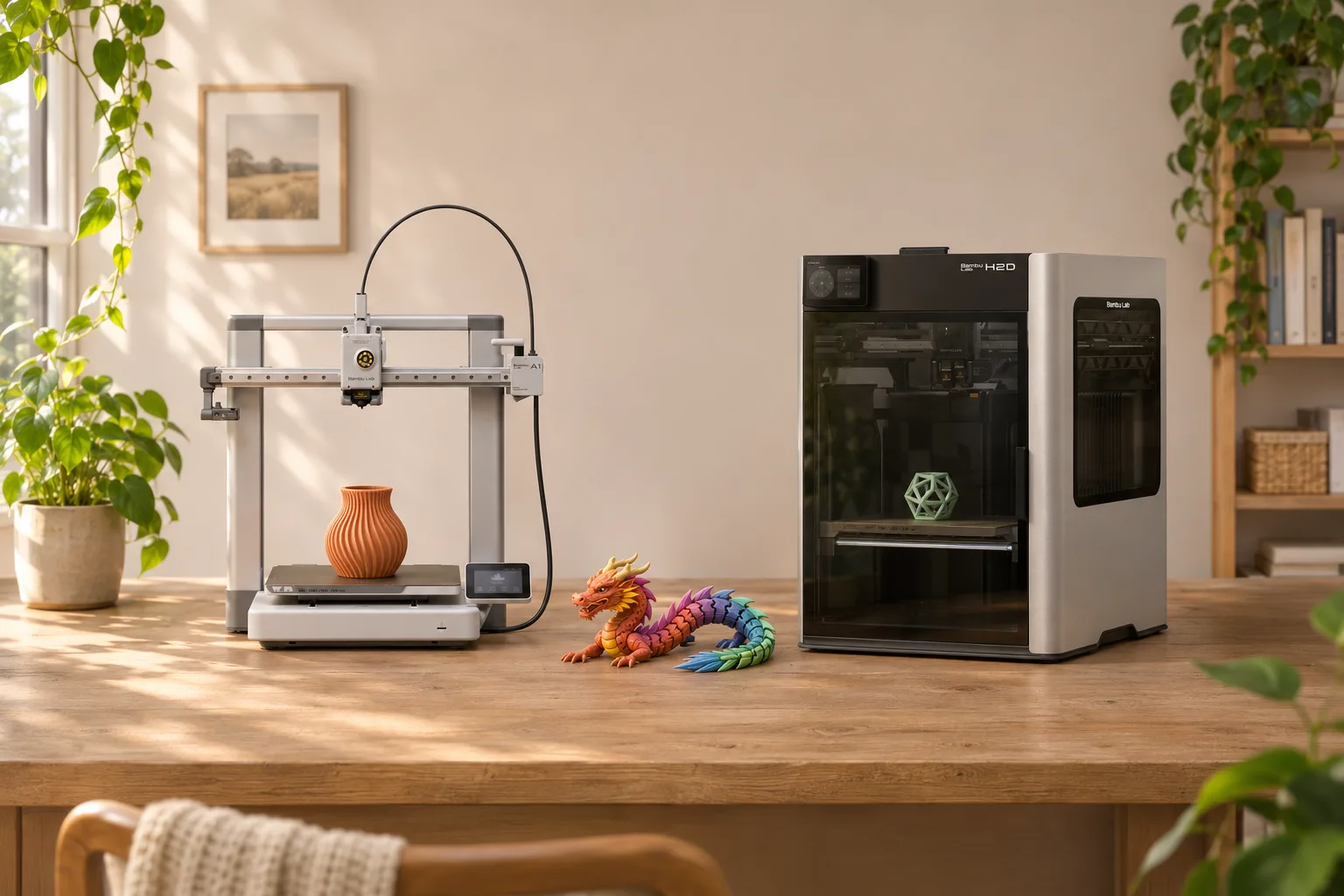
Printers in this guide
Which Bambu Lab printer should I buy?
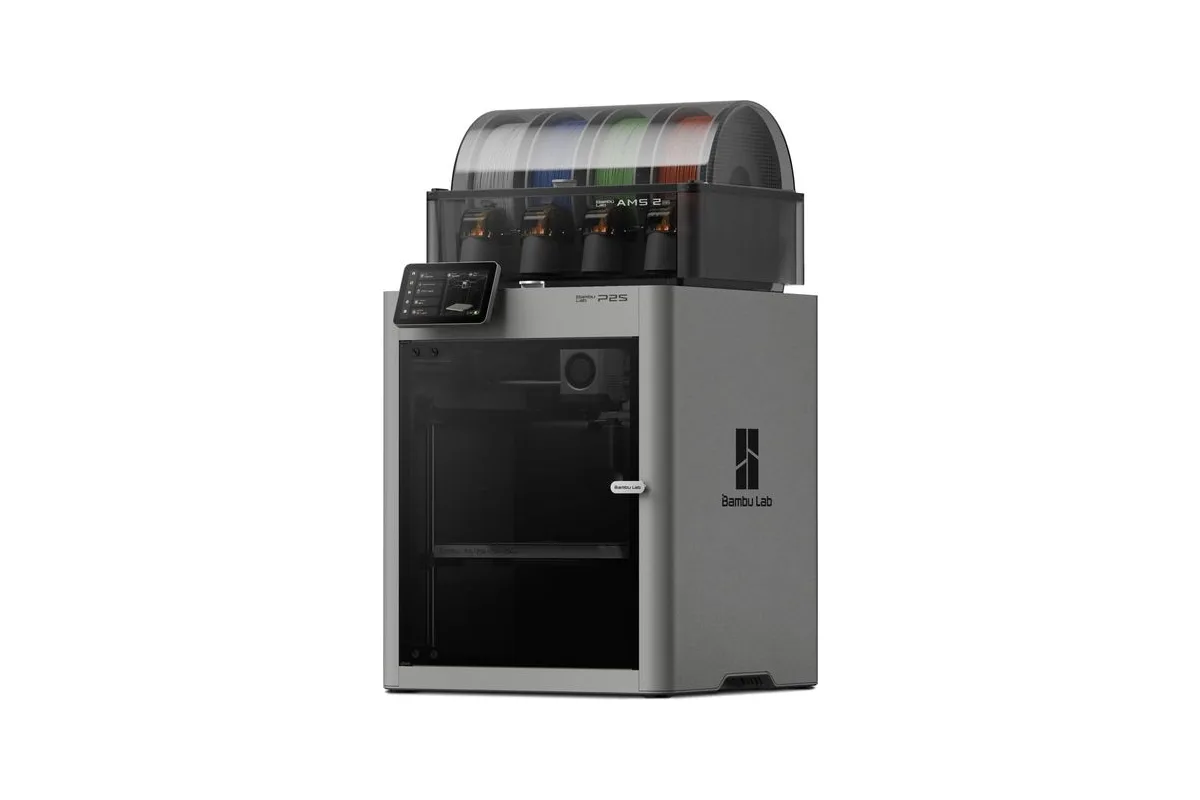
For most people, the P2S Combo: $649 at Bambu’s US store in November 2026 (typical $749). It’s enclosed, so it prints ABS and ASA as well as PLA, PETG and TPU, and the AMS 2 Pro in the box feeds four colors and dries filament. Bambu will ship bug and feature updates for it until October 2030.
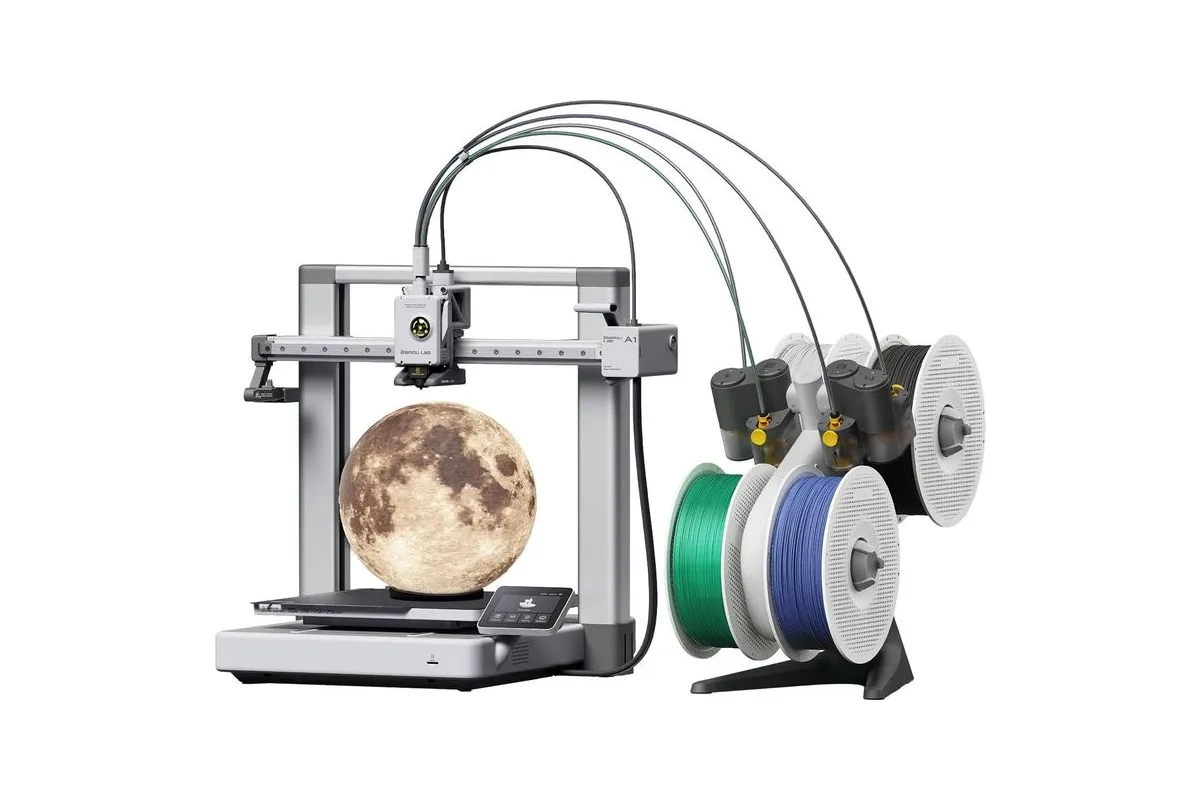
For a first printer on a budget, the A1 Combo: $359 (typical $399). Same 256 mm build size as the P2S and four colors, but an open frame, so PLA, PETG and TPU only.
By need:
- Cheapest: A1 mini, $199 ($299 Combo). A 180 mm cube. See our A1 mini review.
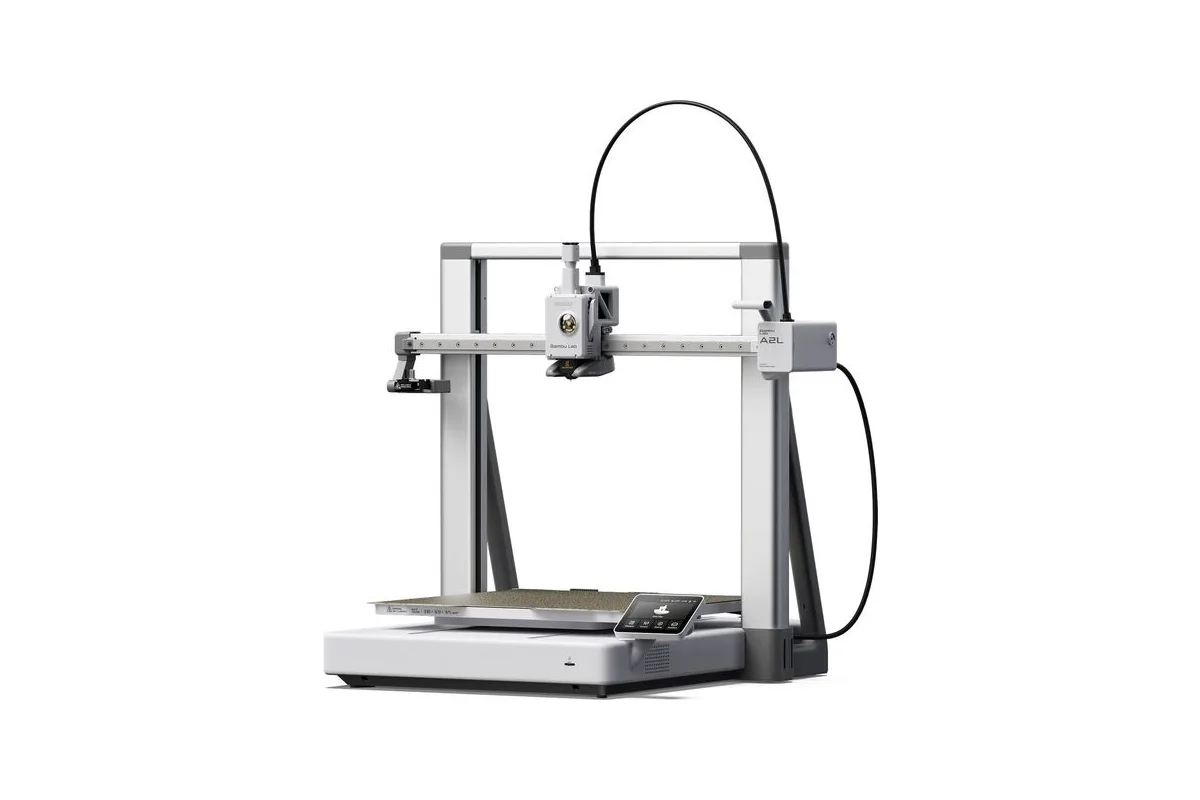
- Big prints on a budget: A2L, $439 ($519 Combo). Twice the A1’s volume, open frame.
- Cheapest enclosed: P1S, $349. Still sold, but its updates end first (July 2028).
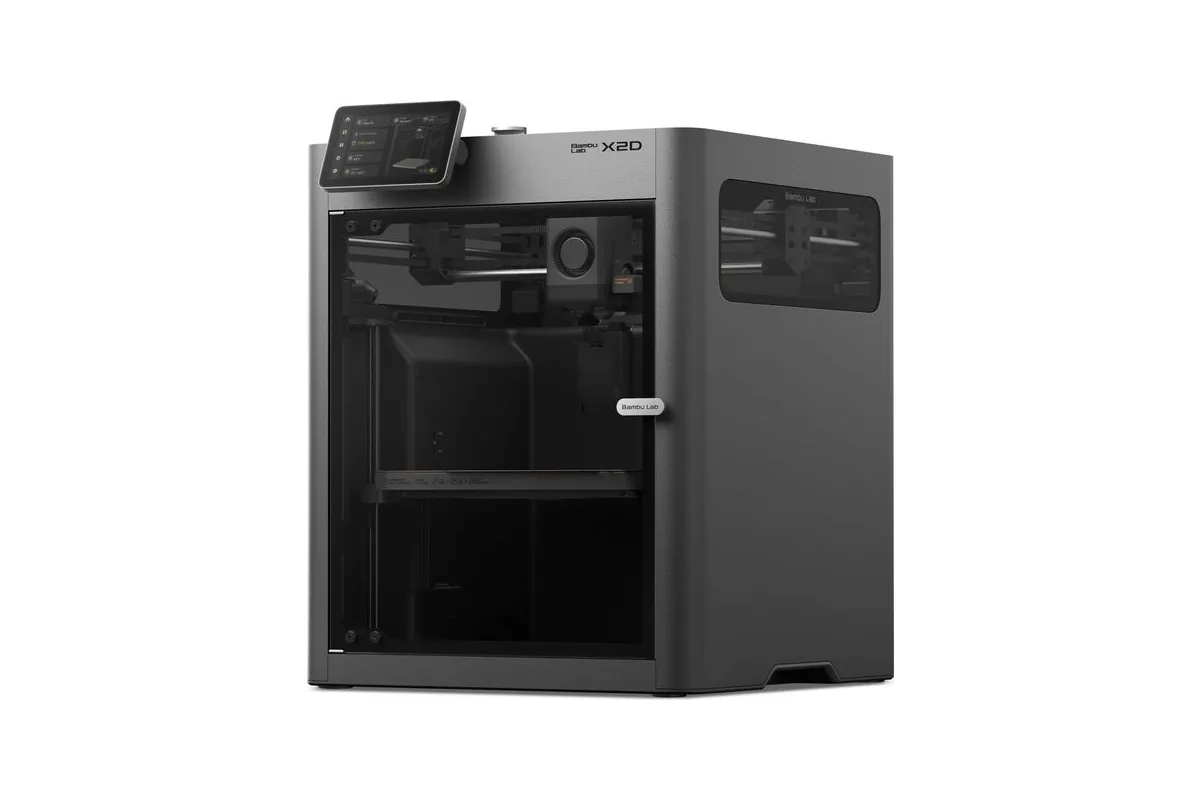
- Heated chamber and a second nozzle: X2D, $589 ($789 AMS Combo). The X1 Carbon’s replacement.
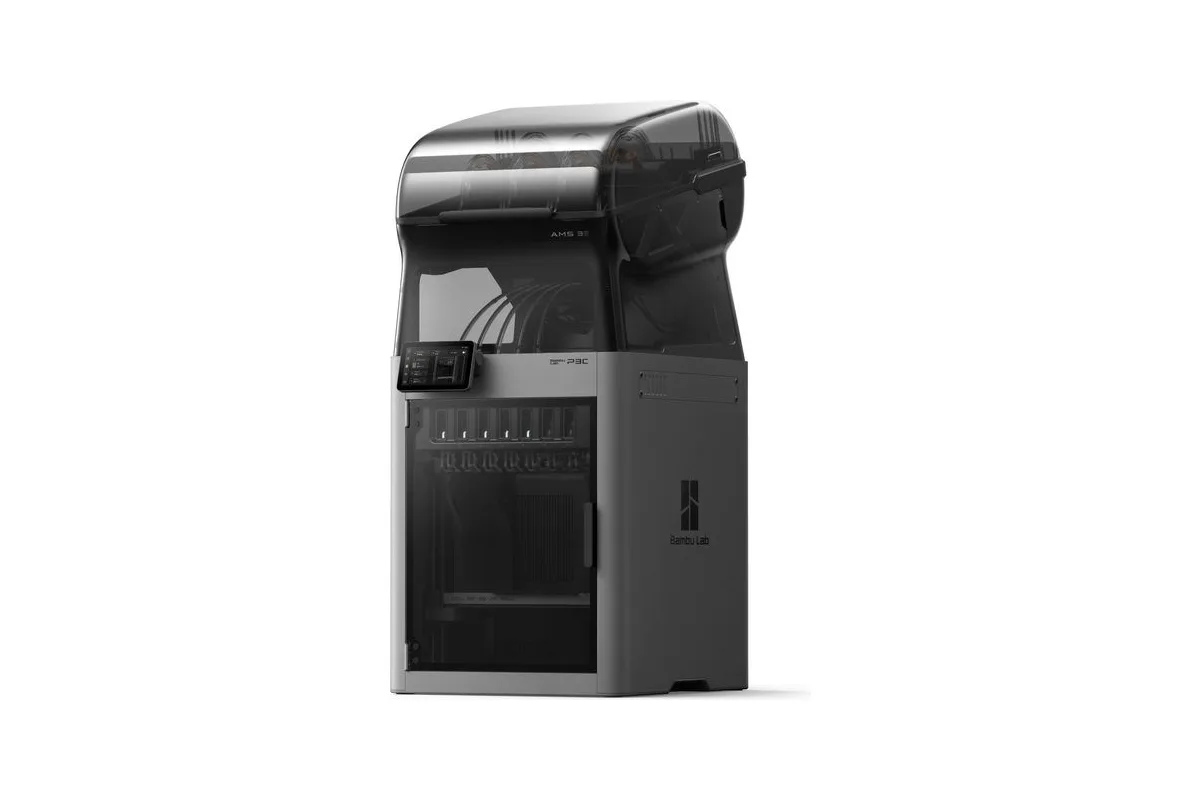
- Least multicolor waste: P3C, $1,149 Combo. A five-tool tool changer with room for seven.
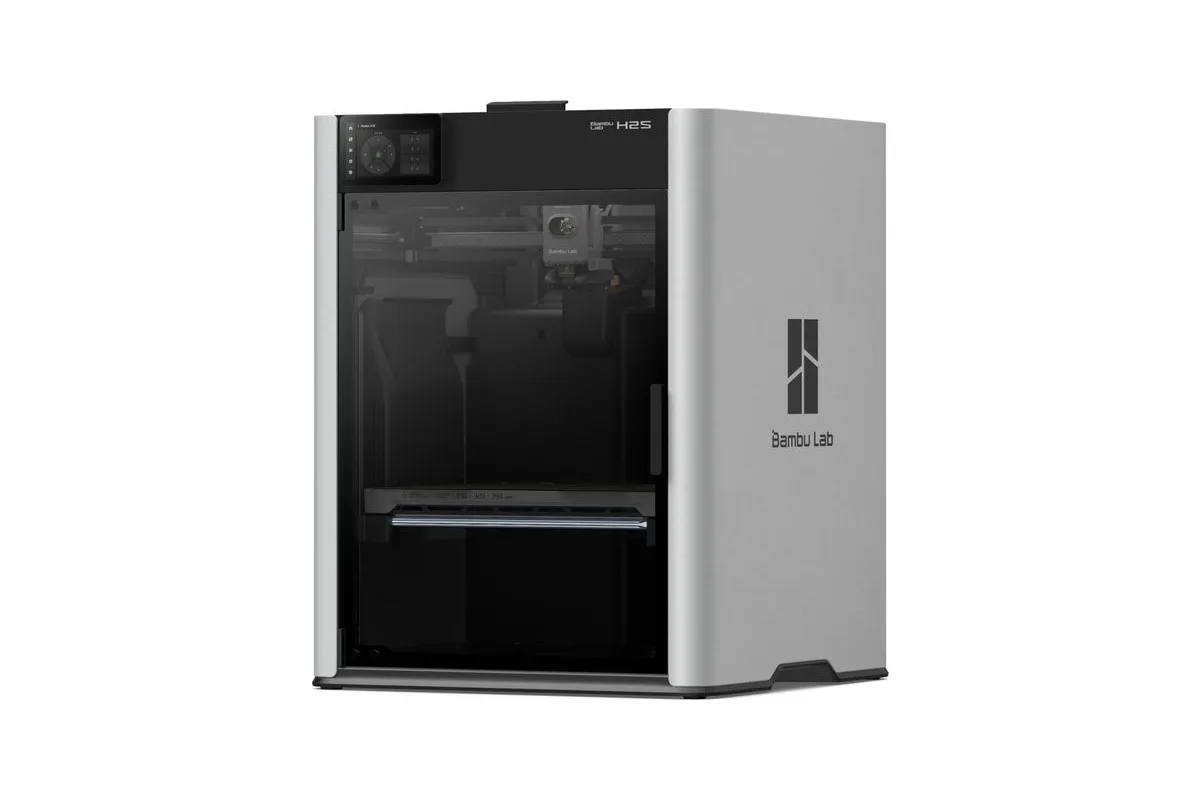
- Biggest: H2S, $1,049 ($1,249 AMS Combo). 340 × 320 × 340 mm.
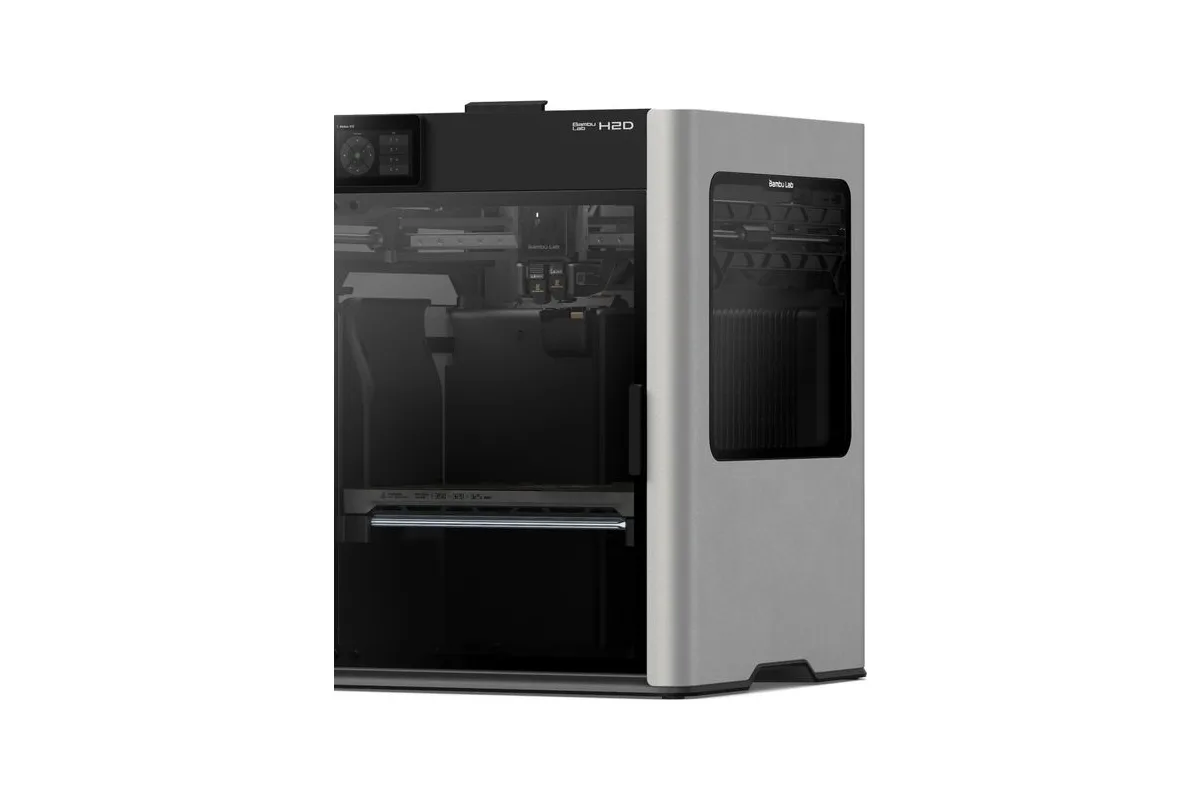
- Two full 350 °C nozzles and a laser option: H2D, $1,399 ($1,599 AMS Combo).
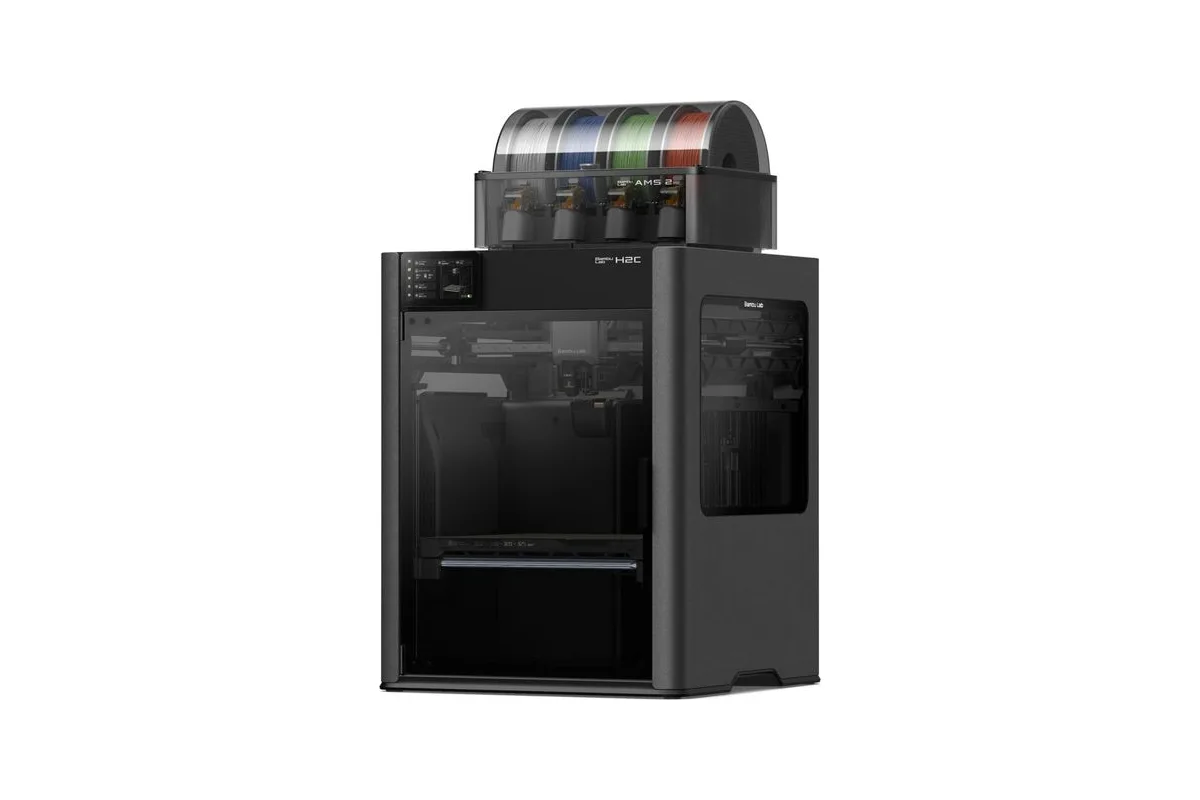
- Seven hotends, big build: H2C, $1,899 AMS Combo. The H3C ($2,499, nine tools) is on backorder, shipping around December 22.
Black Friday prices on Bambu’s store end December 1, 2:00 AM ET. Three P3C bundles go up on December 3; the base P3C Combo stays $1,149.
Every current Bambu Lab printer and its price
Bambu’s US store listed 11 printers on November 28, 2026. “Typical” is the struck-through price Bambu shows. The H2D Pro is sold only through resellers, and the X1 Carbon has been discontinued (see below).
| Printer | Printer only (typical) | Combo (typical) | Combo includes |
|---|---|---|---|
| A1 mini | $199 ($219) | $299 ($329) | AMS lite |
| A1 | $259 ($299) | $359 ($399) | AMS lite |
| A2L | $439 ($469) | $519 ($569) | AMS lite |
| P1S | $349 ($399) | $479 ($549); $509 ($579) | AMS (1st gen); AMS 2 Pro |
| P2S | $449 ($549) | $649 ($749) | AMS 2 Pro |
| X2D | $589 ($649) | $789 ($899) | AMS 2 Pro |
| H2S | $1,049 ($1,199) | $1,249 ($1,399) | AMS 2 Pro |
| H2D | $1,399 ($1,549) | $1,599 ($1,749) | AMS 2 Pro |
| H2C | Not sold alone | $1,899 ($2,199) | AMS 2 Pro, 8 hotends |
| P3C | Not sold alone | $1,149 (no discount) | AMS 3P, 5 PrintTools |
| H3C | Not sold alone | $2,499 (no discount) | AMS 3H, 9 PrintTools |
Laser bundles cost more: H2S Laser Full Combo (10W) $1,599, H2D Laser Full Combo $1,949 (10W) or $2,399 (40W), and H2C Laser Full Combos $2,249 and $2,699, both out of stock on November 28.
The P1S has two Combos. The $479 one has the first-generation AMS; the $509 one has the AMS 2 Pro, which can dry filament. Amazon’s $479 P1S Combo is the older AMS version.
Bambu Lab specs side by side
Liters are our estimate from Bambu’s build dimensions. Colors are Bambu’s maximum with extra AMS units.
| Printer | Build volume | Liters | Nozzle / bed | Chamber | Nozzles or tools | Max colors | Speed / accel (Bambu) |
|---|---|---|---|---|---|---|---|
| A1 mini | 180 × 180 × 180 mm | 5.8 | 300 / 80 °C | Open frame | 1 | 4; 16 with AMS (our estimate) | 500 mm/s / 10,000 |
| A1 | 256 × 256 × 256 mm | 16.8 | 300 / 100 °C | Open frame | 1 | 16 (our estimate) | 500 / 10,000 |
| A2L | 330 × 320 × 325 mm | 34.3 | 300 / 80 °C | Open frame | 1 | 19 | 500 / 10,000 |
| P1S | 256 × 256 × 256 mm | 16.8 | 300 / 100 °C | Enclosed, passive | 1 | 16 | 500 / 20,000 |
| P2S | 256 × 256 × 256 mm | 16.8 | 300 / 110 °C | Enclosed, no heater | 1 | 20 | 600 / 20,000 |
| X2D | 256 × 256 × 260 mm | 17.0 | 300 / 120 °C | Active, 65 °C | 2 | 25 | 1,000 / 20,000 |
| H2S | 340 × 320 × 340 mm | 37.0 | 350 / 120 °C | Active, 65 °C | 1 | 24 | 1,000 / 20,000 |
| H2D | 325 × 320 × 325 mm | 33.8 | 350 / 120 °C | Active, 65 °C | 2 | 25 | 1,000 / 20,000 |
| H2C | 330 × 320 × 320 mm | 33.8 | 350 / 120 °C | Active, 65 °C | 1 + 6 Vortek hotends | 7; 24–25 with AMS | 1,000 / 20,000 |
| P3C | 256 × 256 × 260 mm | 17.0 | 300 / 110 °C | Enclosed, no heater | 5 tools, 7 slots | 22 | 1,400 / 25,000 |
| H3C | 330 × 320 × 325 mm | 34.3 | 350 / 120 °C | Active, 65 °C, dual-zone | 9 tools | 24 | 1,400 / 25,000 |
The P2S spec page still says 600 mm/s, though firmware 01.03 raised travel moves to 1,000 mm/s. The H2D’s 325 mm figure is for one nozzle; using both, it’s 300 × 320 × 320 mm.
What each step up the lineup adds
- A1 mini → A1 (+$60): almost three times the volume (5.8 to 16.8 liters, our estimate) and a 100 °C bed.
- A1 → A2L (+$180): twice the A1’s volume and up to 19 colors, but the bed tops out at 80 °C. Bambu says a hotter bed that size “would consume excessive power”. No laser, for safety on an open frame, though a blade cutter fits.
- A1 → P1S (+$90): an enclosure and carbon filter, so ABS and ASA become practical. The screen is a 2.7-inch non-touch display, and the camera runs at 0.5 frames per second.
- P1S → P2S (+$100): a 5-inch touchscreen, a 1080p 30 fps camera, a 110 °C bed, a hardened-steel nozzle, a stronger servo extruder and AI detection on a built-in processor. Bambu says the P2S is a full redesign, so a P1S can’t be upgraded into one. It still has no chamber heater or Ethernet.
- P2S → X2D (+$140 printer-only, +$140 Combo): an actively heated 65 °C chamber, a 120 °C bed, H12 HEPA filtration, a second nozzle for supports or a second color, and a toolhead camera. The second nozzle is the weak point: it’s limited to 200 mm/s, Bambu says its print quality is “slightly lower”, and it’s covered for 3 months.
- X2D → H2S (+$460): the biggest Bambu build area (37 liters), a 350 °C nozzle, and a 10W laser option. One nozzle.
- H2S → H2D (+$350): two full 350 °C nozzles and the 40W laser option. Slightly smaller build area. No USB drive in the box, and without one Bambu says you can’t start a print over the LAN.
- H2D → H2C (+$300 Combo to Combo): a rack of six induction-heated hotends plus the left nozzle, for up to seven filaments with little purging.
- P3C and H3C: Bambu’s third generation. SwapTek tool changers with five-to-seven and nine tools, 1,400 mm/s, and Bambu’s lowest purge claim, 0.038 g per tool swap. The P3C has no chamber heater and no toolhead camera; the H3C is bigger, hotter and has a heated chamber.
A, P, X and H series: what’s the difference?
- A series (A1 mini, A1, A2L): open-frame bed slingers for PLA, PETG and TPU. The cheapest way in.
- P series (P1S, P2S, P3C): enclosed printers with a 256 mm build area and no chamber heater. The P3C adds a tool changer.
- X series (X2D): Bambu’s flagship-class mid-size printer: heated chamber, two nozzles, 256 mm build area. Bambu calls the X2D “X1C’s next chapter.”
- H series (H2S, H2D, H2C, H3C): the big ones, with 350 °C nozzles, 120 °C beds and 65 °C heated chambers. The H2 models take laser and cutting modules; the H3C takes Bambu’s craft tools instead.
Is the Bambu Lab X1 Carbon discontinued?
Yes. Bambu ended the X1, X1 Carbon and X1E on March 31, 2026, and no longer sells them on its own store. It promises:
- bug fixes and features until May 31, 2027;
- security patches until May 31, 2029;
- spare parts and support until March 31, 2031, though “some parts may sell out earlier.”
Some distributors may still have stock. Micro Center had a refurbished X1 Carbon for $636.99 on November 28, which is more than a new X2D ($589) with a heated chamber, a second nozzle and four more years of updates. Buy the X2D. The P1P was retired in February 2026; the P1S is still sold, and Bambu says it has “no plans” to stop.
How long will Bambu update my printer?
Bambu now publishes update-support end dates on its compare page. Our reading: every current model gets five years of bug and feature updates and seven years of security patches from its launch date.
| Printer | Launched | Bug and feature updates until | Security patches until |
|---|---|---|---|
| X1 Carbon (discontinued) | — | May 31, 2027 | May 31, 2029 |
| P1S | Jul 13, 2023 | Jul 13, 2028 | Jul 13, 2030 |
| A1 mini | Sep 20, 2023 | Sep 20, 2028 | Sep 20, 2030 |
| A1 | Dec 14, 2023 | Dec 14, 2028 | Dec 14, 2030 |
| H2D | Mar 25, 2025 | Mar 25, 2030 | Mar 25, 2032 |
| H2S | Aug 26, 2025 | Aug 26, 2030 | Aug 26, 2032 |
| P2S | Oct 14, 2025 | Oct 14, 2030 | Oct 14, 2032 |
| H2C | Nov 18, 2025 | Nov 18, 2030 | Nov 18, 2032 |
| X2D | Apr 14, 2026 | Apr 14, 2031 | Apr 14, 2033 |
| A2L | Jun 1, 2026 | Jun 1, 2031 | Jun 1, 2033 |
| H3C | Nov 3, 2026 | Nov 3, 2031 | Nov 3, 2033 |
| P3C | Nov 24, 2026 | Nov 24, 2031 | Nov 24, 2033 |
This is the strongest argument against buying an older model cheaply. The P1S is $100 less than the P2S, but its feature updates stop more than two years sooner. See P1S vs P2S.
Printer only or Combo? Which AMS is which?
A Combo adds Bambu’s automatic filament system for multicolor printing and backup spools. On most models it costs $80 to $200 more than the printer alone.
- AMS lite (A series Combos): four spools.
- AMS (first generation) (the $479 P1S Combo): four spools, no drying.
- AMS 2 Pro (the $509 P1S Combo and the P2S, X2D and H2 Combos): four spools, and it also dries filament. On the P2S, drying during a print, or on extra units, needs a separate power adapter the Combo doesn’t include.
- AMS HT: a one-spool high-temperature dryer box, sold separately.
- AMS 3P (P3C): seven spools, sealed storage, but no automatic feeding, and its 75 °C dryer module is optional and needs its own adapter.
- AMS 3H (H3C): nine spools, automatic loading, and a built-in dryer for two slots at up to 85 °C.
The A1 and A1 mini can now take full-size AMS units through the AMS Hub accessory. You can’t mix an AMS lite with box-style units on them. See third-party filament in the Bambu AMS.
How much filament does Bambu multicolor waste?
On single-nozzle models (A1, P1S, P2S, H2S), every color change flushes the old color out of the nozzle. Bambu publishes no grams-per-change figure for the AMS. It does publish Bambu Studio’s estimates for three sample models on its H2C page, labeled “Purge and Prime Tower Waste”:
| Sample model | H2S (1 nozzle) | X1C (1 nozzle) | H2D (2 nozzles) | H2C (7 hotends) |
|---|---|---|---|---|
| Geminaraptor (6 + 6 colors) | 3,917 g | — | 3,032 g | 532 g |
| Bambu Lab Racer | — | 2,953 g | 2,051 g | 522 g |
| Blériot Rider XI | — | 768 g | 695 g | 185 g |
These are slicer calculations, not weighed waste, and Bambu’s H2C figures assume all six induction hotends are the same size. For the SwapTek tool changers (P3C, H3C), Bambu claims 0.038 g per tool swap in internal testing, as long as you use no more colors than you have tools. Colors beyond that share a path and purge.
If you print multicolor often, the purge cost adds up; see is a multicolor 3D printer worth it? and the best tool changer 3D printers.
Where to buy a Bambu printer
- Bambu’s US store gives a 2-year warranty, 30-day returns and 30-day price protection. The 2-year term applies only to printers bought from Bambu Store US or Canada.
- Amazon sells only the A1 mini, A1, P1S and P2S from Bambu: the A1 at $259, the P1S at $349 and the P2S Combo at $649.99 in November 2026.
- Micro Center and Best Buy matched Bambu’s Black Friday prices on most models, plus 99 cents. Neither listed the P3C or H3C.
- Refurbished: Bambu’s own refurbished store was empty on November 28. Micro Center’s refurbished P2S ($466.99) cost more than a new one ($449.99), so buy new during the sale.
Warranty fine print: hotends and nozzles carry no warranty on most models, and the X2D’s auxiliary extruder and the H2 series’ dual extruder unit are covered for 3 months.
Do Bambu printers work offline?
Yes, for printing. Bambu’s LAN Only Mode keeps the printer off the internet, and SD card or USB printing always works. In LAN Only Mode you can’t start prints from outside your home network, the Bambu Handy app doesn’t work, and print history is off; on-printer AI detection still runs. See can you use a Bambu Lab printer offline?
Questions people ask
What is the best Bambu Lab printer for beginners?
The A1 Combo ($359) if you want multicolor, or the A1 ($259) if you don’t. Both calibrate themselves. See A1 vs A2L if you want bigger prints.
Is the P1S still worth buying?
Only at a real discount. At $349 it’s the cheapest enclosed Bambu, but the P2S ($449) adds a touchscreen, a much better camera and a hotter bed, and gets updates for two years longer. See our P1S review.
Which Bambu printers have a heated chamber?
The X2D, H2S, H2D, H2C and H3C, all to 65 °C. The P1S, P2S and P3C are enclosed but have no chamber heater.
What is the biggest Bambu Lab printer?
The H2S, at 340 × 320 × 340 mm. Bambu calls it its largest print space. The A2L (330 × 320 × 325 mm) is close behind for $610 less, but it’s open-frame.
Is the X2D the replacement for the X1 Carbon?
Yes. Bambu’s store FAQ says “X2D is X1C’s next chapter.” See P2S vs X2D and X2D vs H2D.
Should I get the H2D or the H2C?
The H2C if you print in more than two colors often: Bambu’s own figures put its purge at a fraction of the H2D’s. The H2D if two materials are enough and you want the printer-only option or a laser bundle that’s in stock. See H2C vs H2D.
Is there a Bambu A2 or A2 mini?
Not as of November 28, 2026. The A2L is the only new A-series printer.
Does Bambu sell the H2D Pro on its store?
No. Bambu sells the H2D Pro, which adds Ethernet, a tungsten carbide nozzle and network controls, only through authorized resellers.
Sources
- Bambu Lab: compare printers (software update support dates), bambulab.com
- Bambu Lab US store: 3D printers, us.store.bambulab.com
- Bambu Lab US store: Black Friday sale, us.store.bambulab.com
- Bambu Lab: the X1 series is EOL, blog.bambulab.com
- Bambu Lab: X2D launch post, blog.bambulab.com
- Bambu Lab: P3C launch post, blog.bambulab.com
- Bambu Lab: A2L launch post, blog.bambulab.com
- Bambu Lab US store: P2S (FAQ on the P1S), us.store.bambulab.com
- Bambu Lab US store: P1S, us.store.bambulab.com
- Bambu Lab US store: X2D, us.store.bambulab.com
- Bambu Lab US store: H2D, us.store.bambulab.com
- Bambu Lab US store: H2C, us.store.bambulab.com
- Bambu Lab US store: H3C, us.store.bambulab.com
- Bambu Lab US store: P3C, us.store.bambulab.com
- Bambu Lab H2C product page (purge figures), bambulab.com
- Bambu Lab wiki: multi-AMS compatibility guide, wiki.bambulab.com
- Bambu Lab wiki: P3C FAQ, wiki.bambulab.com
- Bambu Lab wiki: LAN Only Mode, wiki.bambulab.com
- Bambu Lab warranty policy, bambulab.com
Keep exploring

How to
Hardened steel vs brass nozzles, and what nozzle size to use
Brass, or the stainless steel Bambu ships on the A1, is fine for PLA, PETG, ABS, ASA and TPU. Carbon fiber, glass fiber, glow-in-the-dark and sparkle filaments need hardened steel. Use a 0.4 mm nozzle for most prints, 0.6 mm for carbon fiber and big parts, and 0.2 mm for miniatures.
Read story
How to
Can you 3D scan with an iPhone? Yes, but not to tight tolerances
Yes. Any current iPhone can 3D scan objects from photos (photogrammetry), and KIRI Engine's free tier exports STL for printing. Only the iPhone 18 Pro and 18 Pro Max have LiDAR in Apple's current lineup. For parts that must fit, a $359 scanner is about ten times tighter.
Read story